
A negative equity car is one where your loan balance is higher than what the vehicle is actually worth. If that’s you, get two numbers today: a written 10-day payoff quote from your lender and a conservative trade-in estimate from Kelley Blue Book, NADA, or Edmunds. Skip that step and a dealer can roll the gap into a new loan, which usually costs you far more over time than waiting it out.
TL;DR:
- Getting a formal payoff quote and a conservative trade-in estimate is essential to accurately determine if you are underwater, especially since interest and fees can change the payoff amount within 10 days.
- Making extra principal payments directly reduces your negative equity if your loan terms and lender allow application to principal rather than future interest, but it often takes months to clear smaller gaps.
- Rolling negative equity into a new loan increases total interest paid and can extend the period you remain underwater, especially with long-term financing and high loan-to-value ratios.
- Dealer tactics like long loan terms for used cars or exceeding the sticker price in financing reveal hidden rollovers of negative equity, which can lead to costly payments over time.
- When negotiating, bring written payoff quotes and private trade-in estimates to prevent overestimating your ability to roll negative equity into a new vehicle purchase.
How to Check Whether Your Car Loan Is Underwater
Figuring out if you’re upside down takes about ten minutes and two phone calls. Start with your lender.
- Request a formal payoff quote, not your statement balance. Payoff figures typically stay valid for about 10 days because interest accrues daily and lenders tack on small fees your monthly statement doesn’t reflect.
- Pull a conservative trade-in value from NADA’s consumer vehicle values tool, Kelley Blue Book, or Edmunds. Use the trade-in number, not the private-party or retail figure, since that’s closer to what you’d actually net.
- Subtract the trade-in estimate from your payoff quote. If the payoff is bigger, you’re underwater by that dollar amount.
Pro Tip: Round your car’s value down and your payoff up when estimating. Dealers routinely lowball trade-in offers by hundreds of dollars, so a pessimistic estimate protects you from a nasty surprise at the finance desk.
Say your payoff quote comes back at $19,400 and NADA lists your trade-in value at $16,200. You’re $3,200 underwater, plus whatever sales tax and fees a new purchase would tack on. That gap is the real number you’re working with, not a guess.
Your Realistic Options for Handling Negative Equity
Not every underwater loan needs a dramatic fix. Rank these by how much they cost you and how fast they get you back to positive equity.
- Keep paying and wait it out. Cars build equity as the loan amortizes and, eventually, as the balance drops below market value. This costs nothing extra but takes the longest.
- Make extra principal payments. Confirm with your lender that additional payments apply to principal, not future interest, or you’re just prepaying without shrinking the gap. Experian notes that long loan terms and small down payments are the usual root cause of negative equity, so extra principal directly attacks that cause.
- Refinance. This only helps if you qualify for a materially lower rate, since refinancing an underwater loan without a rate improvement just resets the clock.
- Sell the car privately. A private sale almost always nets more than a dealer trade-in, often by $1,000 to $3,000 depending on the vehicle, which can shrink or erase the gap outright.
- Trade in and pay the difference in cash. Clean, simple, and it keeps you from financing the shortfall at all.
- Roll the gap into a new loan. This is the costly option: CFPB data shows financed negative equity averages $5,073 on new vehicles and $3,284 on used ones, and rolling it in means paying interest on debt from a car you no longer own.
- Lease instead of buy next time. Leasing sidesteps the equity question for the term but doesn’t erase existing negative equity on a current loan.
- Add GAP insurance if you’re rolling equity forward. If your car is totaled or stolen while you’re still underwater, standard insurance pays market value, not your loan balance. GAP coverage, or a new car replacement policy, closes that shortfall.
Rolling negative equity into a new loan doesn’t just add debt. It stretches your amount financed, extends how long you’re underwater, and increases total interest paid over the life of the loan.
How Dealers Handle Negative Equity, and How to Spot a Rollover
Dealers don’t erase negative equity. They move it, and the contract shows exactly where.
- Compare the “amount financed” line to the actual vehicle price on the buyer’s order. If amount financed exceeds the sticker price by more than tax, title, and fees, your old loan balance got folded in.
- Watch for a loan term that’s abnormally long for the vehicle’s age, sometimes 72 or 84 months on a car that’s already a few years old. That’s often a sign the payment was stretched to hide a bigger amount financed.
- Treat “we’ll pay off your loan” as marketing language, not a guarantee. The FTC has flagged dealer promises like this as potentially misleading, since many dealerships roll the unpaid balance into the new financing instead of absorbing it themselves.
If the math on paper doesn’t match what the salesperson told you verbally, that’s your signal to walk away or renegotiate before signing.
Negotiating From an Underwater Position
Walking into a dealership underwater doesn’t mean you have no leverage. Use these moves before you sign anything.
- Get written trade-in offers from at least two dealers and a private-party estimate before you negotiate.
- Bring your payoff quote and use it as a hard number, not a starting point for negotiation.
- Ask for an itemized contract before you sign, line by line, not a bundled monthly payment.
- If you can afford it, pay part of the gap in cash rather than financing all of it.
Pro Tip: If you must roll equity forward, choose the shortest loan term you can afford. A shorter term reduces total interest paid and gets you back to positive equity faster, even though the monthly payment is higher.
Choosing a Path and Knowing How Long It Takes
Your choice depends on four things: the size of the gap, how many payments remain, your interest rate, and whether you genuinely need a different car now.
A small gap with a strong rate often clears itself in six to twelve months of normal payments. Adding an extra $100 to $150 toward principal each month speeds that up noticeably. Rolling equity into a new loan resets the clock, often pushing positive equity two to three years out. If you’re financing negative equity and driving a vehicle with real total-loss risk, GAP coverage is worth the modest premium.
Why FrenzyCars Covers This the Way We Do
At FrenzyCars, we cover car ownership costs the same way we cover performance and specs: with real numbers, not sales pitches. CFPB’s own analysis shows nearly 1 in 9 auto loans carries negative equity, so this isn’t a rare situation. Before you talk to a dealer, our trade-in value guide and credit score breakdown help you walk in with the same numbers the finance desk is looking at.
What Actually Matters Here
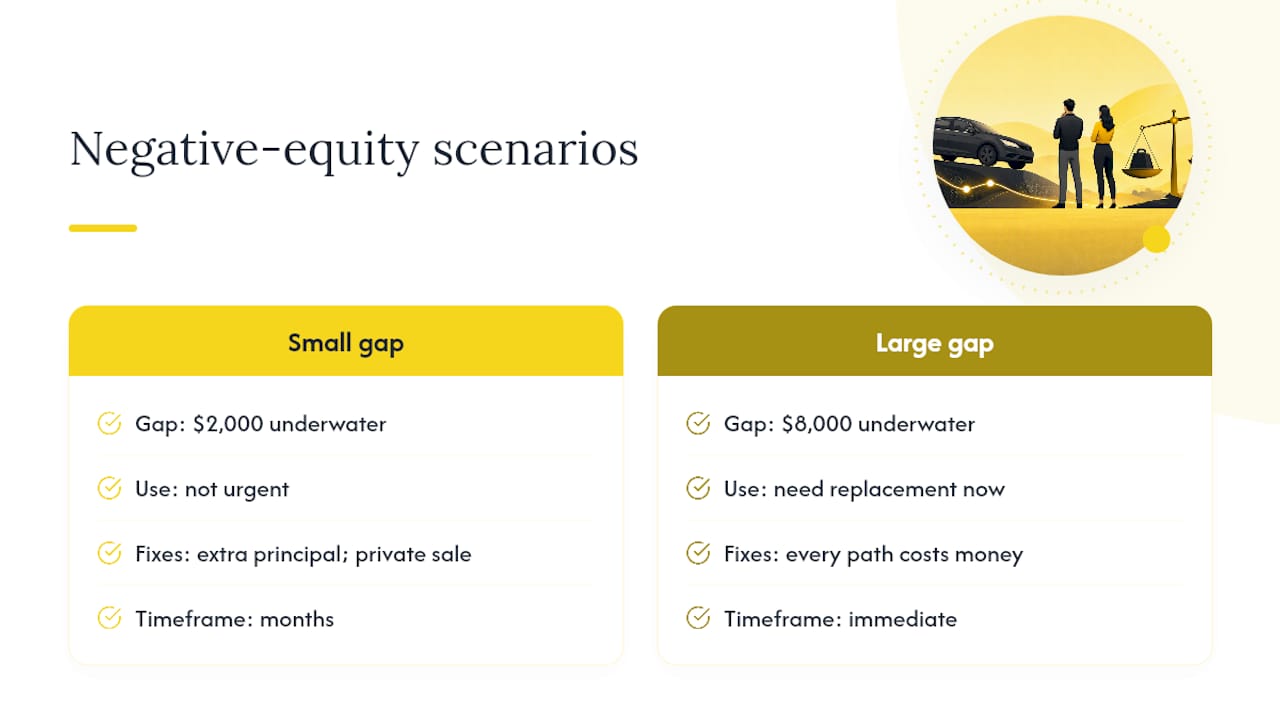
Most advice on negative equity treats every option as equally viable, laying out a menu without ranking it. That’s backwards. The size of the gap and how you plan to use the car matter far more than which “strategy” sounds most sophisticated. If your payoff quote and trade-in value put you $2,000 underwater, extra principal payments or a private sale solve that in months. If you’re $8,000 underwater on a car you need to replace this week, the honest answer is that every path costs you something, and the job is picking the least expensive one, not the most comfortable one.
The conventional wisdom undersells how much a written payoff quote protects you. It’s not paperwork. It’s the one number a finance manager can’t talk you out of. Get that number, get a conservative trade-in value, and do the subtraction yourself before anyone else does it for you. That single habit prevents more bad car deals than any negotiating tactic.
Get a Clear Number Before You Talk to a Dealer
Frenzycars isn’t a dealership or a lender, so there’s no incentive to talk you into rolling equity forward. Before you shop, use our car specs and model pages to compare what a replacement vehicle would actually cost you against staying put and paying down what you owe. If you’re leaning toward downsizing to shrink or erase the gap entirely, our best cars by category roundups point you toward reliable, lower-cost options instead of whatever’s sitting on a dealer’s lot with the highest markup. Check your numbers here first, then walk into any negotiation already knowing what you owe and what your car is worth.
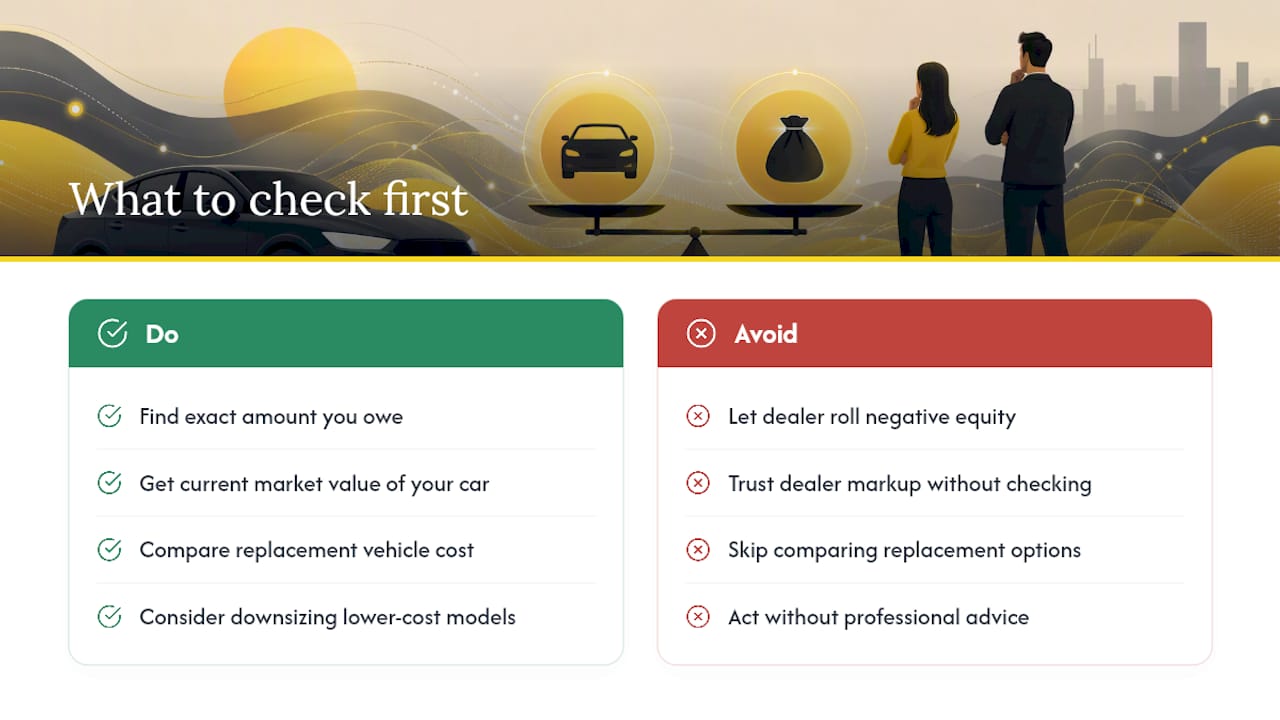
This article is general information, not a substitute for advice from a qualified financial advisor. Consult a qualified financial professional about your own circumstances before acting on anything here.
Sources
- Auto Trade-Ins and Negative Equity: When You Owe More than Your Car Is Worth — FTC
- Negative equity in auto lending (CFPB report)
- How do I know if I have positive or negative equity in my car? — Experian
- Upside down on your car loan? Here’s what to do — Kelley Blue Book