
TL;DR:
- Certified used cars cost more due to mandatory inspections, reconditioning, and factory warranties.
- Their higher price is justified by fewer mechanical problems and extended warranty coverage.
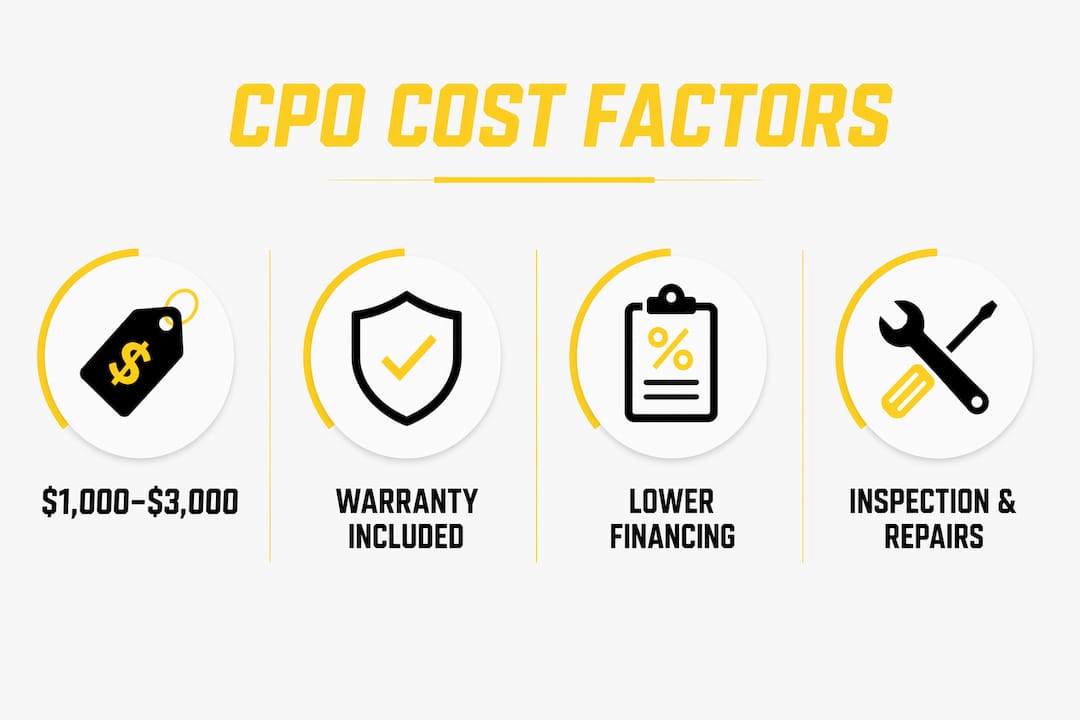
Certified used cars, formally known as certified pre-owned (CPO) vehicles, cost more because they include verified quality assurance through mandatory inspections, reconditioning, and factory-backed warranties that standard used cars lack. The CPO price premium typically runs $1,000–$3,000 above a comparable non-certified vehicle. That gap exists for concrete reasons, and understanding each one helps you decide whether the extra cost makes sense for your situation.
Why certified used cars cost more: the inspection and reconditioning factor
The price difference starts before the car ever reaches the lot. Every CPO program requires a multi-point inspection, typically covering 100 to 150 checkpoints across the engine, transmission, brakes, tires, and electrical systems. Any item that fails gets repaired or replaced before the car earns its certification badge.

That reconditioning work adds real labor and parts costs. A dealer might replace worn brake pads, fix a minor oil leak, or recondition the interior before listing the car as certified. Those repairs get baked into the asking price. CPO vehicles show about 14% fewer mechanical problems than standard used cars. That reduction in post-sale problems is the direct result of pre-sale repairs.
Non-certified used cars skip this step entirely. A private seller or a dealer selling a standard used car has no obligation to fix anything before the sale. You buy the car as-is, which means any hidden issues become your problem the moment you drive off the lot.
- Engine and drivetrain: Oil condition, compression, transmission function, and fluid levels are checked and corrected.
- Safety systems: Brakes, tires, steering, and suspension must meet manufacturer standards.
- Electrical and tech: Battery health, infotainment, sensors, and lighting are tested.
- Cosmetics: Interior wear, paint condition, and glass integrity are assessed and often addressed.
Pro Tip: Always request the full inspection checklist from the dealer, not just a summary. Ask which items were repaired and get the repair records in writing before you sign anything.
What warranty coverage comes with a certified pre-owned car?
The warranty is the most tangible benefit included in the certified pre-owned car price. Most manufacturer CPO programs extend the original factory warranty, adding coverage that can run an additional two to five years or up to 100,000 miles beyond the original terms.
That coverage often includes more than just powertrain repairs. Many CPO programs bundle in roadside assistance, rental car reimbursement, and trip interruption coverage. Some manufacturer programs also offer free scheduled maintenance for a defined period. These perks have real dollar value that a standard used car simply does not include.
Warranty coverage and inspection assurance can justify $1,000–$1,500 of the premium, with the remainder often negotiable. That means a $2,500 premium might be $1,500 in genuine protection and $1,000 in dealer margin you can push back on.
- Powertrain warranty: Covers engine, transmission, and drivetrain components, typically the most expensive repairs.
- Bumper-to-bumper coverage: Some programs extend comprehensive coverage for a limited period after purchase.
- Roadside assistance: Towing, flat tire service, and lockout help are standard in most manufacturer programs.
- Loaner vehicles: Many programs provide a loaner car during covered repairs, eliminating rental costs.
Pro Tip: Compare the CPO warranty terms side by side with a third-party extended warranty quote before you buy. Third-party coverage is sometimes cheaper for reliable models, which changes the math on whether the CPO premium is worth it.
How financing rates affect the total cost of a certified used car
The sticker price is not the full story. CPO financing typically offers interest rates 3–5 percentage points lower than standard used car loans. That gap can flip the math entirely.
Here is a straightforward example. Say you finance $25,000 over 60 months. A standard used car loan at 9% costs roughly $520 per month. The same amount financed through a manufacturer CPO program at 4.9% drops to about $470 per month. That $50 monthly difference adds up to $3,000 over the loan term, which covers the entire CPO premium.
Manufacturer captive financing programs, offered directly through brands like Ford Motor Credit or Toyota Financial Services, often carry these lower rates exclusively for CPO buyers. The rate advantage disappears if you finance through a bank or credit union, or if you pay cash.
- Get the CPO financing quote first. Ask the dealer for the manufacturer’s current CPO rate before discussing any other financing.
- Calculate total loan cost, not monthly payment. Multiply the monthly payment by the number of months to compare true costs.
- Check your credit score. The best CPO rates go to buyers with strong credit. Know your score before you walk in.
- Compare with your bank. Get a pre-approval from your bank or credit union so you have a benchmark.
| Scenario | Loan Amount | Rate | Monthly Payment | Total Cost |
|---|---|---|---|---|
| Standard used car loan | $25,000 | 9.0% | ~$520 | ~$31,200 |
| CPO manufacturer financing | $25,000 | 4.9% | ~$470 | ~$28,200 |
| Difference | 4.1% | ~$50/month | ~$3,000 |
When is the certified pre-owned premium actually worth it?
The CPO premium makes the most sense for high-repair-cost brands where factory warranties protect buyers from expensive repairs. A luxury European sedan with a history of costly electronic or suspension repairs is a strong candidate. The warranty provides real financial protection because the repairs it covers are genuinely expensive.
The math gets weaker for brands with strong reliability records. If a model historically needs very few repairs in the first 100,000 miles, the warranty coverage you are paying for may never get used. Consumer Reports data shows 12% higher satisfaction levels with CPO vehicles, but satisfaction varies significantly by brand and model. Checking model-specific reliability ratings before deciding is the right move.
Your ownership timeline matters too. If you plan to keep the car for three years, a five-year CPO warranty delivers less value than it would for a buyer planning to keep the car for seven years. The longer you own it, the more likely you are to use the coverage.
- High value scenarios: Luxury brands, models with above-average repair costs, buyers with low repair budgets, and long-term ownership plans.
- Lower value scenarios: Historically reliable economy models, short-term ownership plans, and buyers who can self-insure against repairs.
- Always negotiate: CPO status is a marketing claim, not a perfection guarantee. The premium is not fixed. Push back on the portion above what the warranty and inspection genuinely justify.
Not all CPO programs offer equal value. A manufacturer-backed program from a major automaker carries more weight than a dealer-certified program with looser standards. Always confirm whether the certification is manufacturer-backed or dealer-issued before you pay the premium.
Practical steps for evaluating a certified used car purchase
Buying a certified used car requires the same due diligence as any used car purchase, plus a few extra steps specific to the CPO process. A thorough test drive remains one of the most reliable ways to catch issues that inspection reports miss.
- Pull a vehicle history report. Use a VIN-based service to check for accidents, title issues, and odometer discrepancies before you get attached to the car.
- Request the full inspection report. Ask for the checklist with pass/fail marks and a list of repairs completed during reconditioning.
- Get an independent inspection. Pay a trusted mechanic $100–$150 to inspect the car independently. CPO inspections are dealer-performed, and an outside opinion catches what dealers miss.
- Compare warranty terms in writing. Get the full warranty document, not a summary sheet. Confirm what is covered, what is excluded, and how claims are filed.
- Negotiate the premium. The cost difference in certified used cars is not set in stone. Dealers have room to move, especially on the portion above what the warranty and inspection justify.
- Compare to similar non-certified cars. Find two or three comparable non-certified vehicles and price them out with third-party warranty quotes to see if the CPO deal holds up.
Understanding vehicle value retention also helps here. CPO cars tend to hold their value slightly better at resale, which partially offsets the higher purchase price if you plan to sell or trade in within a few years.
Key Takeaways
Certified pre-owned vehicles cost more because inspection, reconditioning, and factory-backed warranties add real value, but lower financing rates and negotiable premiums can offset much of that gap.
| Point | Details |
|---|---|
| CPO premium range | Expect to pay $1,000–$3,000 more than a comparable non-certified used car. |
| Inspection reduces problems | CPO vehicles show 14% fewer mechanical problems due to mandatory pre-sale repairs. |
| Warranty justifies part of the cost | Warranty and inspection value accounts for roughly $1,000–$1,500 of the premium. |
| Financing can close the gap | CPO loan rates run 3–5 percentage points lower, potentially saving $3,000 over a 60-month loan. |
| Not all programs are equal | Manufacturer-backed CPO programs offer stronger protection than dealer-issued certifications. |
The CPO badge is not a blank check
I have watched buyers walk onto lots and pay the full CPO premium without asking a single question about what the certification actually covers. The badge creates a psychological shortcut. It signals “safe” and “reliable,” and dealers know it. That signal has real value, but it is not worth whatever number the dealer puts on it.
The buyers I have seen get the best outcomes treat CPO status as a starting point, not a conclusion. They pull the inspection report, hire an independent mechanic, and negotiate the premium down to what the warranty and reconditioning genuinely justify. Consumer Reports research frames the CPO expense as an investment in peace of mind, and I agree with that framing. Peace of mind is a legitimate benefit. Overpaying for it is not.
The model matters more than most buyers realize. A CPO badge on a historically reliable compact car adds less value than the same badge on a luxury SUV with a reputation for expensive repairs. Do the model-specific research first. Then decide if the premium fits your risk tolerance and your budget.