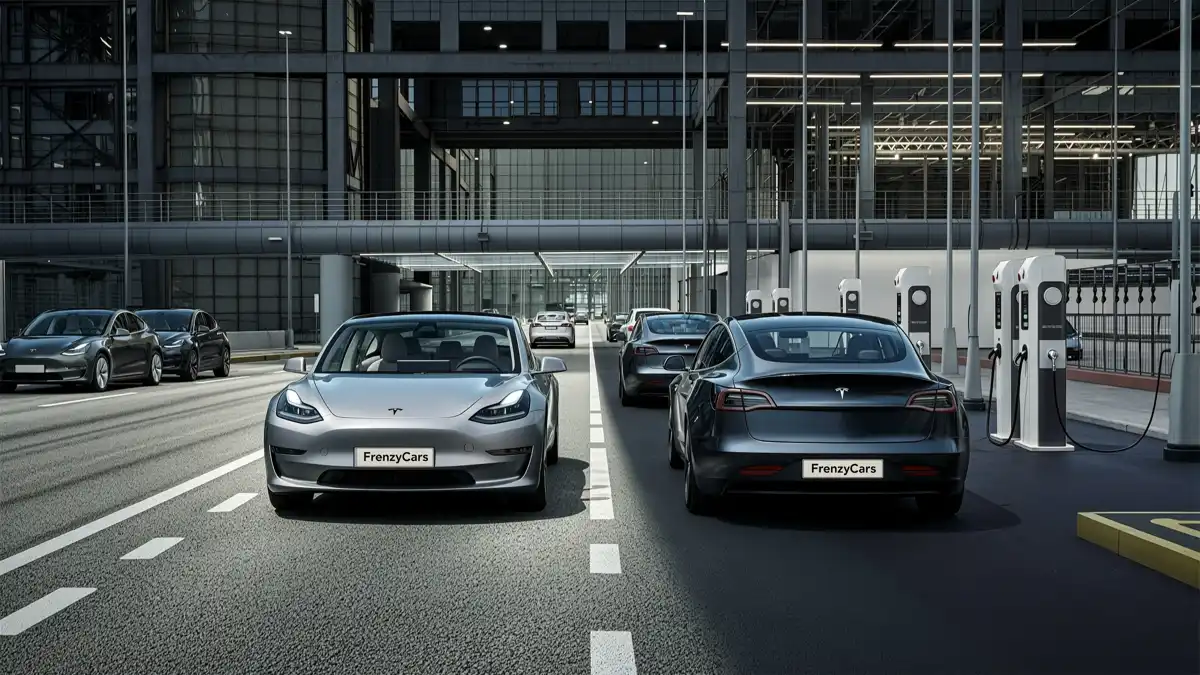
Tesla has produced its 10 millionth electric vehicle, according to the company’s announcement this week. That makes Tesla the first automaker focused exclusively on battery-electric models to reach eight figures in production. The milestone car is reportedly a black Model Y, rolling off the line at a moment when Tesla’s manufacturing machine is objectively massive — but also when the broader EV market is getting harder. For enthusiasts, the round number is worth a closer look: 10 million is a triumph, and a pressure point.
A Dozen Years to One Million, Then Six More to Ten
According to reporting around the company’s announcement, it took Tesla a dozen years to build its first one million electric vehicles. The jump to 10 million came just six years after that. That is a dramatic acceleration, reflecting years of factory expansion, the Model Y ramp, and the broader shift toward EV adoption. A pure-EV automaker reaching one million once seemed almost unthinkable; ten million puts Tesla in a category of its own.
Scale, however, cuts both ways. The milestone is arriving later than Tesla once expected, and the company’s overall EV growth has stalled even as deliveries remain high. That puts the achievement in a more complicated light: Tesla can point to a huge cumulative base, but new-sales momentum is not matching its earlier trajectory. The real question isn’t whether Tesla is failing — it’s whether it can convert this installed base into the next 10 million.
A Milestone That Doubles as a Pay Package Marker
This is not just a ceremonial number. The 10 millionth vehicle puts Tesla halfway toward one of four targets tied to Elon Musk’s $1 trillion compensation package, according to the facts around the announcement. That means the production milestone carries direct strategic weight beyond the factory floor. It shows Tesla can still hit the operational metrics that matter to its leadership, but it also highlights how closely the company’s incentive structure is tied to future growth targets.
Tesla’s actual sales picture is mixed. The company posted record second-quarter vehicle deliveries and record revenue, and sales rebounded in the quarter. Yet coverage of the milestone warns that “the road ahead is more” challenging than the headline suggests. EV growth has stalled, which is an unusual position for a brand that spent years as the default choice for electric mobility.
The Competitive Squeeze Is Now Part of the Story
The 10 millionth car also lands in the middle of Tesla’s most serious competitive test. A reality-check piece published around the same time asks whether Tesla is failing and answers with a resounding no — but it also lists significant headwinds, competitive pressures, and evolving market dynamics. Tesla, in other words, is navigating a challenging period of transition, not collapse.
That transition is being accelerated by Chinese EV makers. For a long time, Chinese electric vehicles competed mainly on price, often with real compromises in refinement. That era is ending. A recent review of the XPENG G6 — an EV aimed squarely at Tesla’s space — called it “the EV that should have Tesla looking over its shoulder.” When a rival’s crossover can not only match but threaten a segment leader, a production milestone shifts meaning. It is no longer just about how many Teslas you can build; it is about how many you can sell against a growing field of credible alternatives.
What 10 Million EVs Mean for the People Buying Them
For FrenzyCars readers, this milestone matters because an eight-figure production base has real-world consequences. It implies mature supply chains, confidence in battery technology, and a large pool of used vehicles that will eventually feed the market. It also raises the stakes for Tesla’s service and charging network: millions of existing owners expect the ecosystem to keep pace. None of those details were in the announcement, but they are the natural implications of reaching this scale.
Looking forward, Tesla is still pushing into new markets. The company has begun Cybertruck deliveries in Qatar, with customers able to book vehicles there starting in August 2026. The Model Y also remains at the center of Tesla’s global rollout, with 2026 launch coverage emerging for India. The 10 millionth vehicle may be in the rearview mirror, but Tesla’s next million will determine whether this milestone is a peak or a springboard.