
TL;DR:
- Many vehicle recalls start with NHTSA investigations triggered by complaint patterns rather than manufacturer-initiated actions.
- Owners must be proactive by checking their VIN regularly and not rely solely on mailed notices, which can be missed or outdated.
A car recall is a federally mandated safety procedure where a manufacturer must fix an identified vehicle defect at no cost to the owner. The National Highway Traffic Safety Administration (NHTSA) oversees this process under federal statute 49 U.S.C. § 30120, which requires manufacturers to notify owners and perform free repairs regardless of a vehicle’s age or mileage. Understanding how the car recall process works protects you from safety risks and prevents you from paying for repairs that federal law already covers. Frenzycars breaks down every stage of the process so you can act with confidence.
How does the car recall process work from start to finish?
A recall begins long before any letter arrives in your mailbox. NHTSA collects Vehicle Owner Questionnaires (VOQs), warranty data, insurance claims, and field reports to identify patterns that suggest a safety defect. When enough complaints cluster around a specific failure mode, the agency opens a formal investigation.

The investigation runs in two stages. The first is a Preliminary Evaluation, where analysts determine whether a defect pattern is real and safety-related. If the evidence holds up, NHTSA escalates to an Engineering Analysis, which involves detailed testing and manufacturer input. NHTSA investigations start from owner complaints and move through both stages before a recall is issued or the case is closed.
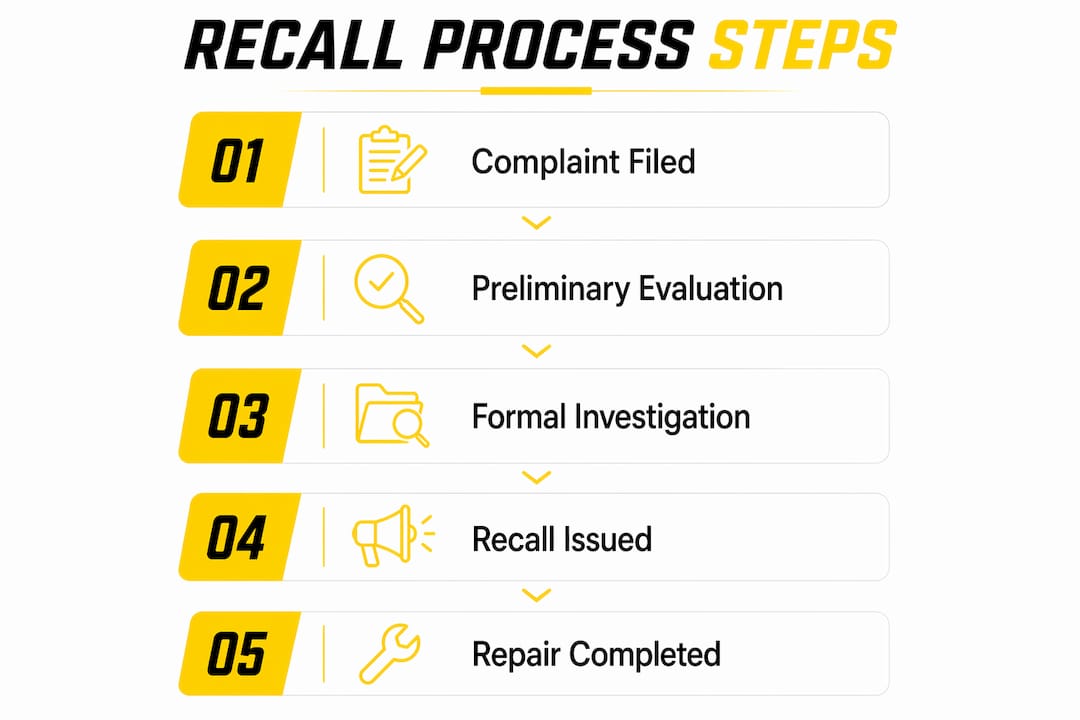
A common misconception is that recalls are always manufacturer-initiated. Many recalls actually start with NHTSA investigations triggered by complaint trends, not voluntary manufacturer decisions. That distinction matters because it means the agency is actively watching for problems you may not even know exist.
Once NHTSA confirms a defect, the manufacturer can issue a voluntary recall or receive a formal Recall Order. Voluntary recalls are far more common. Investigations can take months or even years depending on how quickly defect patterns emerge and how complex the failure mode is.
Pro Tip: File a Vehicle Owner Questionnaire at NHTSA.gov if you notice a recurring safety problem with your car. Your complaint could trigger the investigation that protects thousands of other drivers.
How are vehicle owners notified about recalls?
Manufacturers must notify registered owners by first-class mail within 60 days of informing NHTSA. The notice must include a description of the defect, the safety risk it poses, and any interim instructions for operating the vehicle safely until the repair is done.
The notification system has a significant weakness. Outdated registration databases, missed mail, and ownership changes mean many owners never receive their notice. Used car buyers are especially vulnerable because the mailing goes to the last registered owner on record, not necessarily the current driver.
Your recall notice will typically include:
- A description of the defect and which vehicles are affected
- The specific safety risk the defect creates
- Instructions for scheduling a free repair at an authorized dealer
- Interim safety guidance, such as parking restrictions or speed limits
- Contact information for the manufacturer and NHTSA
For serious advisories labeled “Do Not Drive,” follow the instructions immediately. Driving a vehicle under that advisory puts you and others at serious risk.
The most reliable way to check your recall status is not to wait for a letter. Entering your 17-character VIN into NHTSA’s live recall database confirms whether any open recalls apply to your specific vehicle, accounting for whether a prior repair was already performed. Your VIN appears on the driver’s side dashboard near the windshield, on your registration, and on your insurance card.
NHTSA also offers the SaferCar app, which sends proactive recall alerts tied to your VIN. If you own a used car or recently moved, this tool fills the gap that the mail system leaves open.
Pro Tip: Check your VIN on NHTSA’s recall database every time you buy a used vehicle. A rebuilt title car or one with multiple previous owners may have open recalls the seller never disclosed.
What does the recall repair process cover?
Federal law is clear on repair costs. All recall repairs must be performed free of charge, including parts, labor, diagnostics, and any related fees, regardless of the vehicle’s age or mileage. A car with 300,000 miles on a 20-year-old frame still qualifies for a free recall repair. That protection does not disappear with high mileage or an expired warranty.
Manufacturers choose from three remedies: repair the defect, replace the affected component or the entire vehicle, or issue a refund of the purchase price. Repair is by far the most common outcome. The scope of a repair can range from a simple software update to full component replacement, disposal of hazardous parts, and related reprogramming.
Dealers are prohibited from charging you for recall work. Dealers are reimbursed directly by manufacturers and have no legal basis to pass costs to you. If a dealer attempts to charge you for a recall repair, report it to NHTSA immediately.
The table below shows what recall repair coverage includes and excludes under federal law:
| What is covered | What is not covered |
|---|---|
| Parts and labor for the defect repair | Unrelated maintenance or wear items |
| Diagnostic fees tied to the recall | Cosmetic repairs not part of the defect |
| Related reprogramming or software updates | Damage caused by owner neglect |
| Disposal of recalled components | Repairs performed before the recall was announced (unless reimbursed) |
Owners who paid out of pocket for a defect repair before the recall was officially announced have a legal path to recovery. Reimbursement requires itemized receipts documenting defect-related parts and labor. Submit those receipts to the manufacturer with a formal claim per federal regulations.
For serious recalls where parts are unavailable, manufacturers often provide loaner vehicles or rentals, though this is not legally required. Ask the manufacturer directly if your repair is delayed and the vehicle is unsafe to drive.
Pro Tip: Keep every service receipt tied to a potential defect. If a recall is announced later for the same issue, those receipts are your evidence for a reimbursement claim.
What happens after a recall repair is completed?
A recall campaign does not expire on its own. Recall campaigns remain open until the dealer performs the repair and notifies the manufacturer, covering vehicles regardless of mileage or age within the legal timeframe. That means an open recall on a vehicle you buy today is still your right to have fixed for free.
NHTSA monitors recall completion rates and requires manufacturers to submit quarterly progress reports. If new data reveals the remedy is ineffective or the defect is more widespread, NHTSA can expand the recall or order a revised repair. The Honda Odyssey recall is a real example of this: 325,000 minivans were recalled a second time after the first camera fix failed, requiring a completely different repair approach.
After your repair is completed, take these steps:
- Request written documentation from the dealer confirming the recall repair was performed and closed
- Verify the repair appears in NHTSA’s database by rechecking your VIN within a few weeks
- Keep the repair record with your vehicle’s service history, especially if you plan to sell
- Monitor NHTSA’s database periodically, since new recalls can be issued at any time on any model
- If parts are on backorder, ask the dealer for a written timeline and contact the manufacturer if delays exceed a reasonable period
Owners under a “Do Not Drive” advisory must comply strictly until the repair is complete. Driving a vehicle under that designation voids any protection and creates liability. If you purchased a pre-recall repair and have documentation, file your reimbursement claim promptly since manufacturers set their own deadlines for those submissions.
Key Takeaways
The car recall process is a federally regulated system that gives vehicle owners the right to free safety repairs, proactive defect monitoring, and legal recourse when repairs are delayed or costs are wrongly charged.
| Point | Details |
|---|---|
| Recalls are federally mandated | Federal law under 49 U.S.C. § 30120 requires free repairs regardless of vehicle age or mileage. |
| NHTSA drives most investigations | Many recalls begin with NHTSA complaint analysis, not voluntary manufacturer decisions. |
| Notification has real gaps | Used car buyers and movers often miss mailed notices; a VIN check on NHTSA’s database is the reliable alternative. |
| Repairs are always free | Parts, labor, diagnostics, and fees are covered by law; any dealer charge should be reported to NHTSA. |
| Recalls stay open until fixed | An open recall does not expire and transfers with the vehicle regardless of ownership changes. |
Why most car owners are not getting the most out of the recall system
I have covered automotive safety for years, and the pattern I see most often is not ignorance about recalls. It is misplaced confidence. Owners assume that if something serious were wrong with their car, they would know about it. They trust the mail system. They assume the previous owner handled it.
That trust is often misplaced. The notification system is genuinely flawed, and the gap between a recall being issued and an owner actually getting their car fixed can stretch into years. The NHTSA crash testing and safety rating system is rigorous, but even a well-rated vehicle can carry an open recall that undermines everything those ratings promise.
The owners who benefit most from the recall system are the ones who treat it like a subscription, not a one-time check. They look up their VIN twice a year. They file complaints when something feels wrong. They keep their service records organized. That habit costs nothing and has real legal value when a recall is eventually announced for a defect they already paid to fix.
My honest advice: do not wait for a letter. The system was designed for a world where people stayed at the same address and bought new cars. That world is gone. Take 90 seconds and check your VIN today.
Frenzycars keeps you ahead of what matters in vehicle safety
Staying informed about recalls is one part of owning a car responsibly. The other part is knowing what you are buying before you sign anything. Frenzycars publishes detailed car specs by make and model so you can research safety features, recall history, and reliability data in one place. When you are comparing options, the best cars by category pages give you curated picks from editors who prioritize safety alongside performance and value. Whether you are buying new or used, Frenzycars gives you the information you need to make a decision you will not regret.
Recommended
- Evaluate Car Safety Ratings: A 2026 Buyer’s Guide | FrenzyCars
- Honda Odyssey Recall Expanded: 325,000 Minivans Get Sony Camera Fix After First Repair Fails | FrenzyCars
- BMW Recalls 29,000+ U.S. Vehicles Over Fire Risk: What Owners Need to Know | FrenzyCars
- How Scheduled Maintenance Works: A Car Owner’s Guide | FrenzyCars