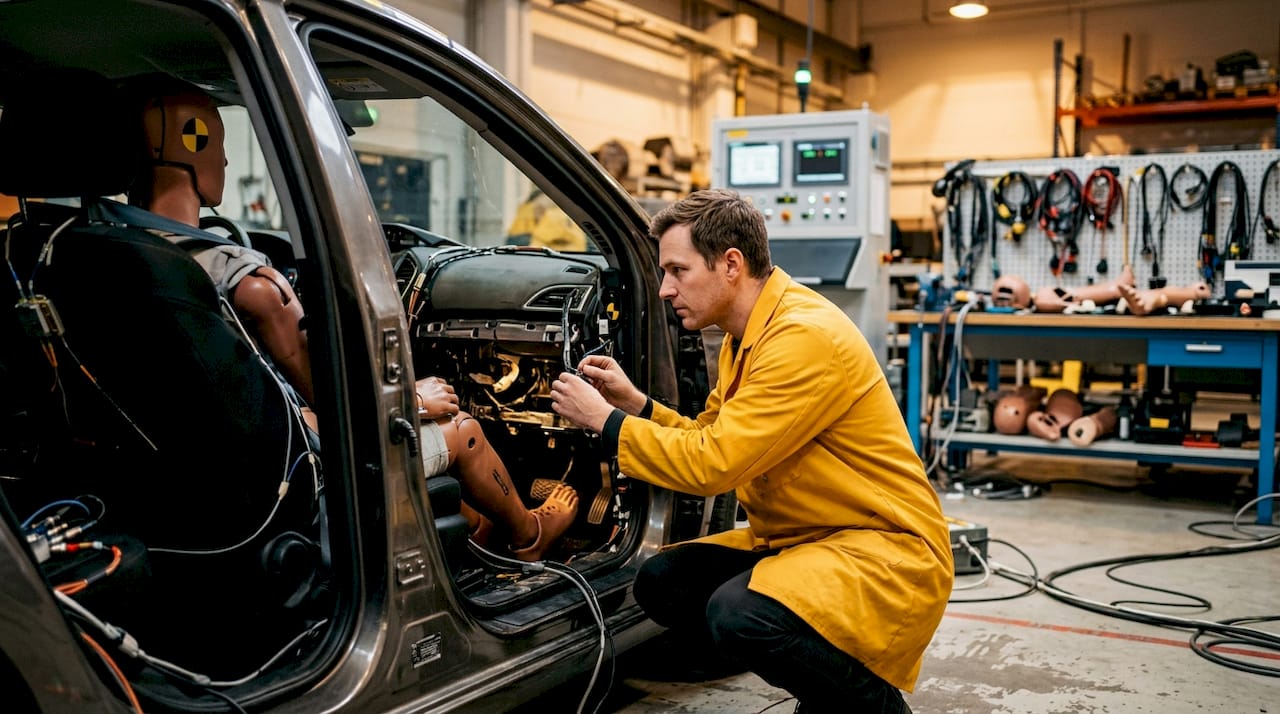
TL;DR:
- NHTSA crash testing assesses vehicle safety through a star rating system based on frontal, side, and rollover evaluations. The ratings influence automaker safety features, insurance costs, and consumer trust, especially with recent updates including rear automatic braking assessments in 2026. However, these controlled tests do not fully replicate real-world crashes, so buyers should consider multiple sources like IIHS results and consumer complaints for a complete safety picture.
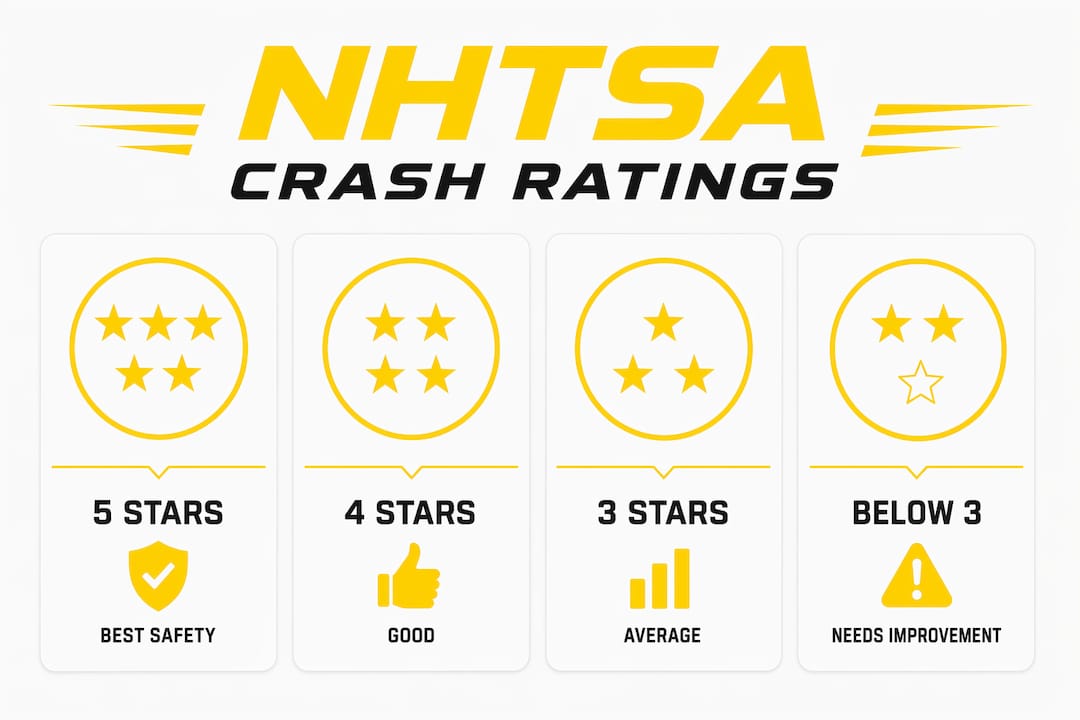
NHTSA crash testing is defined as a standardized government program that measures how well a vehicle protects its occupants in a collision, then translates those results into a 1-to-5 star rating that any car buyer can read. The role of NHTSA crash testing goes far beyond the lab. It shapes which safety features automakers build, which vehicles insurance companies price differently, and ultimately which cars you should trust with your family. The National Highway Traffic Safety Administration runs this program under its New Car Assessment Program (NCAP), and each star below 5 increases serious injury risk by roughly 10%. That single fact makes the rating system one of the most consequential numbers in automotive retail.
How does NHTSA conduct crash tests and what categories are evaluated?
NHTSA evaluates vehicles across three core test categories: frontal crash, side crash, and rollover resistance. Each category produces its own star rating, and those scores combine into an overall vehicle rating.
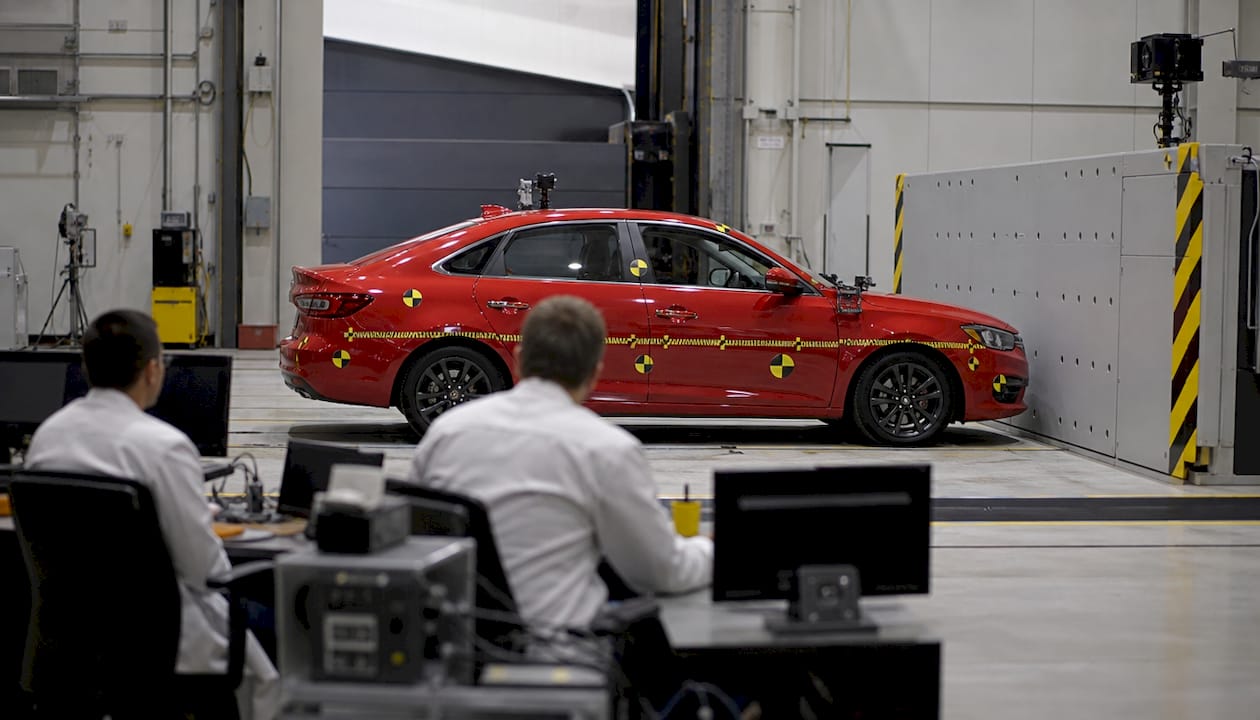
The frontal crash test drives a vehicle into a rigid barrier at 35 mph. That speed recreates a head-on collision between two identical vehicles, each traveling at 35 mph. The side crash test uses a 3,015-pound moving barrier striking the vehicle at 38.5 mph, simulating a broadside impact from an SUV or truck. Rollover resistance is not a crash at all. NHTSA calculates a Static Stability Factor based on the vehicle’s track width and center of gravity height, then uses that number to estimate rollover probability.
Here is what each category measures:
- Frontal crash: Injury risk to the driver and front passenger, measured through sensors on crash test dummies
- Side crash: Protection for occupants on the struck side and the far side of the vehicle
- Rollover resistance: Probability that a vehicle will roll over in a single-vehicle crash, expressed as a percentage
- Overall rating: A composite score requiring high marks across all three categories to earn 5 stars
Pro Tip: Check the individual category scores, not just the overall rating. A vehicle can earn 4 stars overall while scoring only 3 stars in the rollover category, which matters most for SUV and truck buyers.
To earn a 5-star overall rating, a vehicle must perform well across every category. One weak score pulls the composite down, even if the other categories are strong.
What recent updates have been made to NHTSA crash testing protocols?
NHTSA updated its NCAP program in 2026 to reflect how vehicles are actually used and what threats drivers now face. The most significant addition is the formal evaluation of Rear Automatic Braking (RAB) systems.
RAB assessments are now standardized within crash avoidance testing to reduce backover crash injuries, particularly for pedestrians and children behind vehicles. This is a meaningful shift. Previous NCAP versions focused almost entirely on what happens after a crash begins. RAB evaluation rewards vehicles that prevent the crash from happening at all.
The 2026 updates also expand crash avoidance technology evaluations more broadly:
- Rear Automatic Braking (RAB): Standardized performance assessments for pedestrian detection behind the vehicle
- Crash avoidance scoring: Expanded criteria covering forward collision warning, automatic emergency braking, and lane departure systems
- Manufacturer incentives: Public star ratings create competitive pressure for automakers to integrate advanced safety features faster
These updates matter for buyers because they change what a high rating actually means. A 5-star vehicle in 2026 is meaningfully safer than a 5-star vehicle from 2019, even if both carry the same label.
Pro Tip: Always check the model year of the NHTSA rating you are reading. Ratings from before 2011 used a different scoring methodology and are not directly comparable to current results.
What are the limitations of NHTSA crash test ratings?
NHTSA ratings apply to specific controlled test conditions and do not capture real-world crash variability like speed differentials, impact angles, or weight disparities between vehicles. That is the single most important limitation every buyer needs to understand.
Kinetic energy increases with the square of speed. A crash at 60 mph does not deliver twice the force of a 35 mph test. It delivers nearly three times the force. Real accidents happen at highway speeds, at odd angles, and between vehicles of very different sizes. None of those variables appear in NHTSA’s controlled lab environment.
“NHTSA ratings measure only performance under controlled conditions. Consumers should use ratings as a comparative baseline rather than absolute safety guarantees.”
The distinction between crashworthiness and crash avoidance adds another layer of complexity. Crashworthiness ratings measure how well a vehicle protects occupants once a crash has already begun. Crash avoidance technology, like automatic emergency braking, works to prevent the crash from occurring. Both matter, but they address different problems. A buyer who focuses only on the star rating may overlook a vehicle with weak automatic braking performance.
NHTSA and IIHS (Insurance Institute for Highway Safety) run separate, independent programs. IIHS includes tests like the small overlap frontal impact, which NHTSA does not conduct. A vehicle can score well on one program and poorly on the other. Checking both gives you a fuller picture.
| Evaluation factor | NHTSA | IIHS |
|---|---|---|
| Frontal crash test | 35 mph full-width barrier | Moderate and small overlap tests |
| Side crash test | Moving barrier at 38.5 mph | Moving barrier and pole tests |
| Rollover resistance | Static stability factor | Not a primary IIHS category |
| Small overlap frontal | Not included | Included; often reveals A-pillar weakness |
| Crash avoidance scoring | Expanding in 2026 | Separate front crash prevention ratings |
Consumer complaints are a third resource that most buyers skip entirely. NHTSA’s complaints database often reveals patterns of defects before official recalls occur. A vehicle with a 5-star rating and 400 complaints about brake failure deserves a second look. Recalls are official fixes. Complaints reveal emerging problems that have not yet triggered a recall.
You can check fuel economy ratings and see the same pattern: standardized test results and real-world performance often diverge. Crash ratings follow the same logic.
How do NHTSA crash test ratings impact vehicle purchase decisions?
NHTSA star ratings function as the most accessible comparative safety tool available to car buyers. They reduce a complex engineering evaluation into a number anyone can use at a dealership or on a shopping website.
Here is how to use ratings effectively when buying a car:
- Start with the overall rating, then drill into categories. A 4-star overall score with a 3-star side crash result tells you something specific about where the vehicle is vulnerable.
- Cross-reference with IIHS ratings. Checking both programs gives you coverage of test scenarios that neither organization covers alone.
- Search NHTSA’s complaints database. Look for patterns in the complaint type, not just the volume. Repeated brake or steering complaints matter more than scattered interior trim issues.
- Factor in crash avoidance tech. A vehicle with strong crashworthiness but no automatic emergency braking is less safe than its star rating suggests.
- Match the rating to your driving context. Highway commuters face different risks than urban drivers. Rollover ratings matter more for SUV drivers than sedan drivers.
The market pressure created by NCAP has pushed automakers to make automatic emergency braking standard across entire lineups, not just premium trims. That competitive dynamic benefits every buyer, even those who never read a crash test report. Star ratings also influence insurance premiums and resale value, though the relationship is indirect. Insurers use actuarial data from real claims, not NHTSA scores directly. But vehicles with strong safety records tend to generate fewer severe injury claims, which feeds back into lower rates over time.
You can explore vehicles by safety category on Frenzycars to see which models consistently earn top marks across both NHTSA and IIHS evaluations.
Key Takeaways
NHTSA crash testing provides a standardized, consumer-facing safety baseline that buyers should use as a starting point, not a final verdict, when evaluating any vehicle.
| Point | Details |
|---|---|
| Star rating scale | Each star below 5 increases serious injury risk by about 10%, making the scale directly meaningful. |
| Three test categories | Frontal, side, and rollover scores each matter; a weak category score lowers the overall rating. |
| 2026 protocol updates | RAB evaluations and expanded crash avoidance scoring make current ratings more complete than older ones. |
| Ratings have limits | Controlled test conditions do not replicate real-world speed, angle, or vehicle weight variability. |
| Use multiple sources | Combine NHTSA ratings, IIHS results, and the NHTSA complaints database for a full safety picture. |
Why I think most buyers misread NHTSA ratings
I have spent years reading crash test reports, and the most common mistake I see is treating a 5-star rating as a guarantee of safety rather than a measure of relative performance. That distinction is not semantic. It changes how you shop.
The buyers who get the most value from NHTSA data are the ones who use it as a filter, not a finish line. They check the star rating to eliminate clear underperformers, then dig into the category scores, the IIHS results, and the complaints database before making a decision. That three-source approach takes maybe 20 minutes and catches things a single star rating never will.
The 2026 RAB additions are genuinely encouraging. Active safety tech evaluation belongs in NCAP, and its inclusion signals that NHTSA understands the program needs to evolve alongside vehicle technology. But I would caution buyers not to assume that a high crash avoidance score means a vehicle’s active systems will perform perfectly in every real-world scenario. These are still standardized tests. The safety ratings guide on Frenzycars walks through how to read both passive and active safety scores together, which is the right way to approach this.
The bottom line: NHTSA ratings are the best publicly available starting point for vehicle safety research. They are not the end of that research.
Frenzycars and smarter vehicle safety research
Frenzycars covers crash test ratings, vehicle specs, and safety feature breakdowns across hundreds of models so you can compare what actually matters before you buy. The car specs database on Frenzycars includes safety ratings, standard feature lists, and model-year comparisons that put NHTSA and IIHS data in context alongside real-world ownership information. Whether you are narrowing down a shortlist or verifying a specific model’s safety history, Frenzycars gives you the detail that a star rating alone cannot. Pair the ratings with a test drive and you have a complete picture before signing anything.