
TL;DR:
- Scheduled vehicle maintenance involves planned inspections and services at specific mileage or time intervals to prevent failures and extend vehicle life. Following proper maintenance schedules improves safety, reduces repair costs, and enhances resale value by catching issues early and maintaining performance. Regular documentation and combining time-based with usage-based intervals optimize vehicle reliability and ownership costs.
Scheduled maintenance is a planned set of inspections and service tasks performed on vehicles at predetermined intervals to prevent failures and extend vehicle lifespan. Understanding how scheduled maintenance works separates car owners who face surprise repair bills from those who keep their vehicles running reliably for years. The process follows a structured cycle tied to mileage, time, or both, and it covers everything from oil changes to brake inspections. Frenzycars covers this topic because the difference between a $50 oil change and a $3,000 engine repair often comes down to one thing: staying on schedule.
How scheduled maintenance works: tasks and intervals
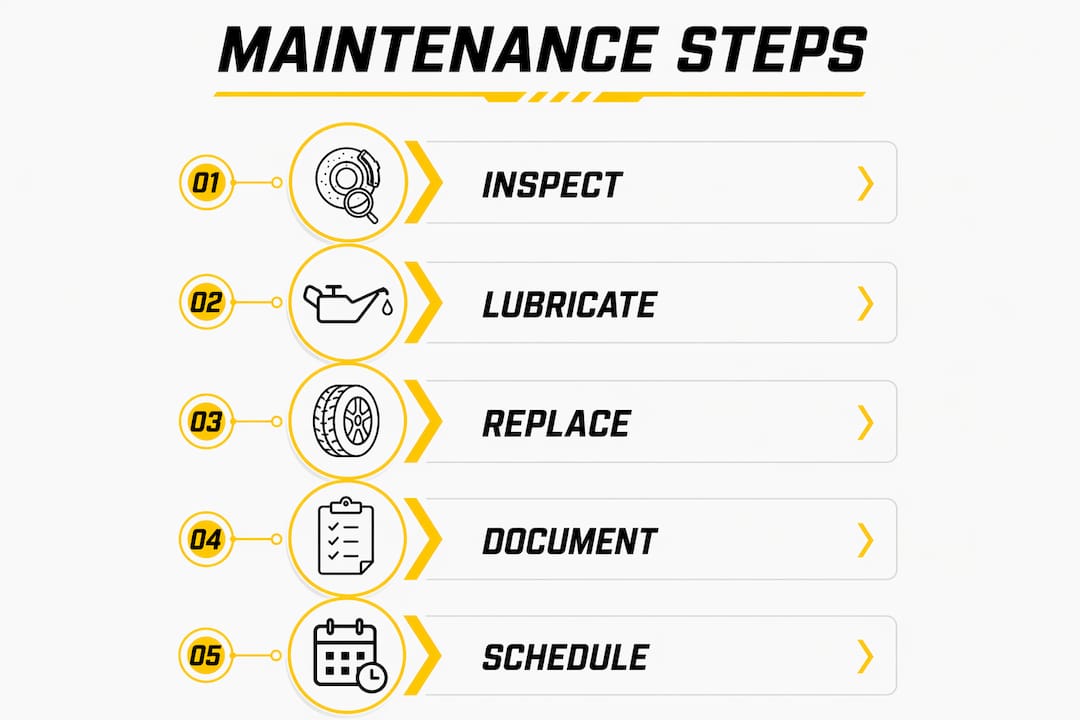
Scheduled maintenance covers far more than oil changes. A complete program includes inspections, lubrication, fluid checks, filter replacements, tire rotations, battery testing, and brake assessments. Scheduled maintenance includes inspections, lubrication, cleaning, and calibration, not just parts replacement, which prevents many failures before they start. That distinction matters because most drivers think of maintenance as swapping parts, when the real value comes from catching problems early.
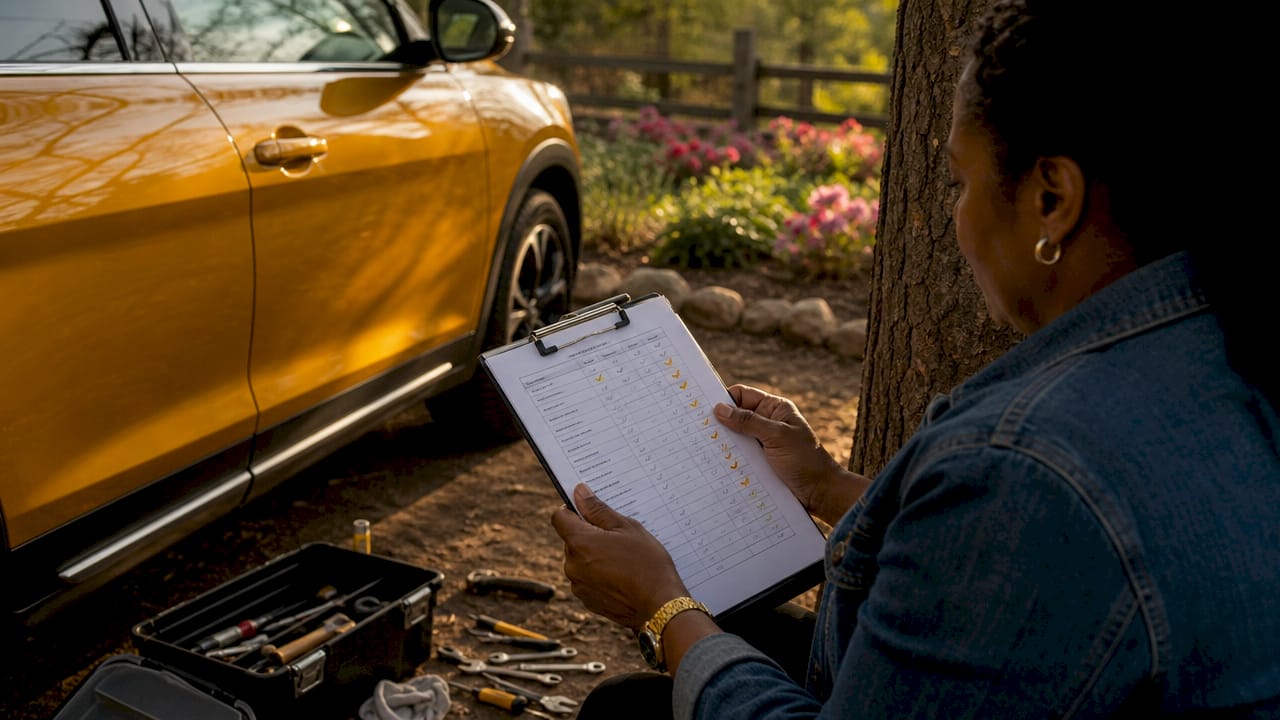
Intervals are set by mileage, time, or both. A typical oil change falls every 5,000–7,500 miles or every six months, whichever comes first. Tire rotations usually happen every 5,000–8,000 miles. Brake inspections are standard at every 12,000 miles or annually. Air filters, cabin filters, and spark plugs follow longer cycles, often 15,000–30,000 miles depending on the vehicle.
Common scheduled maintenance items and their typical intervals:
- Oil and filter change: every 5,000–7,500 miles
- Tire rotation: every 5,000–8,000 miles
- Brake inspection: every 12,000 miles or annually
- Air filter replacement: every 15,000–30,000 miles
- Cabin filter replacement: every 15,000–25,000 miles
- Battery test: every 12 months or at 3 years
- Coolant flush: every 30,000 miles or per manufacturer spec
- Spark plug replacement: every 30,000–100,000 miles depending on plug type
Pro Tip: Your owner’s manual is the single most reliable source for maintenance intervals. Manufacturer recommendations account for your specific engine, transmission, and climate tolerances, and they override generic advice every time.
What does the scheduled maintenance process look like step by step?
The maintenance work order lifecycle consists of six core stages: request, triage, assign, execute, close, and review. Each stage has a specific purpose, and skipping one creates gaps that lead to missed defects or repeated problems.
Here is how the process works from start to finish:
- Request: The service interval triggers a maintenance request, either from a dashboard reminder, a mileage tracker, or a calendar alert set by the owner or service center.
- Triage: A service advisor reviews the request and confirms which tasks are due based on the vehicle’s history and current mileage.
- Assign: A qualified technician is assigned to the vehicle. Specialty tasks like transmission service or alignment go to technicians with the right certification.
- Execute: The technician performs all scheduled tasks, documents findings, and flags any additional issues discovered during the service.
- Close: The work order is completed, parts used are logged, and the vehicle is returned to the owner with a written summary.
- Review: The service record is updated. A complete work order review is critical to improve maintenance quality and avoid repeating issues.
Documentation at every stage protects you legally and financially. Detailed maintenance records provide legal protection, support warranty claims, and preserve vehicle resale value. A car with a full service history commands a higher price on the used market.
Digital tools and apps can automate scheduling, work order tracking, and notifications to improve maintenance adherence. Many dealerships and independent shops now use service management software that sends reminders and stores your vehicle’s full history in one place.
Pro Tip: Ask for a printed or emailed copy of every work order. Store them in a folder or a cloud app. When you sell the car, that paper trail is worth real money.
What triggers scheduled maintenance, and how do time-based and usage-based schedules differ?
Scheduled maintenance triggers are either time-based (calendar intervals) or usage-based (mileage or engine hours), and the best programs often integrate both. Choosing the right trigger type depends on how you drive and what systems you are protecting.
Time-based scheduling runs on the calendar. An oil change every six months, a battery test every year, or a coolant flush every two years are all time-based. This approach requires no condition monitoring and makes budgeting predictable. Calendar-based maintenance enables predictable budgeting and suits safety-critical components that degrade with time regardless of miles driven. Brake fluid absorbs moisture over time whether you drive 2,000 miles or 20,000 miles in a year.
Usage-based scheduling ties service to actual vehicle activity. Oil changes at 5,000 miles, tire rotations at 7,500 miles, and transmission flushes at 30,000 miles are usage-based. This approach suits high-mileage drivers and avoids unnecessary service on vehicles that sit for long periods.
| Trigger type | Best suited for | Key advantage | Potential drawback |
|---|---|---|---|
| Time-based | Low-mileage drivers, safety systems | Predictable cost, no monitoring needed | May over-service low-use vehicles |
| Usage-based | High-mileage drivers, fleet vehicles | Service tied to actual wear | Requires accurate mileage tracking |
| Combined | Most everyday car owners | Balances safety and cost efficiency | Slightly more complex to track |
Usage-based maintenance better suits intermittently used vehicles by avoiding unnecessary service, while time-based schedules safeguard safety-critical components that degrade with time. A car driven only on weekends benefits from annual brake fluid changes regardless of low mileage, but does not need an oil change every six months if it rarely turns over 3,000 miles.
Your driving habits shape the right answer. City driving with frequent stops wears brakes faster than highway commuting. Towing or hauling loads stresses the transmission and cooling system beyond what a standard schedule assumes. Adjust your intervals accordingly.
Why does scheduled maintenance matter for performance, safety, and cost?
Neglecting a structured maintenance schedule reduces vehicle operational capacity by about 20%, increasing repair costs and safety risks. That is not a minor efficiency loss. A 20% reduction in capacity means your engine, brakes, and tires are all working below their designed performance level.
The cost argument for regular maintenance is straightforward. Planned maintenance reduces downtime and costly emergency repair premiums by identifying small defects early. A worn serpentine belt costs $150 to replace on a schedule. The same belt snapping on the highway can damage the alternator, power steering pump, and water pump simultaneously, turning a $150 job into a $1,500 repair.
Safety is the most direct benefit. Scheduled maintenance improves safety by preventing failures in critical systems like brakes and tires, reducing accident risk. Brake fade, tire blowouts, and steering failures are not random events. They are the predictable result of skipped service intervals.
“Viewing maintenance as risk management rather than a routine chore leads to more successful upkeep programs. Every service visit is a chance to catch a small problem before it becomes a dangerous one.”
Preventive Maintenance: A Complete Guide, Reliamag
The best maintenance programs target 80–90% planned versus unplanned work to minimize costs and maximize reliability. That ratio is the industry benchmark. When unplanned repairs start dominating your service history, the schedule has broken down and costs will follow.
Resale value is the long-term payoff. A vehicle with documented, consistent service history sells faster and at a higher price than one without records. Buyers pay a premium for proof that a car was cared for properly.
Key Takeaways
Scheduled maintenance is the single most effective way to protect vehicle performance, safety, and long-term value by replacing reactive repairs with planned, predictable service.
| Point | Details |
|---|---|
| Follow manufacturer intervals | Your owner’s manual sets the correct schedule for your specific engine and climate. |
| Use the six-stage work order process | Request, triage, assign, execute, close, and review every service to avoid missed defects. |
| Match trigger type to driving habits | Combine time-based and usage-based intervals for the most cost-effective schedule. |
| Document every service | Maintenance records support warranty claims, legal protection, and higher resale value. |
| Treat maintenance as risk management | Planned service prevents the 20% capacity loss and high repair costs that come from neglect. |
Why I think most car owners get maintenance backwards
Most car owners treat maintenance as something they do when a warning light appears. That is the wrong mental model entirely. A warning light means a system has already degraded past its threshold. You are not preventing a problem at that point. You are responding to one.
The shift that changed how I think about this came from understanding the 80/20 rule in professional maintenance programs. The goal is 80–90% planned work versus unplanned repairs. When I started tracking my own service history, I realized I was closer to 50/50. Half my repair spending was reactive. That is expensive and avoidable.
The other mistake I see constantly is treating all intervals as equal. Your driving conditions matter more than the calendar. If you drive 20,000 miles a year in stop-and-go traffic, your brake pads wear out faster than the standard annual inspection assumes. If you drive 5,000 miles a year on smooth highways, you can stretch some intervals without risk. Every scheduled service is also a diagnostic opportunity to adjust future intervals based on actual vehicle condition. A good technician will tell you what they found and what it means for your next visit.
For EV owners, this logic applies directly to battery health. Understanding EV battery lifespan requires the same proactive mindset. Thermal management checks, charging habit reviews, and software updates are the EV equivalent of oil changes and they matter just as much.
The practical advice is simple: set calendar reminders, keep every receipt, and ask your technician to explain what they found at each visit. Maintenance is not an expense. It is the cheapest insurance policy you can buy for a vehicle you depend on.
Frenzycars and smarter vehicle care
Frenzycars publishes maintenance guides, vehicle reviews, and in-depth features to help car owners make better decisions about the vehicles they own. If you drive an electric vehicle, the principles of scheduled maintenance apply directly to battery longevity. Thermal checks, charging patterns, and software updates follow the same planned-interval logic as conventional service. Frenzycars breaks down exactly what affects EV battery lifespan and how owners can protect their investment over time. For new drivers building their first maintenance habits, Frenzycars also covers safe, affordable car picks designed with low ownership costs in mind.