
TL;DR:
- Car auctions are sales where vehicles are sold “as-is” to the highest bidder, with strict rules on registration, inspection, payment, and removal. Buyers must understand fees like buyer’s premiums, taxes, and transport costs to avoid overspending, and preparation is key for success. Watching the bidding process beforehand helps prevent overpaying and increases chances of winning a vehicle at a fair price.
A car auction is a sale event where vehicles go to the highest bidder, almost always sold “as-is” with no consumer protections attached. Understanding how auction cars sold explained in plain terms means knowing the full process: registration, bidding, fees, and strict pickup deadlines. The US car auction market generates gross vehicle sales exceeding $105 billion, driven by both wholesale dealer-only events and public auctions. That scale tells you this is a serious, structured market with real rules. Get those rules wrong and you pay for it.

How does the car auction process work step by step?
The car auction process follows a fixed sequence. Each stage has requirements you must meet or risk losing your deposit, your vehicle, or both.
-
Register before the event. Most auctions require separate registration per event, including a refundable deposit or proof of funds. Registration at one auction does not carry over to another. Bring valid ID and confirm payment methods accepted before you arrive.
-
Inspect vehicles during the preview period. Auctions hold a preview window, typically a few hours before bidding starts. Walk the lot, check for visible damage, and pull the VIN for a history report. Condition reports and photos are guides, not guarantees, since auction vehicles are sold “as-is” without any warranty or right of return.
-
Understand the bidding format. Live auctions move fast. An auctioneer calls bids in rapid succession, and the momentum builds quickly. Online and proxy bidding options exist at many hybrid auctions, letting you set a ceiling bid in advance. Know which format applies before the event starts.
-
Win the bid and pay immediately. Once the hammer falls, you own the car. Payment is typically due within 24–48 hours. Most auctions accept cashier’s checks, wire transfers, or approved financing. Personal checks are rarely accepted. Delays in payment can void your winning bid.
-
Remove the vehicle on time. Storage fees begin after a short grace period, often three business days. Arrange transport or drive the car out before that window closes. If the vehicle is not running, line up a flatbed truck in advance.
Pro Tip: Arrange financing and transport before auction day. Scrambling for either after you win wastes time and risks storage fees.
What are the main types of car auctions?
Not every auction is open to everyone. The type of auction determines who can bid, what vehicles are available, and what rules apply.
-
Public auctions are open to any registered buyer. They include repossessed vehicles, fleet cars, and government surplus. Buyer’s premiums apply at most public events, and vehicles range from daily drivers to high-mileage fleet units.
-
Dealer-only auctions require an active dealer license to enter. These wholesale events move large volumes of trade-ins and off-lease vehicles. Private buyers cannot access them without a licensed dealer acting on their behalf.
-
Government and municipal auctions sell surplus police cars, city fleet vehicles, and seized property. Some government auctions skip the buyer’s premium, making them attractive for budget buyers. Conditions vary by agency and state.
-
Salvage auctions specialize in damaged, flood, or total-loss vehicles. These carry rebuilt or salvage titles, which affect insurance, financing, and resale value significantly. Only buy salvage vehicles if you have a clear repair plan and understand title implications.
-
Online and hybrid auctions combine a physical lot with virtual bidding. Buyers can participate remotely, which widens access but removes the ability to inspect in person. Online and hybrid auction formats are growing rapidly as platforms improve vehicle photography and condition reporting.
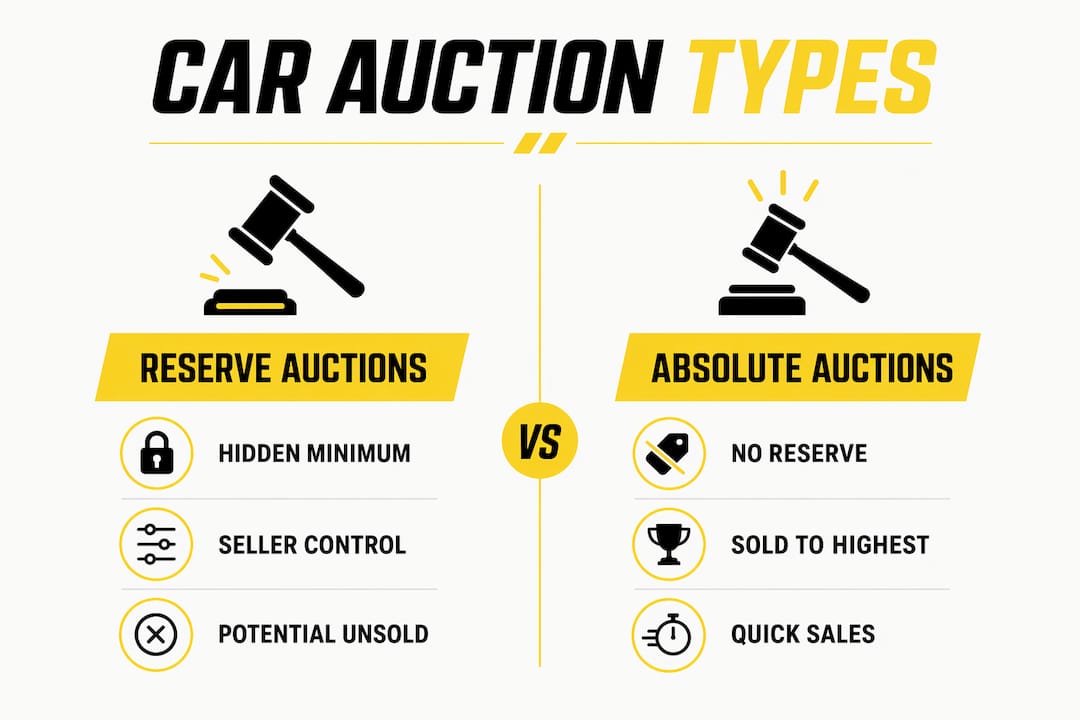
One distinction that cuts across all auction types is the reserve price. A reserve auction sets a hidden minimum the seller must receive before the car sells. If bids fall short, the car goes unsold. A no-reserve auction sells to the highest bidder regardless of price, which can produce genuine bargains or surprise results.
What fees and additional costs should buyers expect?
The hammer price is not the final price. Buyers who budget only for their winning bid routinely get caught short.
Buyer’s premium is the most common added cost. Buyer’s premiums typically range from 8% to 12% of the final hammer price. On a $10,000 car, that adds $800 to $1,200 before you factor in anything else. Government auctions sometimes waive this fee, but confirm before you bid.
State sales tax applies in most states at the same rate as any vehicle purchase. The rate varies by location, so check your state’s DMV rules in advance. Some auctions collect tax at the point of sale; others require you to handle it at registration.
Title, registration, and processing fees add another layer. Auction houses charge document processing fees that range from modest to significant depending on the platform. Title transfer costs vary by state.
Transport and storage fees catch many buyers off guard. If you cannot drive the car off the lot, you need a transport service. Storage fees kick in after the grace period, typically three business days, and accumulate daily. Hidden costs including buyer’s premiums, taxes, transport, and storage can inflate the total purchase price by 15–20% over the hammer price.
Pro Tip: Build a simple cost sheet before bidding. List your max bid, add 12% for the buyer’s premium, add estimated tax and transport, then set that total as your real ceiling.
Certified used car buyers often pay a premium for peace of mind. Understanding why certified cars cost more puts auction pricing in sharper context: you trade warranty protection for a lower entry price at auction.
What strategies help buyers succeed at car auctions?
Winning at auction requires preparation before you ever raise a paddle. The buyers who overpay are almost always the ones who showed up without a plan.
Attend as an observer first. First-time participants should attend as observers to learn the auction cadence, bidding rhythm, and pace before bidding live. One session watching how quickly bids escalate is worth more than any guide you read online.
Set a hard maximum bid and hold it. Auction rooms are designed to create urgency and momentum. Auctioneers use rapid cadences to push competitive bids higher. Decide your ceiling before the auction starts and treat it as fixed. Bidding fever is real and expensive.
Verify vehicle condition beyond the condition report. Relying solely on published condition reports increases buyer risk significantly. Use the preview period to inspect the car in person. Check panel gaps, look under the hood, and scan for rust or fresh paint that might hide repairs. For electric vehicles, review battery health disclosures carefully. Frenzycars covers EV battery lifespan in detail if you are considering an electric auction vehicle.
Know the bidding increments. Most auctions use fixed bid increments, such as $250 or $500 steps. Understanding auction terminology like bidding increments lets you pace your bids and avoid accidentally jumping past your limit.
Arrange post-win logistics in advance. Know whether the car runs before you bid. If it does not, have a flatbed transport booked. Confirm your payment method is accepted. The window between winning and paying is short, and the auction house will not wait.
A test drive is not possible at most auctions, which makes pre-bid research critical. Frenzycars explains why a test drive matters when buying any used vehicle, and the same logic applies to auction research: know the model’s common issues before you bid.
Key Takeaways
The car auction process rewards prepared buyers and punishes impulsive ones. Budget for the full cost, inspect every vehicle you plan to bid on, and set your maximum price before the auctioneer starts.
| Point | Details |
|---|---|
| Register per event | Each auction requires separate registration, a deposit, and proof of funds. |
| Budget beyond the hammer price | Buyer’s premiums, taxes, and transport can add 15–20% to your winning bid. |
| Inspect during preview | Condition reports are guides only. Vehicles sell “as-is” with no warranty. |
| Set a hard bid ceiling | Auction momentum pushes prices up fast. Fix your maximum before bidding starts. |
| Know your auction type | Public, dealer-only, government, and salvage auctions each have different rules and access requirements. |
What I’ve learned watching buyers get burned at auctions
Ramón here. After years of covering automotive markets for Frenzycars, the pattern I see most often is buyers who treat the hammer price as the total price. They win a $9,000 car and walk out having spent $11,500 once the buyer’s premium, tax, and a flatbed truck are added. That gap is not a surprise if you do the math beforehand. Most people simply do not.
The psychological pressure inside an auction room is real and underestimated. I have watched composed, research-ready buyers get swept up in a bidding war over a car they did not even want that badly. The auctioneer’s rhythm is designed to compress your decision-making. The only defense is a number you wrote down before you walked in.
My strongest advice for first-time buyers: go once without bidding. Sit in the room, watch the pace, and notice how quickly a car moves from opening bid to sold. That single session recalibrates your expectations better than any article can. When you return to bid, you will be calmer, faster, and far less likely to overpay.
Research your next auction car with Frenzycars
Before you place a bid, know exactly what you are bidding on. Frenzycars gives you the specs, history context, and category guidance to make that call with confidence. Use the car specs by make and model database to pull detailed technical information on any vehicle you are considering at auction. If you want category-level guidance, the best cars by category pages break down top picks across segments so you can narrow your target list before auction day. Buying an electric vehicle at auction? The EV battery lifespan guide covers real-world degradation data you need before bidding on any plug-in vehicle.