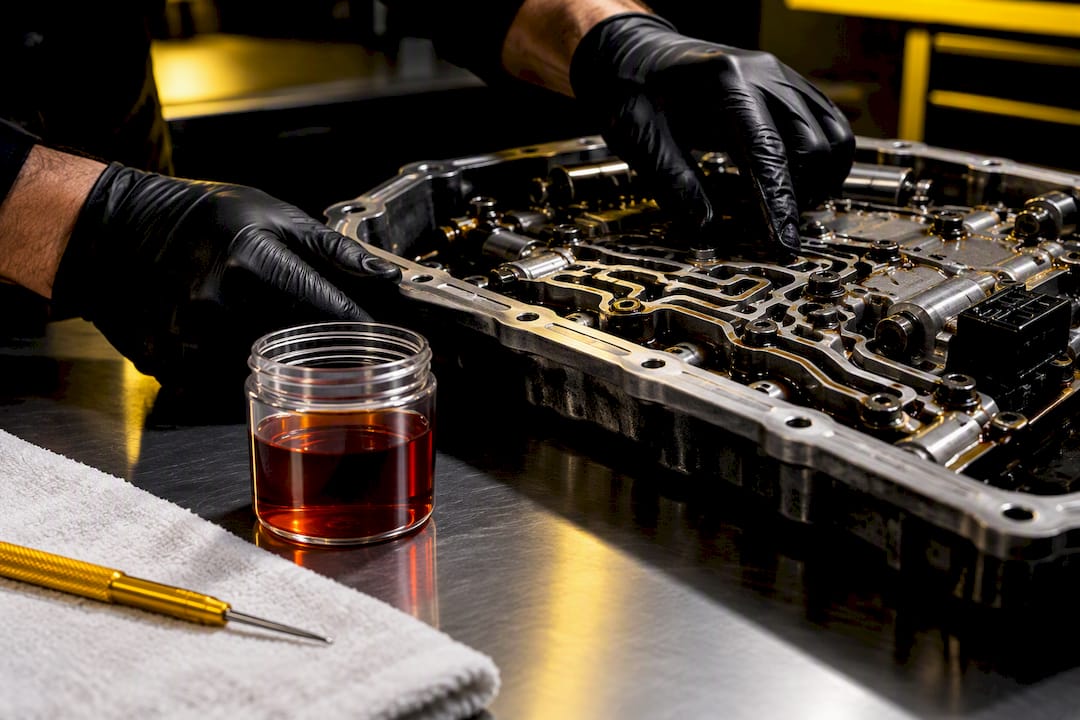
Transmission slipping means the transmission’s clutches or bands can’t hold, so the engine revs but the car doesn’t accelerate the way it should. The most common and most fixable cause is low or degraded transmission fluid, which is why the first move is always the same: check the fluid, then scan for transmission codes before you touch anything else. Don’t drive aggressively until you know which one you’re dealing with.
TL;DR:
- A slipping transmission is most often caused by low or burnt transmission fluid, which can be diagnosed by checking fluid level and condition first.
- Metal shavings or a burnt smell in the fluid indicate internal damage needing professional repair, not just a fluid change.
- Scanning for codes and inspecting the transmission pan can reveal solenoid failures or internal wear that lead to slipping, avoiding unnecessary rebuilds.
- Repair costs escalate quickly from fluid service to clutch pack rebuild, making accurate diagnosis crucial before expensive work.
- Driving should be limited if slipping signs are mild, but stop immediately if there is a burning smell or metal debris to prevent catastrophic failure.
What Does Transmission Slipping Feel Like?
Slipping rarely shows up as one dramatic failure. It usually starts subtle and gets worse over a few weeks or months, which is exactly why so many drivers ignore it until a $3,000 repair becomes a $6,000 rebuild.
Watch for these signs:
- RPM flare: the engine revs up suddenly with no matching increase in speed, especially under acceleration.
- Delayed engagement: a pause between shifting into Drive or Reverse and the car actually moving.
- Gear-specific slip: the car slips only in third gear or only under load, but feels fine otherwise.
- Burning smell: a sharp, acrid odor from overheated fluid or scorched clutch material.
- Check engine or transmission warning light: flashing dashboard lights often mean the transmission control module has already logged a fault.
A burning smell or visible metal shavings in the fluid means the damage has moved past “low fluid” territory. If you see either one, stop driving and arrange a tow rather than risking a total transmission failure on the highway.
What Causes a Transmission to Slip?
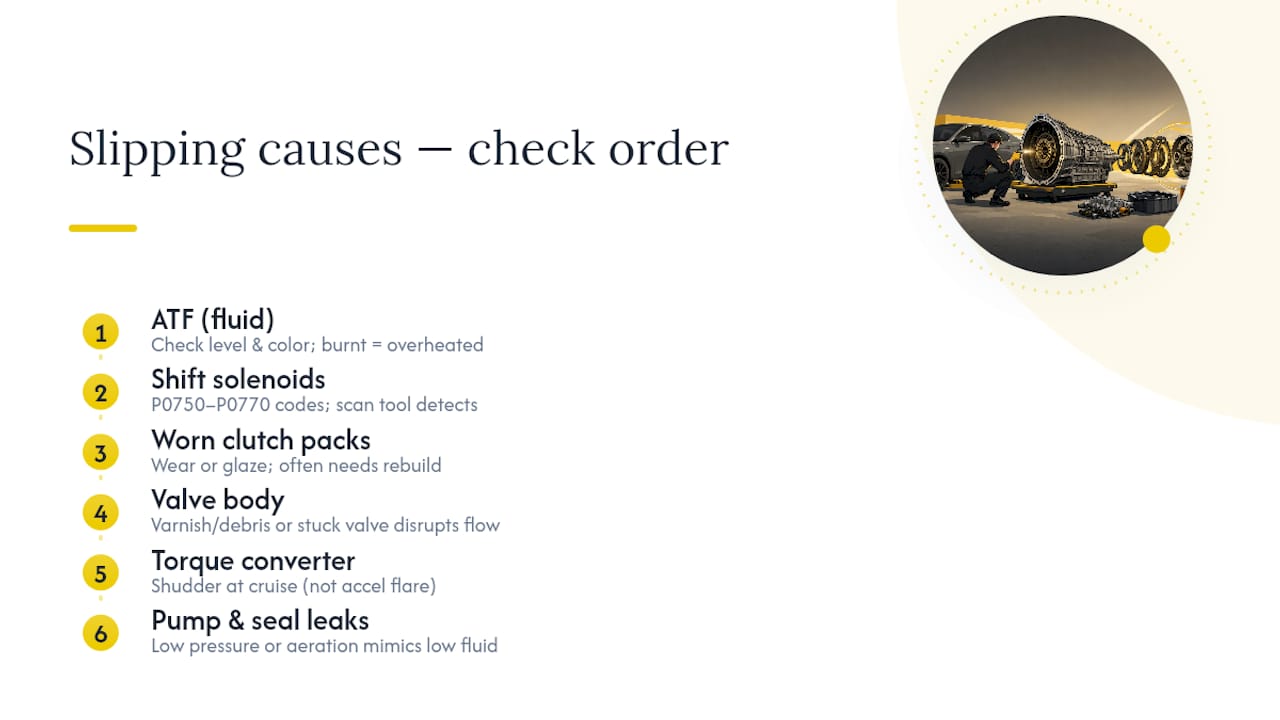
Causes break down roughly in order of how likely they are and how cheap they are to rule out. Start at the top of this list before assuming you need a rebuild.
Low or burnt automatic transmission fluid (ATF) is the leading cause of slipping, and checking fluid level and condition is the most effective early diagnostic step commonly recommended according to technician guides. Healthy ATF is usually red or pink and smells faintly sweet. Fluid that’s brown, black, or smells burnt has likely cooked from overheating, and that heat damage is often what triggers the slip in the first place.
Failing shift solenoids control which gear the transmission engages, and when one sticks or fails electrically, the transmission can slip or shift erratically. These faults typically throw codes in the P0750–P0770 range, and a scan tool will usually catch them before you notice anything else wrong.
Worn clutch packs and bands are the internal friction components that actually do the “holding.” Once they wear thin or glaze over, they slip under load no matter how good the fluid is. This is the failure mode most likely to require a rebuild rather than a quick fix.
Valve body problems happen when varnish, debris, or a stuck valve disrupts hydraulic flow to the clutches, often causing intermittent slipping that comes and goes with temperature.
Torque converter faults are easy to mix up with clutch slip, but they feel different: a bad converter usually causes a shudder at cruising speed (torque converter clutch shudder) rather than a flare during acceleration.
Pump and seal leaks starve the transmission of pressure and can also introduce air into the fluid, a condition called aeration, which behaves almost like low fluid even when the level looks fine.
CVT-equipped vehicles slip differently. Instead of clutch packs, a CVT relies on a steel belt and pulleys, so slipping there often points to belt wear or pulley clamping force problems rather than anything on this list.
Pro Tip: If the fluid smells sweet but the car still slips, don’t assume it’s fine. A sweet smell just means it hasn’t burned yet. Pull a sample onto a white paper towel and check for metal glitter. That’s the tell most drivers miss.
How Do You Diagnose a Slipping Transmission?
Diagnosing this correctly means working from cheapest and fastest to most invasive. Skipping steps is how people end up paying for a rebuild they didn’t need.
- Check fluid level and condition first. Pull the dipstick or check the sight glass, and look at both color and smell. This single step, confirmed by real-world repair guides, resolves a large share of slipping complaints on its own.
- Scan for OBD-II and TCM codes. Look specifically for P0730 (incorrect gear ratio) and the P0750–P0770 solenoid range. Pending codes often show up before the check engine light does, so a scan can catch a problem early.
- Inspect the pan for debris. Fine gray dust is normal wear. Larger metal flakes or chunks mean clutch or band material is breaking down internally.
- Run a hydraulic pressure test. This is the test that actually separates a pump or seal problem from a gear-specific clutch failure, and it’s the most definitive diagnostic step available short of a teardown.
- Test solenoid resistance and inspect the valve body. Some solenoids fail without ever setting a code, so comparing live data against spec is the only way to catch a marginal one.
- Stop DIY here. Pressure testing and valve body inspection require shop equipment. If steps 1 through 3 don’t explain the slip, it’s time for a professional.
What Are the Fixes and What Do They Cost?
Repair paths escalate fast, so getting the diagnosis right up front matters more here than almost anywhere else in car ownership.
- Fluid and filter service: cheap and often effective if the fluid is simply low or dirty, but not burnt.
- Solenoid replacement: moderate labor cost, usually the most affordable fix once a specific code points to it.
- Valve body service or replacement: pricier, since it often requires significant disassembly.
- Torque converter replacement: expensive, and contamination from a failing converter can spread metal debris through the whole system.
- Clutch pack rebuild: this is where cost jumps hardest, since it usually means the transmission comes out of the car entirely.
A full flush isn’t always the right first move. If clutch material has already started burning, replacing the fluid can temporarily worsen slipping as fresh ATF strips away the varnish that was helping the worn clutches grip. That’s one reason a shop may hold off on a flush until they’ve confirmed there’s no internal burnout. Topping off fluid is a stopgap, not a fix, if there’s an active leak. Document when the symptoms started and any codes you’ve pulled before your shop visit. It speeds up diagnosis and gives you a paper trail if a warranty claim is on the table.
Diagnostic Checklist
Run it in this order: confirm the symptom, check the fluid, scan for codes, inspect the pan, then pressure test. Most misdiagnoses happen when a shop skips straight from “slipping” to “rebuild” without doing steps two through four first.
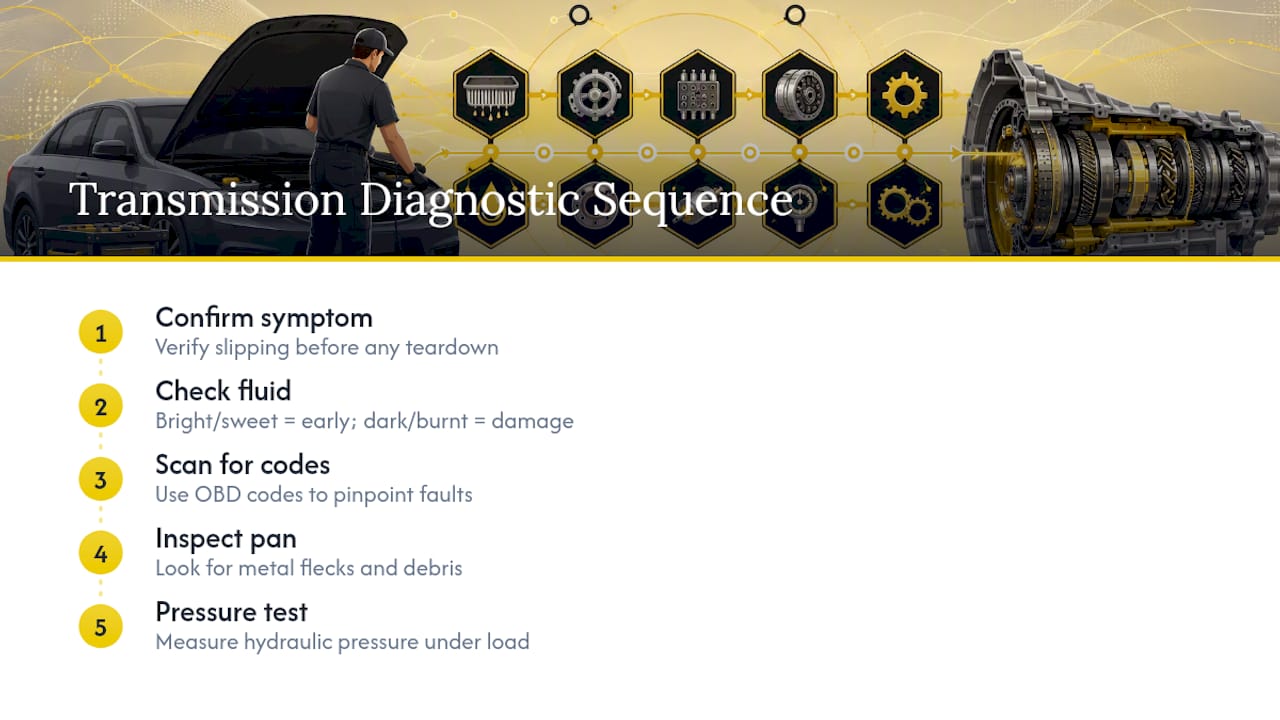
Pro Tip: Dark fluid with a burnt smell and metal flecks in the pan means you’re looking at internal damage, not a simple service. Bright, sweet-smelling fluid with no debris usually means you caught it early. For deeper reading on related warning signs, see our guide on flashing check engine lights and how scheduled maintenance prevents fluid breakdown before it starts.
What Mechanics Get Wrong About Diagnosing a Slip
The three biggest misdiagnosis traps: skipping the pressure test and guessing instead, flushing fluid that’s already carrying burnt clutch material, and assuming a rebuild before anyone’s even pulled a code. Pick a shop that leads with diagnostics, not estimates. Write down when the slip happens and any warning lights before you arrive.
Keep Your Transmission in Check
Fluid breakdown rarely happens in isolation. It tends to follow the same neglected habits: skipped oil change intervals, ignored overheating, and maintenance schedules pushed past their due dates. A routine maintenance checklist catches most of this before it becomes a slip in the first place.
If a slip has already turned into a repair bill big enough to make you consider a different car, Frenzycars’ car specs by make and model page is a solid place to compare reliability and transmission history before you buy your next vehicle.
Sources
- P0730 code (Incorrect Gear Ratio) — Rohnert Park Transmission
- How to Diagnose a Slipping Transmission: A DIY Guide — Expert Auto Guide
- Transmission slipping: causes, symptoms, and possible fixes — Ricks Free Auto Repair Advice
- How to Diagnose Transmission Slipping: Complete Troubleshooting Guide — Gearbox Insider