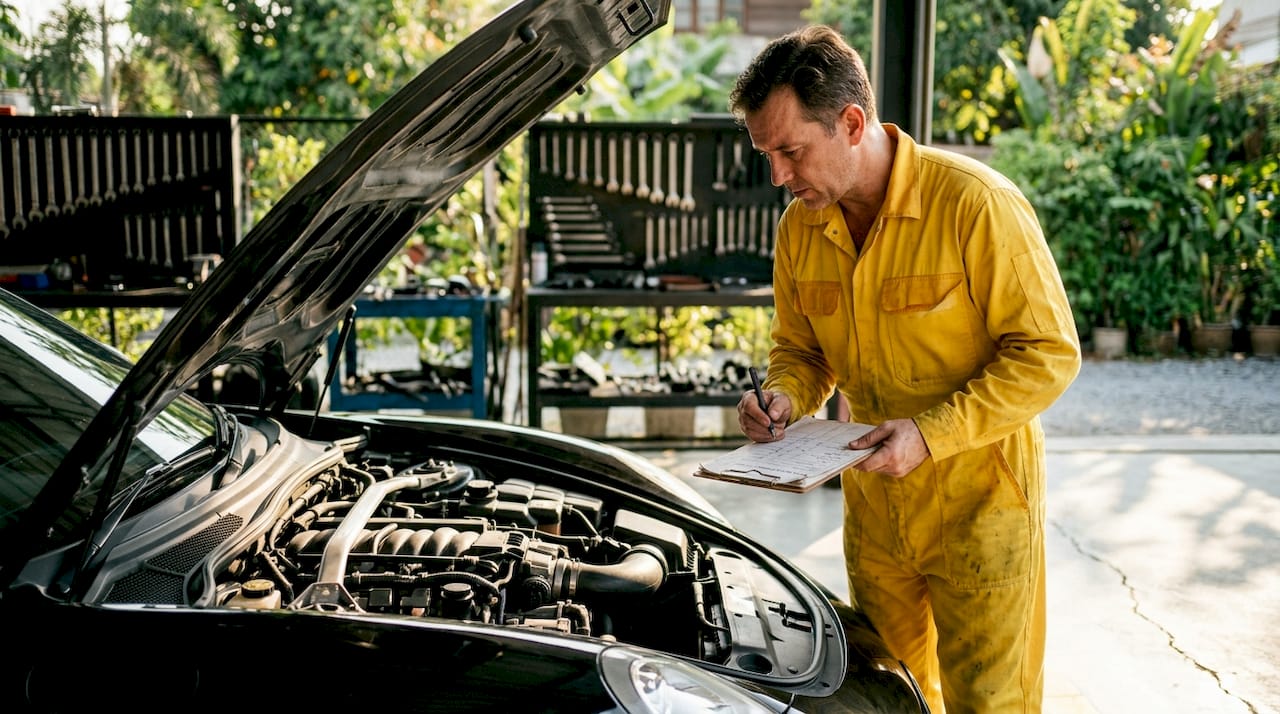
TL;DR:
- Performance car maintenance requires frequent inspections, fluid changes, and component checks to handle high stress. Regular servicing, documentation, and pre- and post-track checks help prevent failures and maintain vehicle value. Neglecting timely maintenance risks costly repairs, especially for high-performance vehicles driven hard.
A performance car maintenance checklist is the structured set of inspections, fluid changes, and component checks required to keep a high-performance vehicle operating at its mechanical limits. Unlike a standard vehicle maintenance schedule, performance car upkeep demands shorter service intervals, tighter tolerances, and more frequent attention to wear components. High-performance engines generate more heat, absorb more stress, and degrade consumables faster than everyday commuter cars. The difference between a well-maintained sports car and a neglected one shows up first in lap times, then in repair bills.
1. What goes on a performance car maintenance checklist?
A complete performance car maintenance checklist covers six core categories: fluids, brakes, tires, belts and hoses, suspension fasteners, and annual diagnostics. Each category has its own service interval, and those intervals tighten significantly for track-driven cars. The industry standard for spirited road use calls for a full service every 6,000–8,000 km or every 6 months, whichever comes first. That cadence is roughly twice as frequent as most manufacturer schedules for standard vehicles, which reflects the real thermal and mechanical load a performance engine carries.
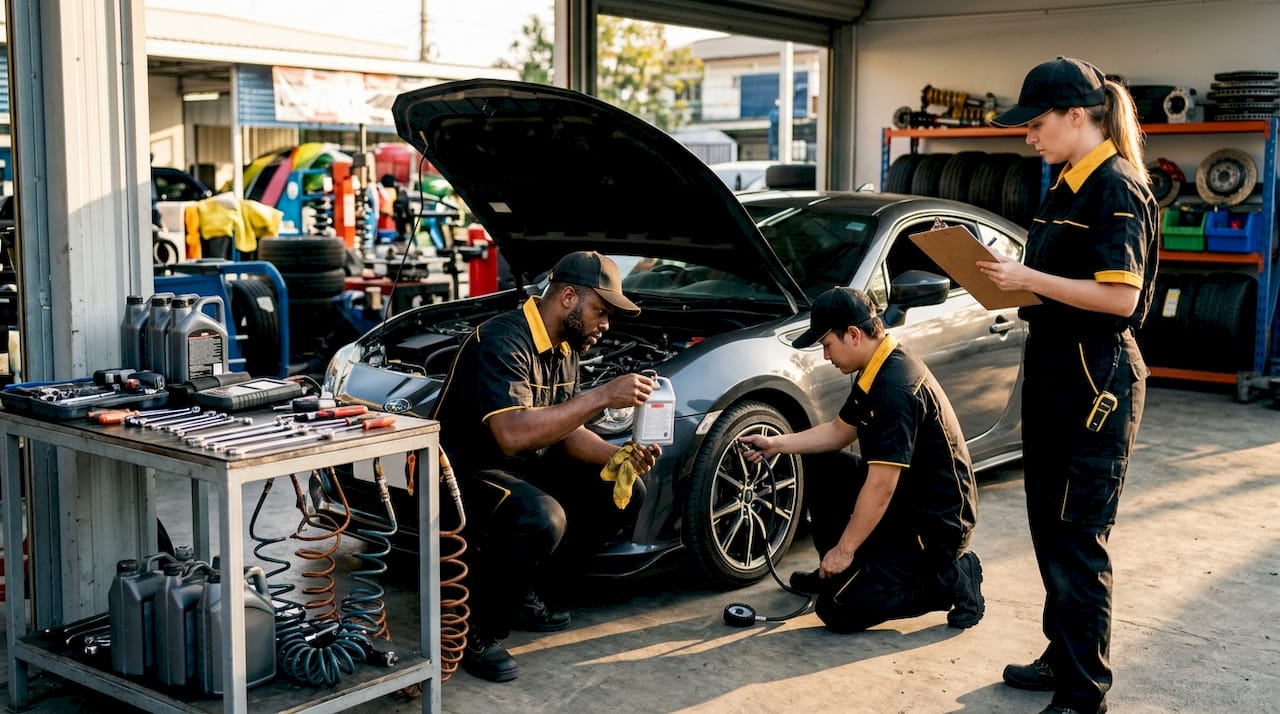
Track-driven cars push those intervals even shorter. The same source recommends a full service every 5,000 miles for cars that see regular circuit use. Owners who treat their car as a dual-purpose road and track machine should plan two full services per year at minimum, with targeted checks before and after every track event.
2. Critical fluid checks and changes for performance cars
Fluids are the single most time-sensitive item on any sports car service guide. Heat degrades oil, brake fluid, and coolant faster in high-performance applications than in standard driving, and degraded fluid is the most common root cause of preventable failures.
Engine oil is the first priority. Road-driven performance cars need oil changes every 6,000–8,000 km, and track cars every 5,000 miles. Using the manufacturer-specified viscosity grade is non-negotiable. Substituting a cheaper oil to save money at service time costs far more when bearings fail.
Brake fluid absorbs moisture over time, which lowers its boiling point. Brake fluid should be flushed every 1–2 years for road use, and annually for any car that sees track days. On a circuit, brake temperatures can exceed 600°F. Degraded fluid boils under that load, causing brake fade at the worst possible moment.
Coolant requires an annual pressure test and a full flush every 3–5 years with modern long-life coolant. Coolant system pressure tests catch failing hoses, weak radiator caps, and early head gasket issues before they become catastrophic. A failed coolant system at track speed can destroy an engine in minutes.
Transmission and differential fluid are often overlooked. Both absorb heat from aggressive driving and break down over time. Check the manufacturer’s interval and treat it as a maximum, not a target.
- Engine oil: every 6,000–8,000 km or 6 months (road); every 5,000 miles (track)
- Brake fluid: every 1–2 years; annually if tracked
- Coolant: annual pressure test; full flush every 3–5 years
- Transmission fluid: per manufacturer interval, inspected annually
- Differential fluid: inspected at each major service
Pro Tip: Pull a small sample of your engine oil between changes and rub it between your fingers. Gritty texture or a dark metallic sheen signals accelerated wear and warrants an early oil analysis.
3. Brakes, tires, belts, and hoses: the wear item inspection
Wear items degrade on a curve, not a cliff. The goal of a regular car performance inspection is to catch wear before it becomes a safety issue, not after.
Brakes
Brake pads typically last 20,000–30,000 miles under normal spirited road use. Track driving can cut that figure dramatically, sometimes to a single event. Check pad thickness at every tire rotation. Most performance pads have a wear indicator groove; once the pad reaches that groove, replacement is immediate.
Rotors show wear through scoring, heat cracking, and thickness variation. Run a micrometer across the rotor face at four points. Variation beyond the manufacturer’s discard tolerance means the rotor warps under braking load.
Tires
Tire pressure on a performance car is not a set-and-forget task. Cold pressure should match the manufacturer’s recommendation. After a spirited run, hot pressure will read higher. That delta tells you whether your baseline setup is correct. Tread depth below 2/32 inch is a legal minimum; performance driving demands replacement well before that point.
Tire age matters as much as tread depth. Rubber compounds harden after 5–6 years regardless of mileage. A tire with full tread but cracked sidewalls is a failure waiting to happen.
Pro Tip: Mark your tires with a chalk pen before a track day. After the session, the wear pattern tells you exactly how the car is loading each corner, which is data no sensor can give you as cheaply.
Belts and hoses
Serpentine belts and coolant hoses age from heat cycling, not just mileage. Inspect for cracking, glazing, and soft spots at every major service. Timing belts on interference engines follow a strict replacement schedule; missing that interval by even a few thousand miles risks catastrophic valve damage.
| Component | Inspection frequency | Replacement trigger |
|---|---|---|
| Brake pads | Every tire rotation | At wear indicator groove |
| Brake rotors | Every major service | Thickness variation or cracking |
| Tires | Monthly and pre-track | Age over 5–6 years or tread below 2/32 in |
| Serpentine belt | Every major service | Cracking, glazing, fraying |
| Coolant hoses | Every major service | Soft spots, cracking, swelling |
4. Pre-track and post-track maintenance steps
Track driving is the highest-stress event a performance car experiences. A dedicated pre-track and post-track protocol is not optional for owners who want to avoid failures on circuit.
Before the track:
- Verify all fluid levels: engine oil, brake fluid, coolant, and power steering fluid.
- Check tire pressure cold and adjust to the manufacturer’s track recommendation.
- Inspect brake pad thickness and rotor condition visually.
- Torque-check suspension and chassis bolts using a calibrated torque wrench. High G-forces loosen fasteners that feel tight on the road.
- Apply torque seals or paint marks to critical fasteners. This makes post-event visual inspection fast and reliable.
- Confirm that no warning lights are active and that the OBD port shows no stored fault codes.
After the track:
- Let the car cool completely before checking brake fluid. Hot fluid gives a false boiling point reading.
- Re-inspect pad thickness. A single aggressive track day can consume significant pad material.
- Check all torque seals and paint marks for rotation, which signals a loosened fastener.
- Inspect tires for blistering, chunking, or abnormal wear patterns.
- Document all measurements: pad thickness, tire pressure readings, and any fastener findings. Written records build a baseline that reveals trends over time.
Pro Tip: Take a photo of your torque seals and brake pads before every track day. After the event, a side-by-side comparison takes 30 seconds and catches issues that a visual inspection alone misses.
5. Annual and long-term maintenance for high-performance cars
Annual inspections matter most for low-mileage performance cars. Neglect, not mileage, causes the most component degradation in performance vehicles. A car driven 2,000 miles per year still needs annual service because fluids absorb moisture, rubber dry-rots, and seals harden regardless of how little the car moves.
The annual service for a high-performance car should include:
- Coolant system pressure test and visual inspection of all hoses
- Spark plug inspection and replacement per manufacturer schedule
- Timing belt or chain inspection with replacement if near interval
- Full brake system inspection including caliper slides and hardware
- Rubber component audit: bushings, CV boots, brake hoses, and engine mounts
- Battery load test and terminal inspection
Advanced diagnostics add a layer of detection that standard compression tests miss. Leak-down tests, borescope inspections, and lab-based used oil analysis reveal early engine wear before it becomes a failure. A leak-down test measures how well each cylinder holds pressure; a borescope lets a technician visually inspect cylinder walls and valve seats without disassembly. Used oil analysis from a lab identifies metal particles that indicate bearing or ring wear.
| Diagnostic tool | What it detects | When to use |
|---|---|---|
| Leak-down test | Cylinder sealing loss | Annually or after hard track use |
| Borescope inspection | Cylinder wall and valve condition | Every 2 years or post-incident |
| Used oil analysis | Metal particle contamination | At every oil change for track cars |
| Coolant pressure test | Hose and head gasket integrity | Annually |
Record keeping ties the whole annual process together. A maintenance log with dated entries, measured values, and photos gives any specialist the full picture of the car’s history. It also protects resale value, as documented maintenance history is one of the strongest factors in a performance car’s trade-in price.
Key takeaways
A disciplined performance car maintenance checklist, built around short fluid intervals, documented measurements, and dedicated pre-track and post-track checks, is the most reliable way to prevent failures and protect long-term vehicle value.
| Point | Details |
|---|---|
| Service intervals are shorter | Performance cars need full service every 6,000–8,000 km or 6 months on the road. |
| Brake fluid is time-critical | Flush every 1–2 years on the road; annually for any car that sees track use. |
| Neglect beats mileage as a risk | Low-mileage cars still need annual service to prevent fluid contamination and rubber degradation. |
| Document every measurement | Recording pad thickness, torque checks, and tire data builds a baseline for early fault detection. |
| Advanced diagnostics catch hidden wear | Leak-down tests and used oil analysis reveal engine wear that standard checks miss. |
Why I think most performance car owners service too late
The most common mistake I see is owners treating their performance car like a daily driver and following the same 10,000-mile oil change sticker. That approach works fine for a commuter. For a car that sees track days, canyon runs, or even just regular hard acceleration, it is a slow path to expensive repairs.
The second mistake is skipping documentation. Independent specialists who work on European performance cars consistently say that owners who bring in detailed service records get faster, more accurate diagnoses. A technician who can see that brake pad thickness dropped 3mm in one track event knows something about that car’s driving style immediately.
My honest recommendation: choose an independent specialist with brand-specific training over a dealer for routine work. The technical depth is often equal or better, and the cost advantage is real. Save the dealer for warranty claims and software updates.
The owners who get the most from their performance cars are not necessarily the ones who spend the most. They are the ones who service consistently, document religiously, and treat the pre-track checklist as non-negotiable. A car that is well-documented and regularly serviced also holds its value far better when the time comes to sell. That discipline pays off twice.
Frenzycars: your resource for performance car upkeep
Frenzycars covers the full spectrum of performance car ownership, from track-day prep to long-term maintenance strategy. The Frenzycars maintenance hub brings together service guides, expert breakdowns, and real-world advice written specifically for enthusiasts who drive their cars hard. Whether you are building a pre-track checklist for the first time or refining a multi-year service log, Frenzycars has the depth you need. The site also tracks how preparation and engineering translate to real-world performance, as seen in coverage of the Ford Mustang GTD’s Nürburgring prep. Bookmark it as your go-to reference between service intervals.