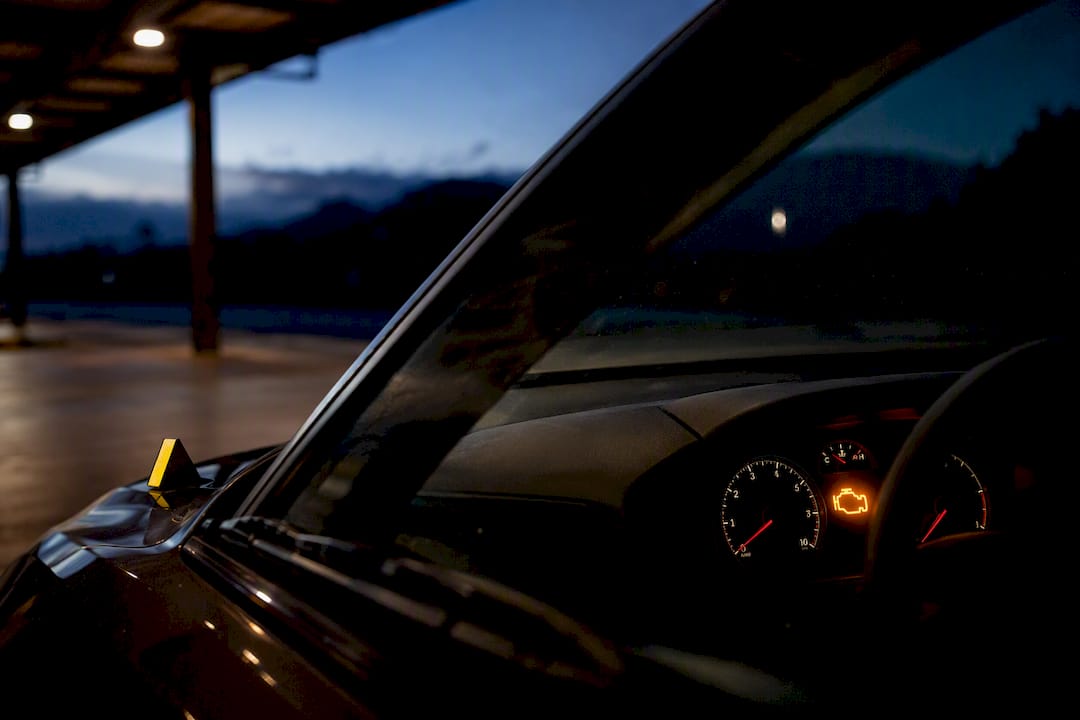
A flashing check engine light means your engine is misfiring badly enough to damage the catalytic converter within minutes, not hours. Pull over safely as soon as you can, cut the engine off, and call for a tow. Do not keep driving to “see how far you can make it.” That decision alone can turn a $150 spark plug fix into a $2,500 catalytic converter replacement.
TL;DR:
- A flashing check engine light indicates a severe misfire that can quickly damage the catalytic converter and requires immediate vehicle shutdown and towing.
- The most common causes include failed ignition coils, fouled spark plugs, stuck fuel injectors, and vacuum leaks, which a professional scan can confirm.
- Performing a five-minute restart test helps determine if the misfire was transient and safe to drive slowly to a repair shop or requires an immediate tow.
- Delaying repairs significantly increases the risk of expensive catalytic converter replacements, which can cost up to $2,500, and possible internal engine damage.
- Do not attempt to continue driving or ignore the flashing light; always get a professional scan and follow proper diagnostic procedures before taking further action.
Check Engine Light Flashing vs. Steady: Why the Difference Matters
Your engine control module (ECM) reads crankshaft speed dozens of times per second, watching for cylinders that fire late or not at all. When the misfire rate crosses a threshold your manufacturer calibrated to protect the catalytic converter, the light flashes instead of glowing steady. That distinction isn’t cosmetic. It’s the ECM telling you the damage clock has already started.
A steady check engine light usually means something slower and less urgent: a loose gas cap, an aging oxygen sensor, or an emissions component drifting out of spec. You can often finish your drive and get it checked within a few days. A flashing light is a different animal entirely.
What tends to show up with each:
- Steady light: Slightly reduced fuel economy, a faint check-engine smell of rich exhaust, no real change in how the car drives.
- Flashing light: Rough idle, a shudder you can feel through the seat, noticeable power loss, sometimes a raw gasoline smell from unburned fuel hitting the exhaust.
If you’re feeling the car misbehave while the light blinks, that’s your engine confirming what the dashboard already told you.
What’s Actually Causing the Misfire
Almost every flashing check engine light traces back to an engine misfire, and the ECM logs it under a specific code family. P0300 means random or multiple cylinder misfire. Codes P0301 through P0306 point to a specific cylinder (P0301 is cylinder one, P0302 is cylinder two, and so on). These are the codes a mechanic will pull first, and they narrow the search fast.
The usual suspects, in roughly the order shops find them:
- Failed ignition coil. Coils wear out from heat cycling and often fail one at a time, which is why a single-cylinder code like P0302 is so common.
- Fouled or cracked spark plug. Oil-fouled, worn, or physically cracked plugs can’t produce a consistent spark, especially under load.
- Stuck-open fuel injector. An injector that won’t close floods a cylinder with fuel, drowning the spark and raising unburned hydrocarbons downstream.
- Vacuum leak. A cracked hose or bad intake gasket lets in unmetered air, throwing off the air-fuel ratio enough to trigger a misfire on one or more cylinders.
A rough idle that smooths out at higher RPM often points to a coil or plug. A car that shudders under acceleration and smells like raw fuel leans toward an injector. A hissing sound near the intake, paired with an unstable idle, usually means a vacuum leak. None of this replaces a scan tool, but it gives you language to use when you call a mechanic or tow driver.
What to Do in the First Five Minutes
You don’t need a mechanic’s toolbox to protect your car right now. You need a short, ordered checklist.
- Ease off the accelerator and reduce speed gradually. Don’t slam the brakes or swerve.
- Signal and move to the shoulder or a parking lot as soon as it’s safe.
- Turn off the air conditioning. It adds load the engine doesn’t need right now.
- Shut the engine off completely.
- Wait five minutes, then restart once and watch the dashboard.
Here’s how to read that restart: if the check engine light comes back on steady (not flashing) and the engine idles normally, the misfire may have been a transient event, and a slow, careful drive to the nearest shop is reasonable. If the light flashes again, stop and call a tow. Don’t restart a second or third time hoping it clears. Repeated restarts don’t fix the underlying misfire, they just add more damaging cycles to the converter.
There are exceptions where you skip the restart test entirely. A strong smell of raw fuel, any visible smoke, or obvious physical damage under the hood means you leave the engine off and call for help immediately.
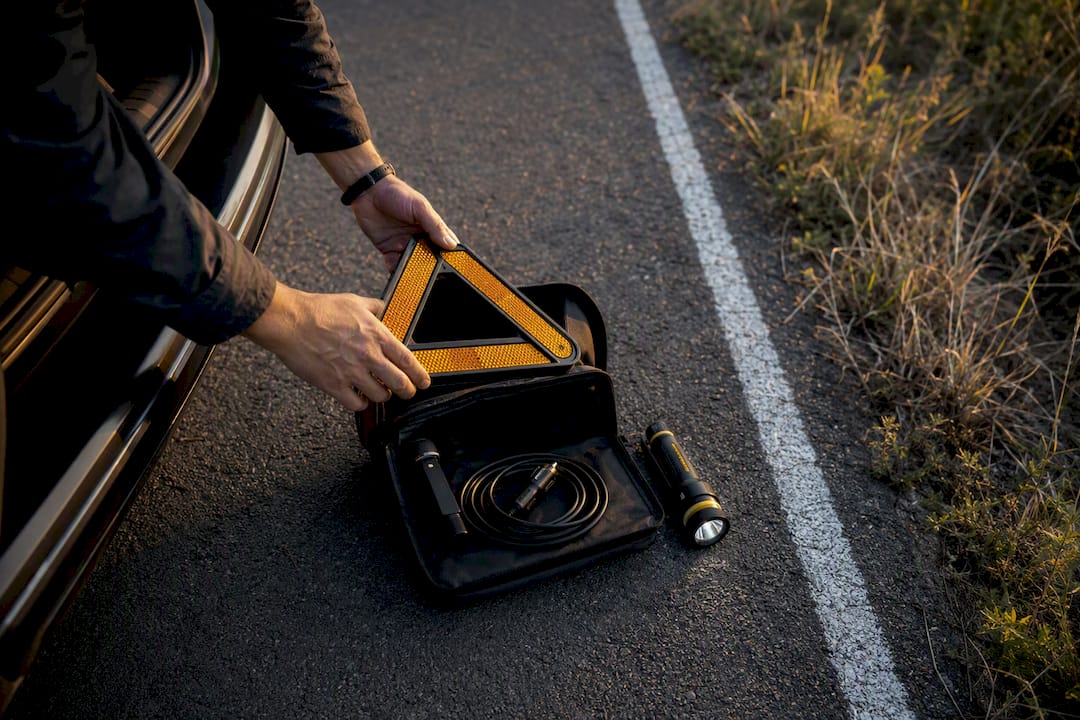
Pro Tip: Keep a basic emergency kit in the trunk, reflective triangles, a flashlight, and a phone charger, so pulling over safely at night or on a highway shoulder doesn’t add a second risk on top of the first.
How a Shop Actually Diagnoses a Flashing Light
A technician’s first move is plugging in a scan tool to pull the stored code, and P0300 is the one that demands the most attention because it points to random or multiple misfires rather than one clean cylinder. That randomness matters. It usually rules out a single bad coil and points toward something systemic, like fuel delivery or a vacuum leak affecting more than one cylinder.
Beyond the basic code, technicians pull Mode 06 data, which shows per-cylinder misfire counts over recent drive cycles. That’s the difference between “the light is on” and “cylinder three has fired incorrectly 340 times in the last ten minutes.” A professional tuner reading ECU data this way can isolate a fault far faster than guesswork.
Common shop triage, once the code is pulled:
- Swap coil-on-plug units between cylinders to see if the misfire follows the coil.
- Pull and inspect spark plugs for fouling, wear, or cracked porcelain.
- Check fuel pressure and injector balance across cylinders.
- Test for vacuum leaks with a smoke machine or propane test.
Clearing the code without fixing the cause, or just driving more in hopes it goes away, erases the freeze-frame data the ECM captured at the moment of failure. That data is often the fastest path to a correct diagnosis, and once it’s gone, the shop is back to guessing.
How Fast the Damage Happens, and What It Costs
A severe misfire dumps unburned fuel into the exhaust stream, where it ignites inside the catalytic converter instead of the cylinder. Converter substrate temperatures can spike past 1,600°F under these conditions, and some technical analyses describe structural damage happening within seconds to minutes under heavy load. This isn’t a slow-burn problem you can put off until next weekend.
The cost of waiting: Catalytic converter replacement typically runs $800 to $2,500 depending on the vehicle, plus oxygen sensor replacement in the $150 to $300 range if the sensors get fouled in the process.
Beyond the converter itself, a prolonged misfire raises emissions output, fouls downstream sensors, and in extreme cases can cause internal engine damage or a fire risk from raw fuel igniting somewhere it shouldn’t. None of that is reversible once it happens, which is the entire reason the flashing light exists in the first place.
Can I Drive a Short Distance With the Light Flashing?
Sometimes, but only under narrow conditions. A very short move, think under two miles at low speed, might be acceptable if you’re clearing a dangerous spot like a highway lane or a blind curve and a safer pull-off is close by.
Run the restart protocol first: shut off the engine, wait five minutes, restart, and watch what happens.
- If the light comes back steady and the engine idles smoothly, a slow crawl to safety is reasonable.
- If flashing returns, stop again and wait for a tow.
- If you smell fuel, hear knocking, or the engine hesitates under light throttle, don’t move the car at all, even a few feet under its own power.
A temporary improvement after restarting doesn’t mean the problem solved itself. It means the misfire dropped below the threshold for that moment, and it can return the second you put the engine back under load.
Expert advice: Get the Scan Before You Guess
Many automotive media outlets cover dashboard warnings that panic drivers unnecessarily, but a flashing check engine light isn’t one of them. Treat it as an emergency the same way you’d treat a flashing TPMS warning: stop, assess, and don’t gamble on a short drive being fine.
Once the car is safely towed, resist the urge to start swapping parts based on a YouTube video. A proper scan with per-cylinder misfire data tells a technician exactly where to look, which saves you from paying for parts you didn’t need. If you want to avoid the next emergency, our performance car maintenance checklist covers the plug, coil, and vacuum-line inspections that catch these problems before they turn into a roadside call.
Where to Dig Deeper on Codes and Repair Costs
For the technical detail behind the misfire-to-catalyst-damage relationship, the P0300 severity and catalyst risk breakdown walks through exactly how the ECM calibrates that flashing threshold. If you want the full code definition and repair path, the OBD-II P0300 reference guide lays out what per-cylinder data and freeze-frame values actually tell a technician. Both are worth bookmarking before your next shop visit, not after.
Why the “Just Drive Slow” Advice Is Backwards
Most drivers treat a flashing check engine light like a suggestion. It’s not. The instinct to baby the throttle and nurse the car home comes from a reasonable place, nobody wants to pay for a tow, but it misunderstands what’s actually happening under the hood. A misfire severe enough to flash the light doesn’t get gentler at lower speeds. It just takes a little longer to cook the converter.
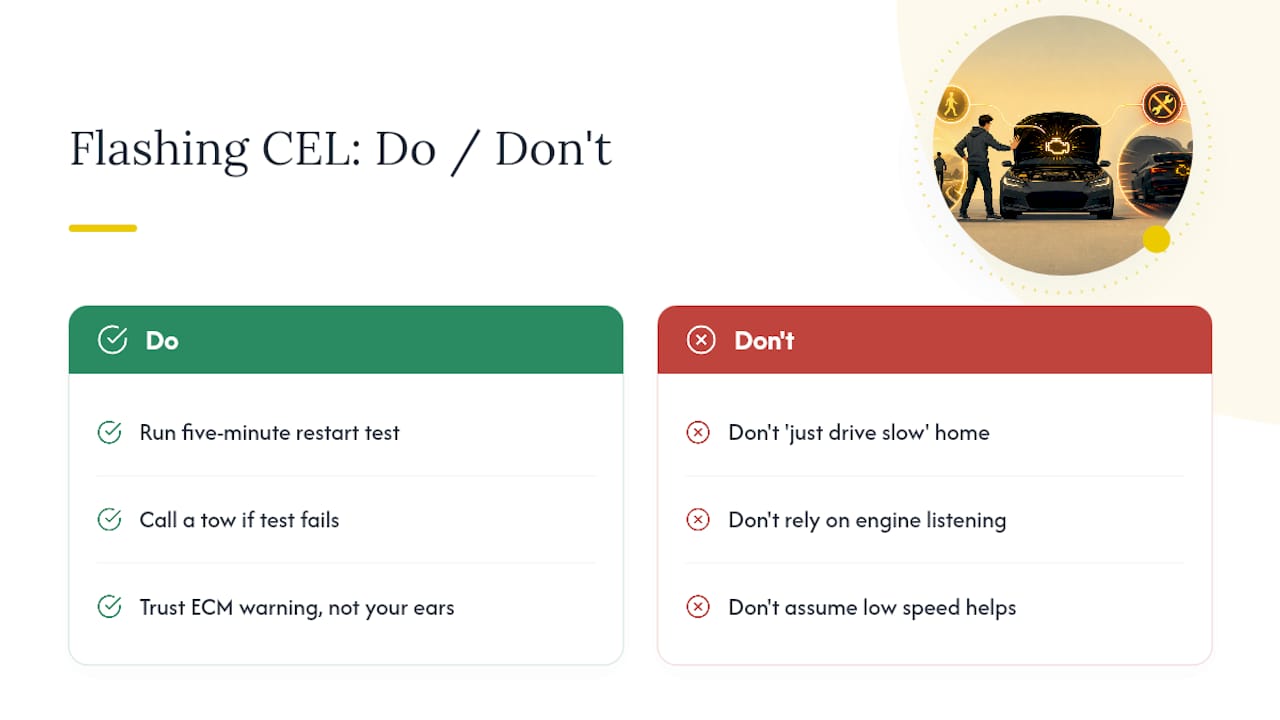
The conventional advice you’ll find scattered across forums, “listen to the engine, and if it sounds okay, keep going”, ignores that the ECM already did the listening for you, using sensor data far more precise than your ears. That’s the entire point of the flashing threshold: it’s not a guess, it’s a calibrated warning tied to real damage risk.
If there’s one thing worth prioritizing here, it’s the five-minute restart test. It’s simple, it’s free, and it gives you real information instead of a hunch. Skip the guessing, run the test, and let the result decide whether you drive on or call the tow truck.
Sources
- Can I Drive With Blinking Check Engine Light? Short Answer - Steer
- Flashing Check Engine Light: Why You Should Stop Driving Immediately | GearMedic