Xpeng Doubles Down on Tesla’s Abandoned Playbook
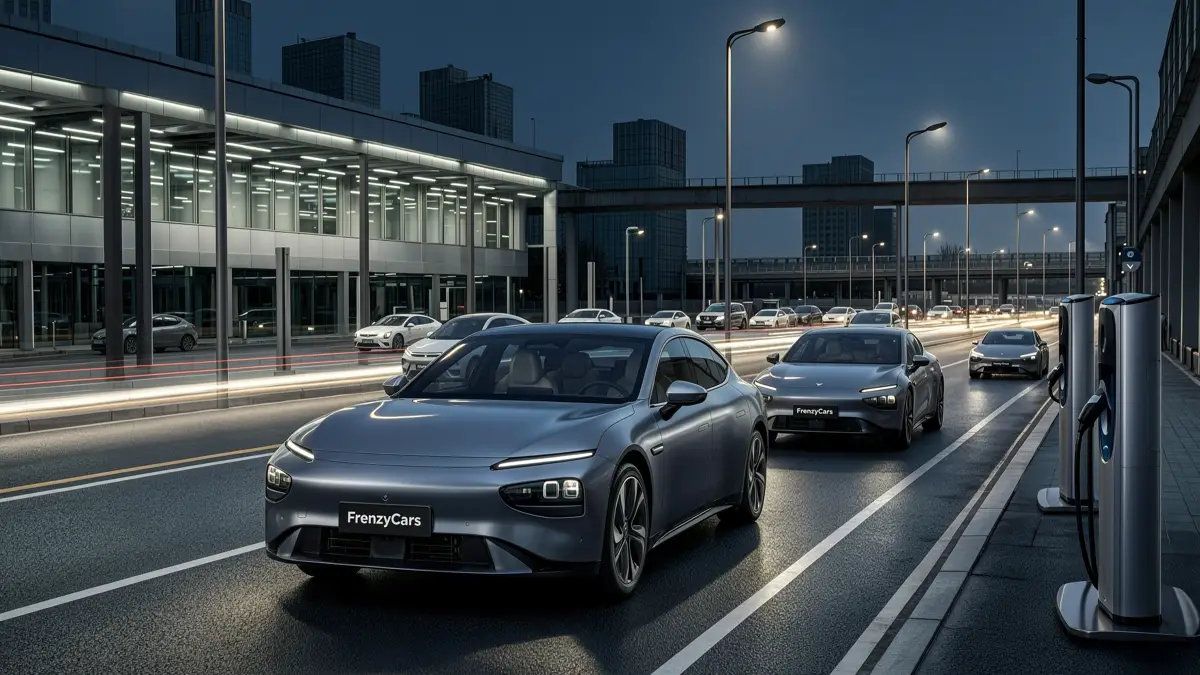
Tesla has long insisted that cameras alone are sufficient for full self-driving, but now it has a major rival in China that agrees wholeheartedly. According to a report from CleanTechnica, Xpeng is aiming to go head-to-head with Tesla in the European market by sticking to a vision-only self-driving architecture. While most of the industry has concluded that radar and/or lidar sensors are necessary supplements to cameras, Xpeng has followed Tesla’s lead by betting the farm on a pure camera-based system.
This is a significant strategic move for European buyers. Xpeng has been quietly developing its autonomous driving tech in lockstep with Tesla’s philosophy for several years. By bringing this system to Europe, Xpeng is promising a level of autonomous capability that competes directly with Tesla’s Full Self-Driving (FSD) suite, but potentially at a different price point. For the enthusiast who values high-tech autonomy as much as sheer performance, this creates a genuine alternative to the Model 3 and Model Y in a market where Tesla has historically dominated the premium EV conversation.
California’s MyFirstEV Program Tilts the Home-Field Advantage
Just as Tesla faces a new threat overseas, a policy shift in its home state of California is shaking up the local playing field. According to a report from TeslaNorth.com, Governor Gavin Newsom signed SB 168 into law on Monday, establishing the MyFirstEV program. The initiative provides a $3,500 upfront rebate on new electric vehicles specifically for first-time EV buyers, with the discount applied immediately at the dealership.
The catch? The report indicates that this program specifically favors automakers like Rivian and Lucid over Tesla. While the exact qualifying price thresholds or vehicle specifications that create this disparity were not detailed in the summary, the implication is clear: California’s new rebate structure is designed to funnel new buyers toward brands that are not Tesla. For Tesla, which has long relied on its California stronghold to move volume, this represents a regulatory headwind that could push first-time buyers toward the competition. FrenzyCars readers shopping for their first EV should pay close attention to which models qualify for this instant discount before signing on the dotted line.
Robotaxis in Miami: A Milestone Achievement Meets Mounting Scrutiny
Tesla’s commercial robotaxi operations are growing fast, but so is the pushback from regulators. The company launched its commercial autonomous ride-hailing network in Miami this week, marking its fifth metropolitan market deployment and the first expansion outside Texas and California. This is a genuine milestone for Tesla’s autonomy program and signals that the company is serious about scaling its robotaxi fleet.
However, the expansion comes with major safety questions. The National Highway Traffic Safety Administration (NHTSA) is actively scrutinizing robotaxi safety, documenting multiple instances of autonomous vehicles driving into active emergency scenes and blocking first responders. NHTSA has stated that an autonomous vehicle which cannot safely interact with emergency scenes represents a fundamental safety risk. In Washington, DC, a Tesla representative told lawmakers earlier this week that the company is now developing a purpose-built, wheelchair-accessible autonomous vehicle. This reveals a dual focus: scaling commercial operations today while planning for a more accessible fleet in the future.
For the enthusiast crowd, the Miami launch is exciting, but the combination of rapid expansion and documented safety issues with emergency vehicles means this story is far from over. Tesla is clearly betting its future on autonomy, but the path from Miami to mass-market acceptance runs straight through the regulatory and safety gauntlet that NHTSA is building.
The Big Picture for Enthusiasts and Buyers
Tesla is facing an increasingly complex landscape in 2026. A determined competitor is mimicking its core tech strategy in Europe, its home state is tweaking incentives to favor rivals, and its flagship robotaxi program is battling real safety hurdles as it expands. For anyone following the pulse of performance, these three developments paint a picture of an automaker that remains a dominant force, but one that can no longer afford to fight on a single front. The coming months in Miami, California, and Europe will be crucial to watch.