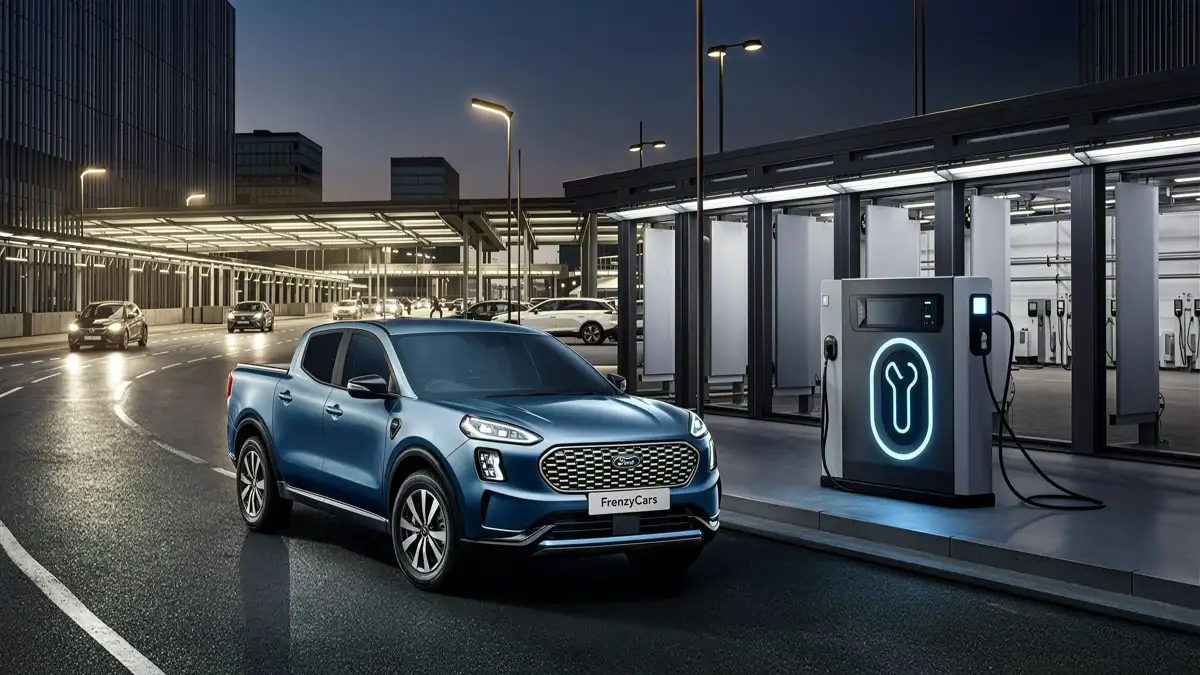
Ford is rewriting the playbook for its next-generation electric vehicles, starting with a budget-friendly ute that will be the first production car to ship with Apple Maps baked right into the dash. The affordable electric ute – widely tipped to revive the storied Ranchero nameplate – is due to enter production in 2027 and will use Apple Maps for its built-in navigation system, according to Ford. But that’s not the only headline: the Blue Oval is also deepening its ties with Chinese automaker Geely in a new European manufacturing joint venture, while simultaneously tackling a huge wave of recalls across its Bronco and Ranger lineups.
Apple Maps Goes Native in Ford’s EV Platform
Ford’s upcoming electric ute will be the first vehicle to feature Apple Maps as its default navigation software – no iPhone required. Apple has made it easier for car manufacturers to embed Maps directly into the infotainment system, and Ford’s new Universal Electric Vehicle Platform will put that integration to work. According to reports, the mapping software won’t just handle directions; it will also feed data into Ford’s hands-free driving system (BlueCruise) and AI-based driver-assistance features. That means the ute’s navigation and autonomous capabilities will speak the same language, potentially allowing for smoother route planning and predictive driving adjustments based on real-time traffic and road conditions.
The decision to go with Apple Maps over Google or proprietary solutions is a significant departure for an automaker that has traditionally developed its own SYNC-based navigation. By leaning on Apple’s ecosystem, Ford can offer a familiar interface to the millions of iPhone owners while reducing the complexity of maintaining a separate map database. The budget electric ute, expected to compete in the sub-$30,000 segment, will be built on this new platform, making it a technology showcase for Ford’s future electric lineup. Production is slated for 2027, and the Ranchero nameplate – a nod to the classic coupe-utility vehicle from the 1960s and 1970s – is considered a strong candidate for revival.
Ford and Geely Join Forces in Spain – What It Means for the Ranchero
In a move that underscores the globalisation of EV manufacturing, Ford and Geely Automobile Holdings have announced a Europe-focused joint venture at Ford’s Valencia, Spain, assembly plant. The new venture will produce both Ford and Geely multi-energy passenger vehicles – a blend of battery-electric, plug-in hybrid, and possibly range-extender models. The agreement marks one of the largest collaborations between a traditional Western automaker and a Chinese carmaker on European soil, and it comes at a time when geopolitical tensions are reshaping trade flows.
For Ford, the partnership provides access to Geely’s advanced platform technology and supply chain expertise, which could accelerate the development of affordable EVs for the European market – including, potentially, the budget electric ute. For Geely, it offers a way to bypass tariffs and political resistance by manufacturing inside the bloc rather than exporting from China. The Valencia plant, which currently builds the Ford Transit Connect and other models, will be retooled to handle multi-energy production. The announcement has sparked concern among some European stakeholders about dependency on Chinese technology, but Ford and Geely have emphasised that the JV will benefit both partners by sharing costs and scaling production.
Recall Watch: Bronco and Ranger Fire Risks
Ford’s recent recall activity has been intense, and the company is facing three separate safety issues that affect hundreds of thousands of vehicles. The largest recall covers 565,691 Bronco and Bronco Raptor SUVs in the United States due to a potential engine bay fire risk linked to a damaged wiring harness that can short circuit. Owners are advised to park outside until repairs are completed.
Separately, Ford is recalling more than 140,000 Ranger pickup trucks because of a unique fire risk: the sun visors’ wiring can short and ignite. The defect, described as an unusual source of cabin fire, affects certain model years. Additionally, in South Africa, Ford has recalled certain Ranger and Everest models over a transmission fault that could cause the vehicle to lose movement while driving – a serious safety concern that the National Consumer Commission has flagged.
Together, these recalls highlight the challenges Ford faces as it juggles new platform development with quality control across its global product line. While the company pushes forward with its most ambitious electric vehicle yet, it must also address legacy issues in its best-selling trucks and SUVs.
Ford’s budget electric ute is still several years away, but the pieces are falling into place: native Apple Maps integration, a manufacturing partnership with Geely in Spain, and a revived nameplate that could redefine the compact utility segment. Expect more details on the ute’s final specs and pricing closer to its 2027 launch.