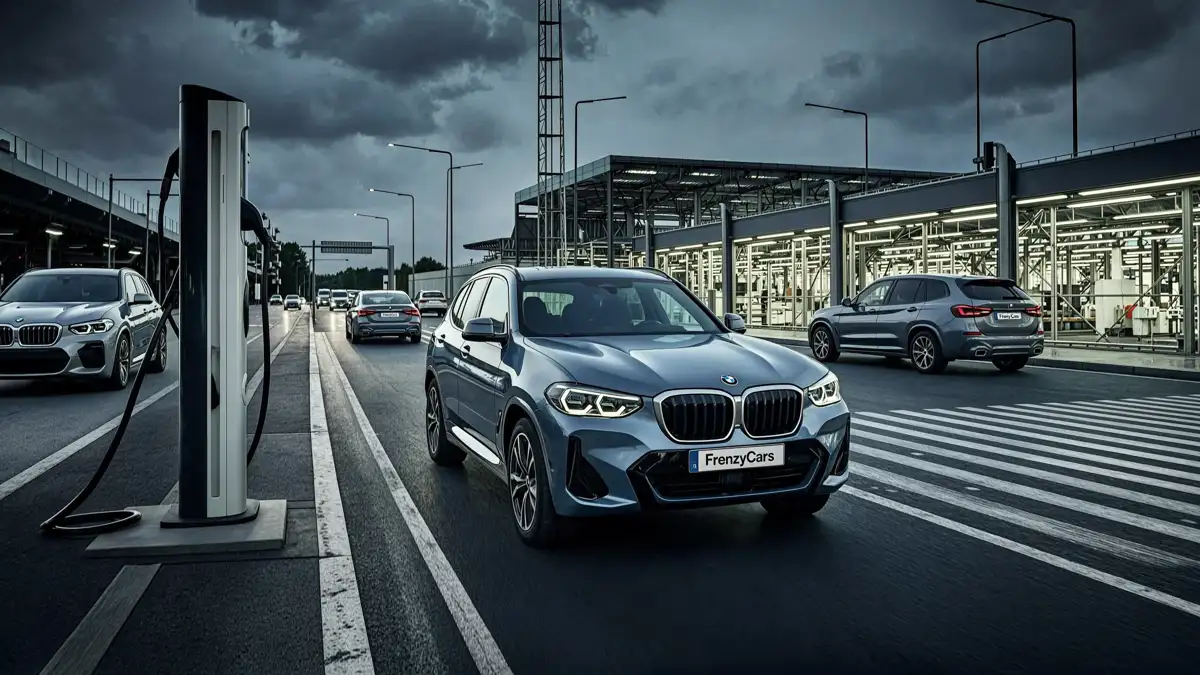
The 2026 BMW iX3 has made its Australian first-drive debut, and with it BMW is officially opening the second wave of its Neue Klasse era. Neue Klasse means “New Class” in German, and for BMW it is more than a styling exercise: it is the company’s bet on a generation of electric vehicles that will define its next decade. According to the first Australian drive report, BMW is betting 18 billion euros on this wave of new-generation EVs, and the iX3 is the first production model to carry that weight.
For enthusiast and mainstream buyers alike, the iX3 matters because it is the first real look at how BMW’s next-generation electric platform translates into a showroom product. It is a medium SUV, the segment BMW helped define and the one where much of the premium market’s volume now lives. If the iX3 lands well, it validates the entire Neue Klasse architecture. If it stumbles, the ripple effects will be felt across BMW’s entire electric lineup for years.
The iX3 Opens BMW’s Second Neue Klasse Wave
The original Neue Klasse name dates back to the 1960s, when BMW used it for a family of sedans that rescued the company financially and set its sporting character. Reviving that name now is a clear signal: BMW sees the switch to electric vehicles as equally existential. The 2026 iX3 is the first example of the second wave of that revival, meaning it is the first new-generation model built on the latest architecture, with more to follow.
That positioning gives the iX3 an unusual burden. It is not just a redesigned electric SUV; it is the template for BMW’s next-generation cockpit, battery, and drive technology. The first-drive review calls it the starting point of a massive wave, and BMW is not being subtle about the scale. An 18-billion-euro investment is a statement of intent at a time when many rivals are hesitating over EV timelines. For shoppers, the iX3 will effectively preview what every future BMW EV is meant to feel like.
A Nuclear Shutdown Is Threatening Debrecen iX3 Production
Even before the iX3 reaches showrooms in volume, BMW is dealing with a production headache in Hungary. The country’s Paks nuclear plant, which supplies nearly half of Hungary’s electricity, shut down completely for the first time in 44 years due to record-low Danube water levels. According to reports on the situation, BMW’s Debrecen plant — the factory that builds the iX3 — now faces a production risk.
The logic is straightforward. A nuclear plant that cannot operate because the river it uses for cooling has run too low is not just an energy issue for Hungary; it is a direct threat to the power supply needed to run a modern car factory. Debrecen is BMW’s newest facility and the one chosen to launch the iX3, so any disruption at the plant hits the company’s most important EV rollout at the worst possible time. BMW has not publicly detailed contingency plans, but the risk is real enough that the fate of the iX3’s production ramp now partly depends on a river in Central Europe.
BMW Cuts Jobs at Home While the World Changes
The launch pressure comes as BMW is also shrinking its German workforce. BMW said it will cut several thousand jobs in Germany by the end of 2027 under a voluntary redundancy programme, becoming the latest German carmaker to respond to squeezed profits and weak demand. That is a notable contrast with the expansion happening abroad, including the investment in Debrecen and other international sites.
The tension is hard to ignore. BMW is pouring money into new plants and new electric architectures while simultaneously reducing headcount at home. According to reporting on BMW’s global losses, this contraction is also being watched in South Carolina, where BMW operates a major factory and is a significant part of the regional economy. The question for BMW watchers is how long the company can push new-model launches and cost-cutting at the same time without one undercutting the other.
New Rivals and New Tech Are Converging on BMW
BMW is also launching the iX3 into a much more crowded market than the original Neue Klasse ever faced. Chinese and American brands are openly targeting Audi, BMW, and Mercedes buyers. One example is Zeekr, the Chinese premium electric brand within the Geely empire alongside Volvo and Polestar, which is preparing to enter Britain. These new players are not niche; they are building premium EVs with aggressive pricing and technology, and they are coming for the exact customers BMW has historically owned.
On the technology side, BMW is locking in its next generation of digital capability. Qualcomm has been named BMW Group’s lead compute silicon provider for the digital cockpit and automated driving through the next decade, with model programs starting in the coming years. That means the iX3’s successors will lean heavily on Qualcomm silicon for their screens and driver-assistance systems, giving BMW a consistent computing foundation across the Neue Klasse lineup.
Meanwhile, BMW is not abandoning combustion engines just yet. Spied prototypes of a new X7 and a G50-generation 3 Series suggest the brand is still developing traditional ICE models, and a possible M2 CS return has also been spotted in testing. In other words, the iX3 is the centerpiece of BMW’s electric future, but it is not the only future BMW is preparing for.
The next few months will be critical. The iX3 still needs to make it from Debrecen to customers, and BMW will need its Hungarian energy supply to stabilize. If the Neue Klasse launch goes smoothly, the iX3 will be remembered as the car that started BMW’s most important transition since the 1960s. If not, it will be remembered as the car that arrived at the wrong time, in the wrong conditions, with the whole company watching.