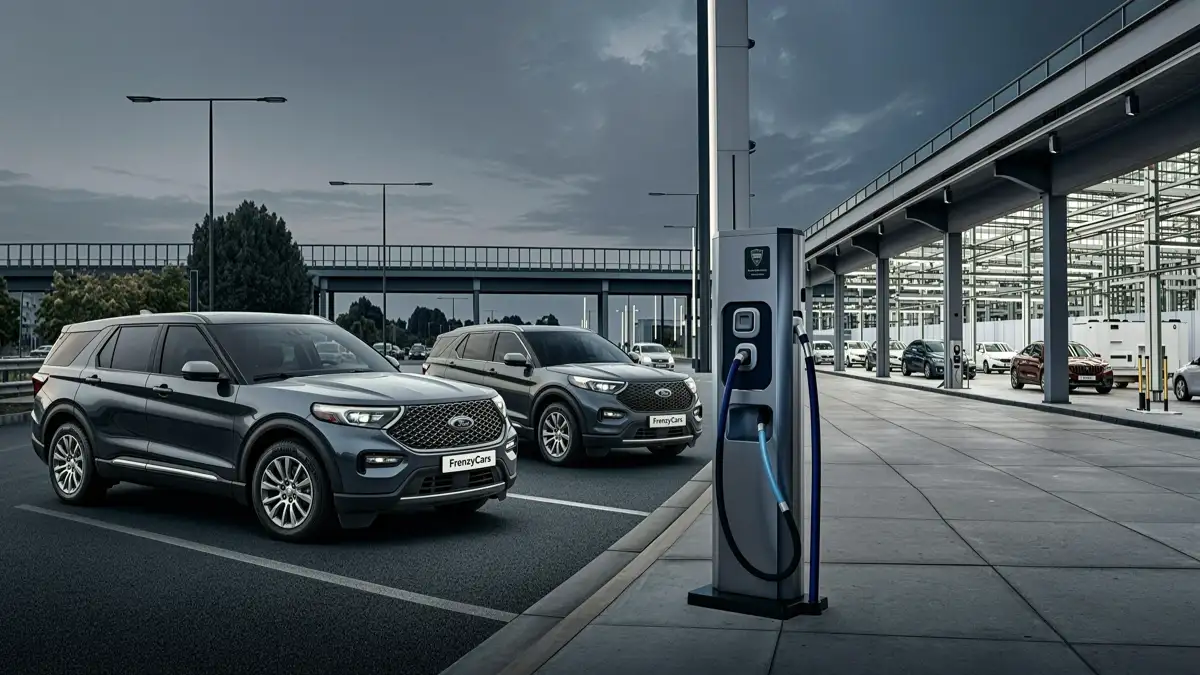
The National Highway Traffic Safety Administration has put a bullseye on a potential mechanical weakness in some older Ford cars and SUVs. In a statement released Monday, NHTSA said the affected vehicles pose “unreasonable safety risks” because their timing belts may fail, causing them to lose power or for their engines to fail. It is the kind of warning that recalibrates the story around an aging vehicle: what was once a routine maintenance item can become a federal safety matter.
Ford investors took notice, too. The automaker’s stock traded down 1.4% during Tuesday’s session, dropping as low as $13.98 before last trading at $14.2340, with roughly 51.96 million shares changing hands. That trading activity is not necessarily a verdict on the news — market moves are rarely that simple — but the timing keeps the federal warning in the spotlight.
What the Federal Safety Warning Actually Says
NHTSA’s message is unusually blunt. The agency did not just flag a possible defect; it used the legal-sounding phrase “unreasonable safety risks.” That is the language NHTSA typically reserves for problems that, if left unaddressed, could lead to injury or death. When a timing belt fails, the result is not usually a subtle warning light. Depending on speed and traffic conditions, a sudden loss of engine power can leave a driver without the acceleration needed to merge, pass, or avoid a hazard.
A timing belt is a small but critical component. It keeps the engine’s valves and pistons moving in perfect rhythm. If it snaps or slips, the engine stops doing its job. In many engines, the failure is immediate and complete. That makes the difference between a breakdown in a driveway and a shutdown on a busy highway. NHTSA’s warning suggests the agency believes the risk in these older Fords is serious enough to warrant a closer look — and potentially a formal recall.
Why This Hits Ford Owners Where It Hurts
For owners, this is the kind of news that forces a rethinking of maintenance schedules. Many drivers treat timing belt replacement as an inconvenient expense, not a safety imperative. But a failed belt can take an engine with it, especially in interference engines where pistons and valves can collide. The repair bill for that kind of damage can easily total more than the vehicle is worth, particularly for older cars and SUVs that may already have high mileage.
The safety angle is even more important. Losing power while driving is never routine. Steering and braking assistance often rely on the engine running, so a stall can make the vehicle noticeably heavier and harder to control. NHTSA’s language suggests the agency believes this scenario is not just theoretically possible, but likely enough to require action.
There is also a broader concern for the resale and ownership value of these vehicles. When a federal safety agency publicly says a vehicle poses “unreasonable safety risks,” it can have a lasting effect on how owners, insurers, and future buyers view that model. Even if a formal recall never materializes, the warning puts a cloud over those older Fords and SUVs that did not exist before Monday.
What Ford Owners Should Watch For Next
At this stage, Ford has not announced a repair program, and NHTSA’s statement does not necessarily mean owners should stop driving their vehicles. But it does mean owners should be paying attention. If your Ford is among the “some older” cars and SUVs named in the federal warning, a careful review of your maintenance records is a sensible first step, especially if the timing belt has not been replaced recently.
It is also worth watching for official communications from both Ford and NHTSA. Safety warnings like this often lead to investigations, and investigations can lead to recall notices. Owners who stay informed will be in a better position to act quickly if the matter escalates. The next few weeks could be decisive in determining whether this federal warning turns into a full-blown recall — and how far Ford and NHTSA are willing to go to address the risk.