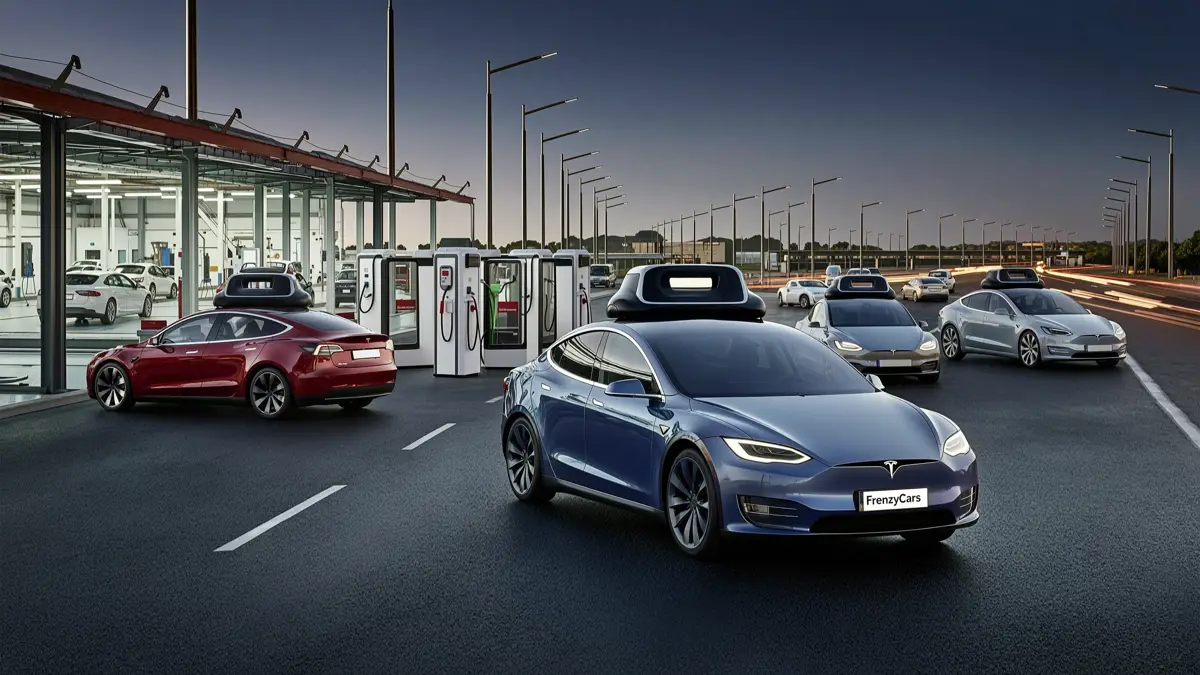
Tesla has officially brought its autonomous ride-hailing network to Miami, marking the company’s fifth metropolitan market deployment and its first operational expansion beyond the strongholds of Texas and California. For enthusiasts and industry watchers, this is not just another city on the map—it’s a clear signal that Tesla is serious about scaling its robotaxi ambitions beyond the West Coast and into the heart of the East Coast.
The launch, confirmed in Tesla’s latest update, positions Miami as the newest proving ground for the company’s Full Self-Driving (FSD) technology in a commercial setting. While Tesla has been testing and operating autonomous ride-hailing services in select cities in Texas and California, this move into a dense, traffic-heavy, and weather-variable market like Miami represents a significant step. The city’s mix of heavy tourist traffic, congested highways, and unpredictable rain patterns will put the vision-based autonomy system to the test in ways that drier, more grid-planned Western cities may not. For buyers and owners, it reinforces that Tesla’s long-term value proposition increasingly hinges on its software and network capabilities, not just the hardware you park in your garage.
Miami Becomes Tesla’s Fifth Robotaxi Market
According to Tesla’s announcement, the commercial autonomous ride-hailing operation in Miami is now live, making it the fifth metropolitan area where the company offers paid self-driving rides. The previous four markets are all located in Tesla’s home base states of Texas and California. The expansion to Florida signals that Tesla has gained enough confidence in its regulatory approvals, operational logistics, and system reliability to branch out beyond its original test beds.
What exactly does ‘commercial autonomous ride-hailing’ mean for Miami residents and visitors? It means that users of the Tesla app can hail a ride in a self-driving Tesla vehicle—without a human safety driver behind the wheel, assuming the service operates at the same level as previous deployments. The initial geographic footprint within Miami was not detailed by Tesla, but the move places the company in direct competition with other autonomous ride-hailing players that already operate in Florida, such as Waymo, which has been testing in Miami and other parts of the state. For the enthusiast community, this is a fascinating real-world laboratory: witnessing how Tesla’s camera-and-neural-network approach handles Miami’s notorious traffic jams, aggressive drivers, and sudden downpours will offer valuable data on the robustness of its autonomy stack.
What This Means for the Autonomous Ride-Hailing Landscape
Tesla’s expansion into Miami is not just a milestone for the company—it is a pivotal moment for the entire autonomous vehicle industry. While competitors like Waymo and Cruise have leaned heavily on lidar and high-definition mapping, Tesla’s vision-only approach has often been viewed as either a bold bet or a risky shortcut. By taking the robotaxi network into a new, more challenging market outside of the relatively controlled environments of Texas and California, Tesla is signaling that it believes its system is ready for broader deployment.
For buyers, this matters because it directly ties to the future of the Tesla vehicle as an asset. Tesla has long promised that owners will eventually be able to add their cars to a shared autonomous fleet, generating income while the car drives itself. The expansion of Tesla’s own commercial fleet increases the pressure to deliver on that promise—and proves that the infrastructure and regulatory framework are being built out city by city. On the other hand, it also means that Tesla is now a mobility service provider, competing not just with other automakers but with Uber, Lyft, and public transit. That shift could influence how Tesla allocates engineering resources, how it prices its vehicles, and how it handles customer service for riders versus owners.
From a competitive perspective, Miami is a smart choice. It is a major international gateway with a dense urban core, heavy tourism, and a population that is often early to adopt new technology. It also has a regulatory environment that has been receptive to autonomous vehicle testing, as evidenced by previous deployments from other companies. Tesla’s entry could accelerate the pace of adoption and force competitors to respond more aggressively. For the enthusiast, watching this play out in real time is part of the excitement—but it also raises questions about reliability, safety, and the timeline for when fully autonomous driving will become a mainstream reality.
Tesla’s next steps remain unannounced. However, the leap from the West Coast to Florida suggests that the company is now comfortable operating its robotaxi network across state lines and diverse environments. As the fleet logs miles in Miami, every data point will inform the rollout to additional cities. Whether you are a Tesla shareholder, a current owner waiting for FSD to deliver on its promises, or simply a car enthusiast fascinated by the future of mobility, the Miami launch is a development worth watching closely.