
TL;DR:
- A comprehensive used car test drive spans 30 to 90 minutes across various road types, including city streets, rough pavement, and highway. It involves pre-drive inspections, structured driving, and post-drive checks to identify potential issues like leaks or overheating. Document all findings and consider a professional inspection before negotiating a deal.
Your complete test drive checklist for a used car
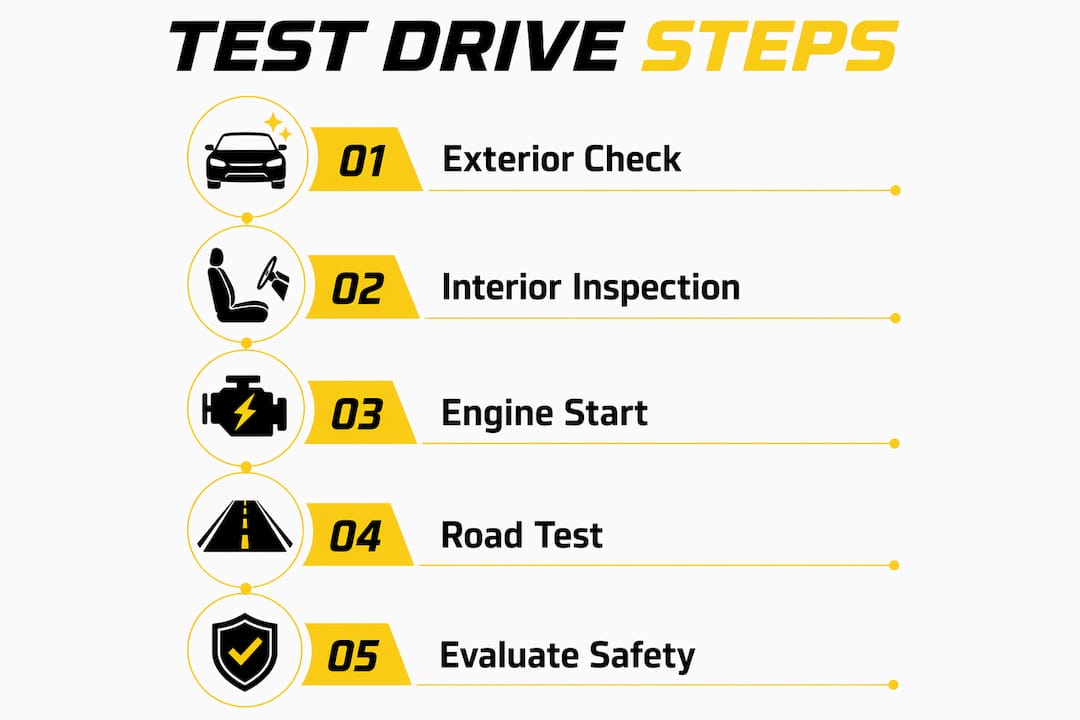
A solid used car test drive checklist covers three phases: a systematic walk-around before you start the engine, a structured drive across at least three road types, and a post-drive inspection once the engine has fully warmed up. Skip any phase and you risk missing the exact problems sellers count on you not finding.
The minimum drive time is 30–90 minutes, mixing neighborhood streets, rough pavement, and a highway stretch. A quick loop around the block tells you almost nothing. Full operating temperature is where leaks, overheating tendencies, and transmission quirks actually show up.
Here is the core checklist at a glance:
Before you drive:
- Request a cold start (engine off for at least one hour before arrival)
- Walk the full exterior: panel gaps, paint, tires, lights, glass
- Inspect the interior: seats, controls, electronics, odors
During the drive:
- Brakes: feel, distance, and straight-line tracking
- Acceleration and transmission: smooth shifts, no hesitation
- Steering: responsive at low speed, stable at highway speed
- Suspension: listen over bumps and during tight turns
- Engine: no surges, misfires, or unusual noises
After the drive:
- Smell test under the hood: coolant, burnt oil, exhaust
- Check the ground for fresh fluid drips
- Inspect coolant hoses and look for any new wetness
What to bring and how to schedule your test drive
Preparation separates buyers who catch problems from buyers who inherit them. Show up with the right tools and the right ask, and you turn a casual drive into a real diagnostic.
What to bring:
- Valid driver’s license (required at every dealership)
- Flashlight for the engine bay and underbody
- Paper towels to wipe the dipstick or check suspected leaks
- Tire pressure gauge for a fast condition check
- A second person, one to drive and one to observe and listen
- Phone with a charger cable to test the USB ports and document anything suspicious
How to schedule:
- Call ahead and ask that the car not be started for at least an hour before you arrive. A cold start reveals ticking, knocking, and rough idle that sellers routinely mask by warming the engine first.
- Request enough time for a full route, not just a quick loop. If the seller or dealer pushes back on time, treat that as a yellow flag.
- Plan your route before you arrive. Pre-scouting the roads in your own car means you already know where the rough pavement and highway on-ramp are, so you can focus entirely on the car during the drive.
Pro Tip: Ask the seller directly: “Can I take it on the highway?” A hesitant answer tells you something before you even turn the key.
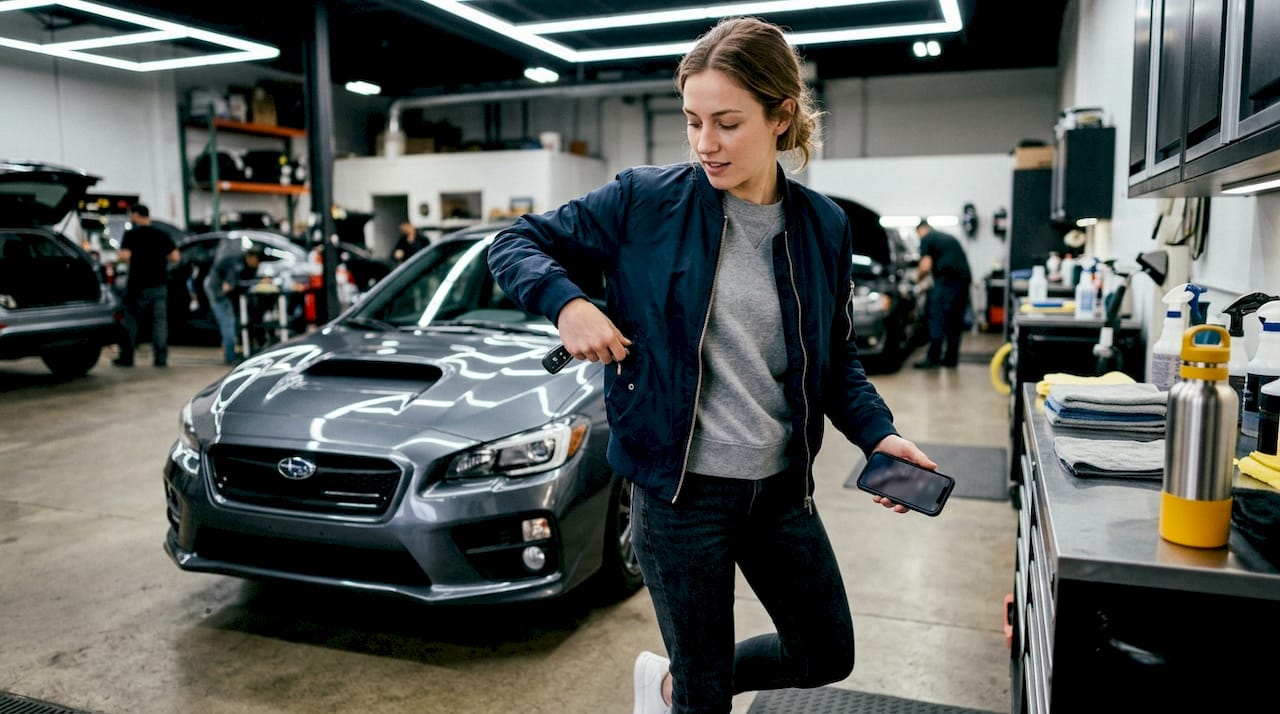
Exterior checklist: walk around the car before you get in
The exterior walk-around takes about eight minutes and costs you nothing. Rushing it costs you thousands. Do it in daylight, move methodically from front to rear, and crouch down at each corner to see what standing height hides.
Panel gaps and paint:
- Check the gaps along the hood, doors, fenders, and trunk lid. Uneven spacing or gaps that widen on one side and narrow on the other point to prior collision repair.
- Look for mismatched paint sheen or texture. A repainted panel often looks slightly different in direct sunlight, especially at a low angle.
- Check for water stains, rust bubbles along door bottoms and wheel arches, and any filler that shows as a slight waviness in the body panel.
Tires:
- Measure tread depth visually or with a gauge. Worn tires on a used car are a negotiating point at minimum and a safety issue at worst.
- Uneven wear patterns tell a story. Wear on the inner or outer edge only suggests alignment or suspension problems. Cupping or scalloping across the tread points to worn shocks.
- Check sidewalls for cracks, bulges, or cuts.
Lights and glass:
- Turn on headlights, taillights, brake lights, and turn signals. Condensation inside a headlight housing can mean a cracked lens or a prior front-end impact.
- Inspect the windshield for chips or cracks that extend into the driver’s sightline. A chip can spread; a crack across the glass typically means replacement.
- Check side windows for chips and look at the rubber seals around each window for cracking or gaps that let in water and wind noise.
Interior inspection: evaluate the cabin before you drive
Sit in every seat, not just the driver’s. A used car’s interior tells you how the previous owner treated the vehicle, and electronics that fail after purchase are rarely cheap to fix.
Seats and comfort:
- Adjust the driver’s seat fully forward, back, up, and down. Powered seats should move without grinding. Manual seats should lock firmly in position.
- Check upholstery for tears, stains, and damp spots. Press your hand into the carpet and floor mats. Dampness or a musty smell under the mats often means a water leak, not a spilled drink.
- Sit in the rear seat. If you regularly carry passengers, have your companion sit behind the driver’s position once the front seat is adjusted to your driving position.
Controls and electronics:
- Test the infotainment system: pair your phone via Bluetooth, check the backup camera image quality, and try the navigation if equipped. Repairs to modern infotainment systems can run into hundreds of dollars.
- Test every window switch and door lock from both the driver’s panel and each individual door.
- Run the climate control through all modes: floor, face, defrost, and rear defrost. Switch between heat and air conditioning.
- Check interior lighting, including dome lights and any ambient lighting.
- Look at the airbag indicator light. It should illuminate briefly at startup and then go off. A light that stays on means a fault in the airbag system, which is a serious safety concern.
Odors:
- A musty or mildew smell is the single most reliable indicator of water intrusion. It does not go away with an air freshener, and it usually means mold in the carpet, headliner, or HVAC system.
- A sweet smell can indicate coolant. A burnt smell can mean oil leaking onto hot engine components. Either warrants a closer look before you drive.
Key test drive evaluation points: what to notice while driving
Treat this drive as a diagnostic routine, not a shopping experience. The goal is to force the car through the transitions that expose problems: cold to warm, low speed to highway, smooth road to rough pavement.
Steering:
- At low speed, turn the wheel to full lock in both directions slowly. Listen for clicking, which points to worn CV joints, or a grinding noise from the steering rack.
- At highway speed, briefly take your hands off the wheel on a flat, straight road. The car should track straight. Any drift suggests alignment problems or bent suspension components.
Brakes:
- Brake hard from 50 mph at least twice on a safe stretch. The car should stop straight without pulling to either side. Pulling can mean a caliper or rotor problem, or in worse cases, a bent frame.
- Feel the pedal. It should be firm and consistent. A pedal that sinks toward the floor under steady pressure points to a hydraulic issue.
- Steering wheel vibration under hard braking typically means warped rotors or front-end problems.
Transmission:
- In an automatic, every gear change should be smooth and prompt. Hesitation between gears, a harsh clunk into drive or reverse, or a transmission that “hunts” between gears on a slight incline are all warning signs.
- In a manual, the clutch should engage cleanly with no slipping or grinding when shifting.
Suspension and ride:
- Drive over speed bumps and rough pavement deliberately. Listen for clunks from the struts or control arms. A single clunk over a bump usually means a worn suspension component.
- Body roll through corners should feel controlled. Excessive lean or a floaty feeling after a bump suggests worn shocks or struts.
Engine and acceleration:
- Accelerate hard to highway speed and watch the exhaust in your rearview mirror. Blue smoke means the engine is burning oil. White smoke that persists after warmup points to a coolant leak or head gasket issue. Black smoke indicates a fuel system problem.
- At steady highway throttle, the engine should pull smoothly with no surging or misfiring.
For a deeper look at how safety systems perform under load, Frenzycars’s guide on car safety ratings is worth reading alongside your test drive notes.

Warning signs and red flags during the test drive
Some problems are fixable and negotiable. Others are deal-breakers. Knowing which is which keeps you from walking away from a good car or buying a bad one.
Dashboard warning lights:
- Any warning light that stays on after startup, or comes on during the drive, requires a professional scan before you proceed. Warning lights are critical red flags that warrant mechanic inspection or disqualify the car entirely.
- An airbag light, check engine light, or transmission warning light is not a “minor thing to fix later.” Get a diagnostic code first.
Noises:
- Grinding during braking means metal-on-metal contact. Brake pads are gone, and rotors may be damaged.
- A knocking or ticking from the engine on cold start that fades as the car warms up can indicate low oil pressure or a worn timing component.
- Clunking over bumps points to suspension joints or sway bar links.
Smells:
- Coolant has a sweet, slightly syrupy smell. Finding it inside the cabin or under the hood after driving is a serious cooling system flag.
- Exhaust smell inside the cabin is a safety issue, full stop.
- Damp or musty odors, especially combined with damp carpet, strongly suggest water intrusion. Flood-damaged vehicles often show up in the used market with this signature.
Behavior:
- Excessive vibration at highway speed that wasn’t there at lower speeds usually means wheel balance or alignment issues, though it can also point to worn wheel bearings or bent rims.
- A sticky or jerky automatic transmission that slips between gears is expensive to repair.
- Any seller who refuses to let you drive on the highway, insists on a short route only, or discourages a mechanic inspection is telling you something about the car without saying it.
If the car has a rebuilt or salvage title, the risk profile changes significantly. Frenzycars covers rebuilt title risks in detail for buyers who encounter that situation.
Expert advice on planning your test drive route and timing
The structure of your drive matters as much as what you check. A car can feel fine in one condition and fail in another, which is why automotive experts recommend a three-pass route that forces the vehicle through distinct transitions.
The three-pass structure:
- Pass A (15–20 minutes): Neighborhood and low-speed maneuvers. Tight turns at full steering lock reveal CV joint wear. Figure-8 patterns expose clunks as weight shifts from side to side. Reverse and brake to feel for jerkiness or grinding.
- Pass B (10–15 minutes): Rough roads and brake heat. Find uneven pavement, speed bumps, or mild potholes. This is where suspension joints, sway bar links, and loose heat shields announce themselves. After several stops, brake hard again. Rotors that warp under heat show up as vibration only after they’ve been worked.
- Pass C (15–25 minutes): Highway. Wheel balance issues, drivetrain vibration under load, transmission shift logic at cruising speed, and wind noise from bad door seals all require highway speed to surface.
Post-drive heat-soak inspection:
Park the car, let the engine run for one minute, then shut it off. This is where leaks and overheating issues appear that are invisible before the vehicle reaches full operating temperature.
- Smell test: sweet means possible coolant, burnt oil smell means a possible leak onto hot components, exhaust smell in the cabin is a safety concern.
- Look under the hood without touching hot parts. Check for wetness around coolant hoses and watch for the radiator fan cycling normally.
- Check the ground under the car for fresh drips. Oil, coolant, and transmission fluid all have distinct colors and textures.
Pro Tip: Pre-scout your test drive route in your own car the day before. Knowing exactly where the rough road and highway on-ramp are means you spend the actual test drive focused on the car, not navigating.
Buyers shopping for a family vehicle can find a complementary perspective in this used SUV buying checklist that covers family-specific evaluation points.
Legal age and documentation requirements for test driving
Most dealerships require test drivers to be at least 18 years old with a valid driver’s license. Some dealers and automakers set the minimum at 21 for performance vehicles, luxury models, or certain EVs. A 16-year-old with a license can sometimes test drive at a standard dealership, but this varies by location and policy.
What you need:
- Valid driver’s license, no exceptions at any dealership
- Proof of insurance, which some dealers require before handing over the keys, particularly on higher-value vehicles
- Identification to verify your license is current and matches your name
Private seller situations:
- Private sellers generally have fewer formal requirements, but you still need a valid license and should be prepared to show it. A seller who does not ask to see your license before a test drive is not being casual; they are being careless, and that attitude often extends to how they maintained the car.
Before you go:
- Call the dealership ahead of time if a younger driver plans to participate. Policies vary enough that showing up without checking first can waste a trip.
- Ask whether the dealer’s insurance covers test drives or whether you need your own policy active. Most major dealerships carry coverage for test drives, but confirming takes thirty seconds.
What to do after completing your used car inspection
The test drive is the data-gathering phase. What you do with that data determines whether you get a good deal or a regrettable one.
Review your notes immediately:
- Go through your checklist while the drive is fresh. Flag anything that felt off, sounded wrong, or raised a question. Minor concerns add up, and a car with three small issues is a different negotiation than a car with one.
Get a pre-purchase inspection:
- If you are seriously interested in the vehicle, a professional mechanic’s inspection is worth every dollar. A trusted independent shop can put the car on a lift and check what no test drive can reveal: frame condition, hidden rust, fluid contamination, and wear on components you cannot see from the driver’s seat.
- Do not rely solely on a vehicle history report. History reports miss issues that a physical inspection catches, including unreported accidents and wear that has never triggered a claim.
Negotiate based on findings:
- Every documented problem is a negotiating point. Worn tires, a brake job due, or a cracked windshield all have real dollar values. Get repair estimates and use them.
- The 30-60-90 budgeting framework applies here: keep your loan term at or under 60 months on a used car, and target at least 10% down to avoid being underwater on the loan early.
- The $3,000 rule is a useful floor: for cash buyers it represents the minimum threshold for a reliably driveable used vehicle, and for financed buyers it is the recommended minimum down payment to protect against negative equity.
Avoid pressure decisions:
- A seller who creates urgency (“another buyer is coming tonight”) is using a tactic, not sharing information. Walk away from any deal you are not fully confident in. A car you regret buying does not get better with time.
For trade-in strategy and financing guidance before you sign anything, Frenzycars’s trade-in value guide covers how to position your current vehicle as part of the deal. When you are ready to compare specs on your shortlisted models, the Frenzycars car specs database lets you pull detailed information by make and model.
Key Takeaways
A thorough used car test drive requires sufficient time across mixed driving conditions, a systematic exterior and interior inspection, and a post-drive heat soak check to catch problems that only appear at operating temperature.
| Point | Details |
|---|---|
| Drive duration matters | Plan 30–90 minutes covering neighborhood streets, rough roads, and highway to fully diagnose the vehicle. |
| Cold start is non-negotiable | Request the engine be off for at least one hour before arrival to hear ticking, knocking, or rough idle sellers mask by pre-warming. |
| Post-drive inspection catches hidden issues | Leaks, coolant smells, and overheating behavior only appear after the engine reaches full operating temperature. |
| Warning lights mean stop | Any dashboard warning light during or after the drive requires a professional scan before you proceed with the purchase. |
| Negotiate with inspection findings | Document every issue during the test drive and use repair estimates to adjust the asking price or walk away. |