Enter your 17-character VIN at NHTSA’s recall lookup or type in your license plate, and you’ll see every open safety recall on your vehicle within seconds. That’s the whole process. If anything comes back open, call any brand-authorized dealership to schedule a free repair — federal law requires manufacturers to cover it.
Here’s what you need right now:
- NHTSA VIN/license-plate lookup: nhtsa.gov/recalls — the official, authoritative first stop
- SaferCar app: NHTSA’s free mobile app with push alerts and a virtual garage
- CARFAX recall check: useful for used-car buyers wanting a broader vehicle history snapshot
- Kelley Blue Book (KBB) recall check: a quick secondary reference, especially during car shopping
Found an open recall? Contact any authorized dealer for that brand, confirm parts are in stock, and schedule the repair. It costs you nothing.
Key Takeaways
The single most reliable way to protect yourself is to enter your VIN at nhtsa.gov/recalls, act on any open result immediately, and check again at least twice a year.
| Point | Details |
|---|---|
| Start with NHTSA | Enter your 17-character VIN at nhtsa.gov/recalls for official, VIN-specific recall data. |
| Repairs are free | Federal law requires manufacturers to cover recall repairs at any authorized dealership. |
| Know the lookup limits | Results cover the past 15 years; completed repairs, some small manufacturers, and very recent campaigns may not appear. |
| Use SaferCar for alerts | The free app stores your VINs and sends push notifications when a new recall is issued. |
| Verify before buying used | Run the VIN before purchase; don’t accept an unresolved safety recall without a price adjustment or repair commitment. |
How to check your car’s recall history: official tools and third-party options
NHTSA’s recall lookup is the place to start, full stop. It pulls manufacturer-provided recall data covering the past 15 calendar years for major light vehicles and motorcycles. You search by VIN or license plate, and the results are specific to your exact vehicle, not just its make and model. That distinction matters: a recall may cover only a subset of a model year’s production run, so a neighbor with the same car might have no open recalls while yours does.
The SaferCar app extends that same official data to your phone. Store your VINs in the app’s virtual garage, and it sends push notifications the moment a new recall affects any vehicle you’ve saved. VIN data stays on your device, not a third-party server.
CARFAX and Kelley Blue Book both pull from NHTSA’s database, so the underlying recall data is the same. What they add is context: a CARFAX report bundles recall status alongside accident history, title records, and odometer readings, which is genuinely useful when evaluating a used car. KBB’s recall check sits inside its vehicle valuation tool, making it convenient if you’re already researching pricing. Neither replaces the NHTSA lookup for raw accuracy, and both may lag slightly behind the most recent NHTSA updates.
State DMV records and dealer service histories are worth checking in edge cases: if a seller claims a recall was already repaired, a dealer’s service record is the only way to confirm it.
Where is your VIN, and when can you use a license plate instead?
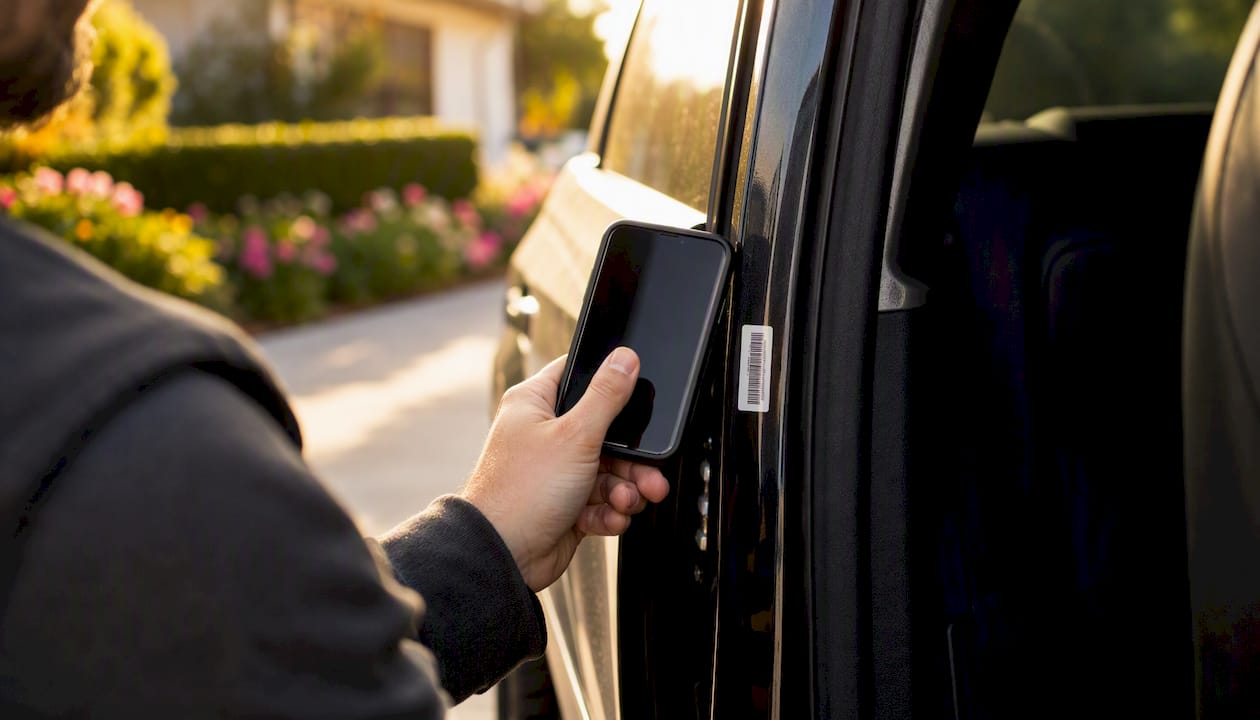
Your 17-character VIN appears in several places:
- Lower-left windshield: visible from outside the car, near the base of the glass on the driver’s side
- Driver-side door jamb: on a sticker inside the door frame, usually alongside tire pressure specs
- Title and registration: printed on both documents
- Insurance card: most insurers include it
The VIN on your windshield and door jamb should match exactly. If they don’t, flag it with a dealer before buying.
License-plate lookup is a convenient shortcut when you don’t have the VIN handy, but it depends on state DMV data linking the plate to the correct VIN. Rental cars, recently registered vehicles, and out-of-state plates occasionally return incomplete results. For anything beyond a quick check, use the VIN directly.
Pro Tip: Open your phone’s camera app and point it at the VIN sticker on the door jamb. Most modern smartphones read the number cleanly in good light, letting you copy it straight into the NHTSA search field without transcription errors.
How to read your lookup results — and what the tool won’t show you
The NHTSA VIN lookup FAQ explains the three main result states you’ll see:
| Result displayed | What it means | Your next step |
|---|---|---|
| Recall INCOMPLETE | An open recall exists for your VIN; repair has not been recorded | Schedule free repair at an authorized dealer |
| INCOMPLETE — remedy not yet available | Recall is open but the manufacturer hasn’t released a fix yet | Monitor NHTSA or SaferCar app for updates |
| Number of Open Recalls: — | No open recalls found within the search window | Set a reminder to recheck in six months |
The lookup also shows the NHTSA campaign ID, a plain-language defect summary, and the remedy description when one exists. What it won’t show: repairs already completed (those drop off the open list), recalls from some small-volume manufacturers, very recent campaigns where individual VINs haven’t been identified yet, and most vehicles originally manufactured for markets outside the U.S.
Screenshot or save your results. If you’re buying a used car, that saved record is your baseline to compare against the seller’s claimed repair history.
What to do immediately if you find an open recall
Act on this in order:
- Confirm your VIN details match the recall campaign description on NHTSA’s site.
- Call any authorized dealership for that brand — you’re not limited to where you bought the car.
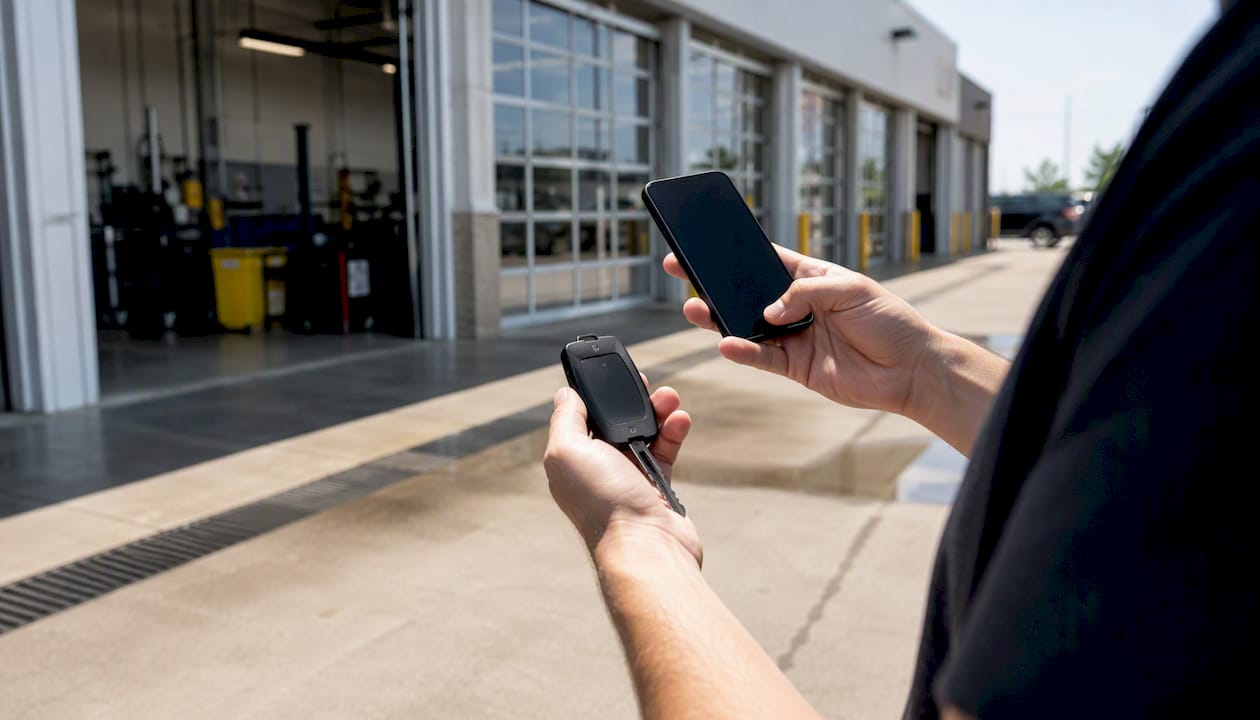
- Ask whether parts are in stock before you drive in. Some high-volume recalls create parts backlogs that can run weeks or months.
- Schedule the repair. The service is free under federal law; manufacturers are required to cover the cost of repair, replacement, or in limited cases a refund.
- Get written confirmation when the work is done — a repair order with the recall campaign number, date, mileage, and technician’s signature.
Ask the dealer specifically: Is the remedy available for my VIN today? How long will the repair take? Is a loaner or rental covered? Get those answers in writing if you can.
If a dealer refuses to perform a manufacturer-mandated recall repair, file a complaint directly with NHTSA at Nhtsa. Under 49 U.S.C. § 30120, if a manufacturer fails to repair a defect within a reasonable time after the vehicle is presented for service, owners may have legal remedies including replacement or refund in limited situations.
Pro Tip: Keep your repair receipt in the glove box or a digital folder. When you sell the car, that documentation adds credibility and may support a higher asking price.
Checking recall history when buying a used car
Federal law bans the sale of new vehicles with open recalls but does not prohibit reselling used vehicles with unresolved ones. That gap is entirely on the buyer to close.
- Run the VIN through NHTSA’s lookup before you negotiate, not after. A model-level news story doesn’t confirm your specific VIN is affected — only the lookup does, as Consumer Reports notes.
- Ask the seller for repair receipts if they claim a recall was already fixed. Then verify by running the VIN again — a completed repair should no longer show as open.
- Cross-reference with a vehicle history report for a fuller picture of the car’s past.
- Don’t accept an open safety recall as part of the deal. Request that the seller resolve it before closing, or negotiate a price reduction that accounts for the repair timeline.
- If the car has a rebuilt title, layer that risk on top of any open recall before deciding.
How to stay updated on new recalls
Recalls don’t stop after you buy. In 2025, more than 29 million vehicles were involved in safety recalls across 997 separate campaigns. Staying current takes about five minutes a year if you set it up right.
- Add your vehicles to the SaferCar virtual garage. The app sends push notifications automatically when a new recall matches a stored VIN.
- Sign up for NHTSA email alerts at nhtsa.gov for broader watchlists covering equipment, tires, and car seats beyond your primary vehicle.
- Check manually twice a year — once in spring, once in fall. Run every VIN you own through the NHTSA lookup. It takes under two minutes per vehicle.
- Check after major service visits or software updates, especially on newer vehicles with over-the-air update capability. Some defects surface only after a firmware change.
Paid VIN monitoring services exist but offer little over the free SaferCar app for most owners. The main tradeoff is speed: some paid services claim faster indexing of new campaigns, though the underlying data still originates from NHTSA.
Why recall checks matter — the numbers and the law
NHTSA’s 2025 data puts the scale in perspective: over 29 million vehicles recalled in a single year across 997 campaigns. That’s not a rare event. Statistically, there’s a reasonable chance any given car on the road has an open recall at some point in its life.
| Fact | Detail |
|---|---|
| 2025 vehicles recalled | 29+ million across 997 campaigns |
| Legal basis for free repair | 49 U.S.C. § 30120 — mandates remedy, completion-rate reporting, and owner rights |
| NHTSA lookup window | Past 15 calendar years for major light vehicles and motorcycles |
| Cost to owner | — repair, replacement, or refund covered by manufacturer |
Manufacturers are required to notify registered owners by mail, but address changes and database errors mean that notice doesn’t always arrive. Proactive checks through the NHTSA lookup are the most reliable way to know your status. A vehicle can feel and drive perfectly fine while carrying an open recall for a defect that only manifests under specific conditions.
For a deeper look at how the recall process works from defect detection to dealer repair, the Frenzycars recall process guide walks through every stage. If you’re shopping for a new vehicle after clearing a recall, browse car specs by make and model to compare your next options.
The one thing most owners skip
Most drivers know recalls exist. Far fewer actually check their VIN. The assumption is: “If something were wrong, I’d have gotten a letter.” That assumption fails more often than people realize. Mailing addresses go stale, database errors happen, and some recalls are issued years after a vehicle changes hands. The NHTSA lookup takes 30 seconds and requires nothing but your VIN.
What I’d push back on is the idea that third-party services add meaningful value for the average owner. CARFAX is worth it when you’re buying a used car and want the full history in one place. For ongoing monitoring of a car you already own, the SaferCar app does the same job for free, with the same data, and sends you an alert before you’d ever think to check.
The other thing worth saying: don’t wait until a recall feels urgent. A defect that seems minor — a sensor, a software flag, a latch that “usually” works — is the kind of thing that matters most when conditions are exactly wrong. The repair is free. The appointment takes an hour. There’s no good reason to leave it open.
Sources
- Check for Recalls: Vehicle, Car Seat, Tire, Equipment
- Recalls Look-up by VIN (Vehicle Identification Number)
- SaferCar app information and FAQ
- U.S.C. Title 49 - TRANSPORTATION (section 30120)