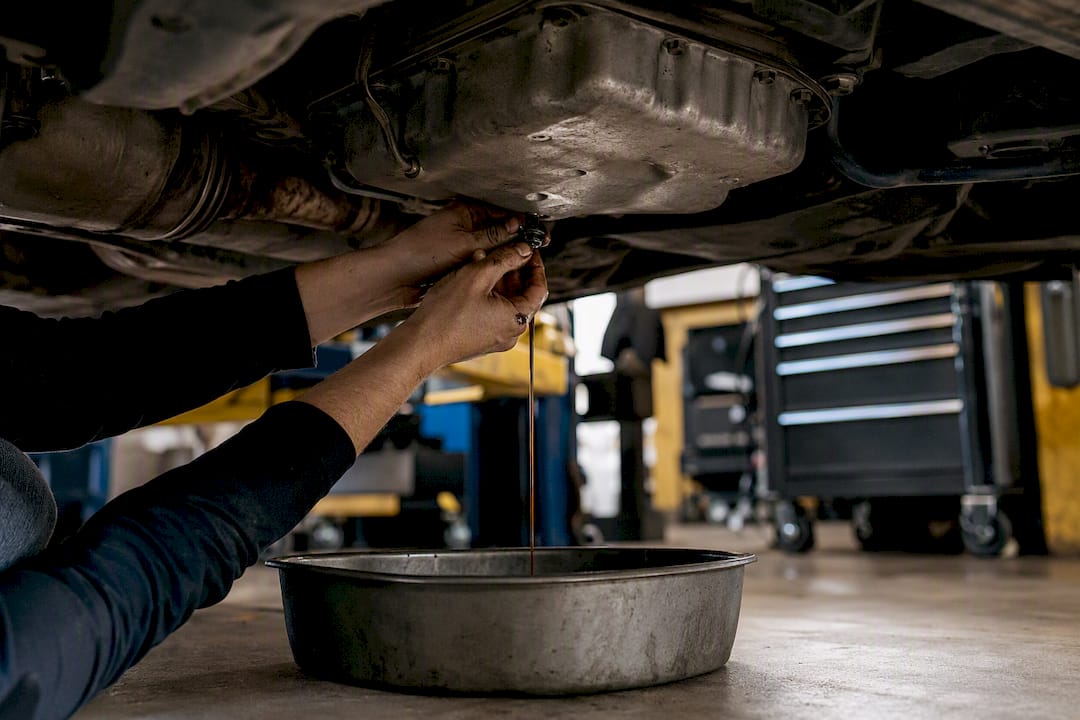
Yes, most owners with a drain plug and dipstick can change their own transmission fluid safely, but sealed or temperature-based systems raise the difficulty and risk considerably. Before you touch a wrench, confirm three things.
- Your owner’s manual lists the exact fluid spec and torque values for your model.
- You can actually locate and access the fill plug before you drain a single drop.
- Your vehicle is high-mileage or has an unknown service history, in which case skip the power flush and stick with a gravity drain-and-fill.
Get those three right and the rest of this transmission oil change guide is mostly patience and a torque wrench.
Key Takeaways
A transmission oil change is safe to do yourself on most vehicles with a drain plug and dipstick, provided you check fluid spec first and skip the power flush on any high-mileage or unknown-history car.
| Point | Details |
|---|---|
| Confirm access first | Locate and verify the fill plug or dipstick before draining anything. |
| Match the method to the vehicle | Use drain-and-fill for high-mileage or unknown-history cars; save flushes for well-maintained ones. |
| Torque matters more than “snug” | Use a torque wrench on pan bolts and the drain plug to avoid leaks or warping. |
| Sealed transmissions need tools | Temperature-based systems require a scan tool or probe, not a dipstick guess. |
| Inspect before you refill | Large metal flakes on the pan magnet mean stop and call a specialist, not top off and drive. |
Tools and Supplies You Need Before Starting
Gather everything before you jack up the car. Running to the parts store mid-job with fluid draining into a half-full pan is how DIY jobs turn into towing bills.
- Jack and jack stands — a floor jack alone is not stable enough to work under; stands prevent the car from shifting while you’re under it.
- Torque wrench — pan bolts strip or leak when tightened by feel instead of spec.
- Drain pan rated for at least 6 to 8 quarts, with volume markings so you can measure what comes out.
- Correct-spec ATF for your transmission, plus a new gasket, filter, and crush washer if your model uses them.
- Ratchet, socket set, and a funnel with a long neck for adding fluid through the fill tube.
- Nitrile gloves and safety glasses — used ATF is not something you want on bare skin for long.
If your transmission is a sealed unit, add a fluid pump and a temperature probe or scan tool to your list. You cannot eyeball the level on these systems.
Pro Tip: Buy one extra quart of fluid beyond what you think you’ll need. Running short mid-refill means driving to the store with the car in the air, which nobody enjoys.
How Do You Drain and Refill Transmission Fluid?
There are two ways into a transmission: through a drain plug, or by dropping the entire pan. Which one applies depends on your vehicle, and the Castrol drain-and-fill procedure is a solid baseline for either path.
Start the same way regardless of method:
- Drive the car for 10 to 15 minutes to warm the fluid so it flows and carries debris out with it.
- Park on a level surface, set the parking brake, and confirm the fill plug or dipstick is actually reachable once the car is raised. This step gets skipped constantly, and it’s the reason people end up stranded mid-job with no way to refill.
- Raise the vehicle and secure it on jack stands.
Drain-plug method:
- Position the drain pan under the plug, remove it, and let the fluid flow completely. Note roughly how many quarts came out.
- Inspect the plug’s crush washer. If it’s worn or flattened, install a new one.
- Reinstall the plug and torque it to the manufacturer’s spec, not “snug.”
Pan-drop method (for transmissions without a drain plug):
- Loosen the pan bolts in sequence, leaving two bolts finger-tight in one corner. This controls the initial fluid rush instead of dumping it all at once, a trick Lube Oil Sales recommends for exactly this reason.
- Once the rush subsides, remove the remaining bolts and take the pan off fully.
- Check the magnet inside the pan for debris, then replace the filter and gasket if your model uses them, following the AutoZone transmission fluid procedure for pan and magnet inspection.
Reinstalling the pan:
- Clean both mating surfaces completely before setting the new gasket.
- Hand-thread every bolt first, then torque them in a criss-cross pattern to your model’s spec. Pan bolt torque is often modest, commonly in the 8 to 20 lb-ft range, and over-tightening warps the pan just as reliably as under-tightening causes leaks.
- Skip RTV sealant unless your manual specifically calls for it. Most modern pans seal fine on the gasket alone.
Refilling and Checking the Fluid Level Correctly
Add fluid in stages, not all at once. Pour in roughly what you measured coming out, start the engine, then shift through each gear with the brake held before checking the level again.
- Dipstick systems: check the level with the engine warm and idling, in park or neutral per your manual, and top off in small increments until it sits between the marks.
- Sealed, temperature-based systems: these have no dipstick at all. You need a scan tool or temperature probe to confirm the fluid has reached the manufacturer’s target range, often around 95 to 104°F, before the level reading means anything, a requirement AAA outlines for modern automatic transmissions.
Guessing on a sealed system is genuinely dangerous for the transmission. Overfilling causes aeration and foaming that leads to slipping; underfilling starves the pump and can cause internal damage within minutes of driving. Neither mistake shows up immediately, which is exactly why sealed systems belong on a shop lift with the right tools.
Drain-and-Fill or Power Flush: Which Should You Choose?
A drain-and-fill replaces roughly 30 to 50 percent of the fluid in the system since it never touches the torque converter or cooler lines, according to Lube Oil Sales. A power flush pushes fluid through the entire system and gets close to 100 percent replacement.
More fluid replaced sounds better, but it isn’t always safer.
- Choose drain-and-fill if your vehicle has high mileage, an unknown service history, or fluid that looks dark and burnt. Flushing under these conditions can dislodge sludge that’s been holding worn seals together, and that debris clogs valve bodies fast, a risk Gears Magazine and Elite Auto Experts both flag as a real failure mode.
- Choose a flush only on a well-maintained vehicle with documented regular service and no shifting complaints.
- Run through mileage, service records, fluid color, and current shifting behavior before deciding. If two of those four are question marks, drain-and-fill is the safer call.
What to Watch for While the Fluid Is Draining
The fluid and pan tell you a lot about what’s going on inside the transmission. Fresh ATF is usually red or pink and smells faintly sweet. Fluid that’s brown, black, or smells burnt has been overheating.
- Fine metallic dust on the pan magnet is normal wear and nothing to worry about.
- Large flakes or metal chunks are not normal. Stop and have a transmission specialist look at the unit before driving further.
- A stuck fill plug usually responds to a six-point socket and steady pressure. Never force it with an impact tool, since stripping the plug turns a fluid change into a much bigger repair.
- Stripped pan bolts mean stop immediately and get the pan re-threaded or replaced before driving.
Pro Tip: If shifting feels off after your fluid change, delayed engagement, a whine, or a burning smell, don’t wait it out. Recheck the level immediately; a wrong fill amount is the most common cause of post-service symptoms.
When Should You Let a Professional Handle It?
Some situations are worth the shop visit. Hand this job off when any of the following apply:
- Your transmission is sealed with no dipstick and requires a temperature-based fill, which needs a scan tool most home garages don’t have.
- The vehicle has high mileage with an unclear service history or existing shifting complaints, where even a careful drain-and-fill carries more risk.
- You can’t confirm the fill plug is reachable before you start draining.
- You need documented service records for a warranty claim or resale.
If the transmission has already failed, a fluid change won’t fix it, and at that point the more useful decision is whether to repair, replace, or sell the vehicle as-is; this guide on options for a blown transmission covers that fork in the road.
Disposing of Used Transmission Fluid the Right Way
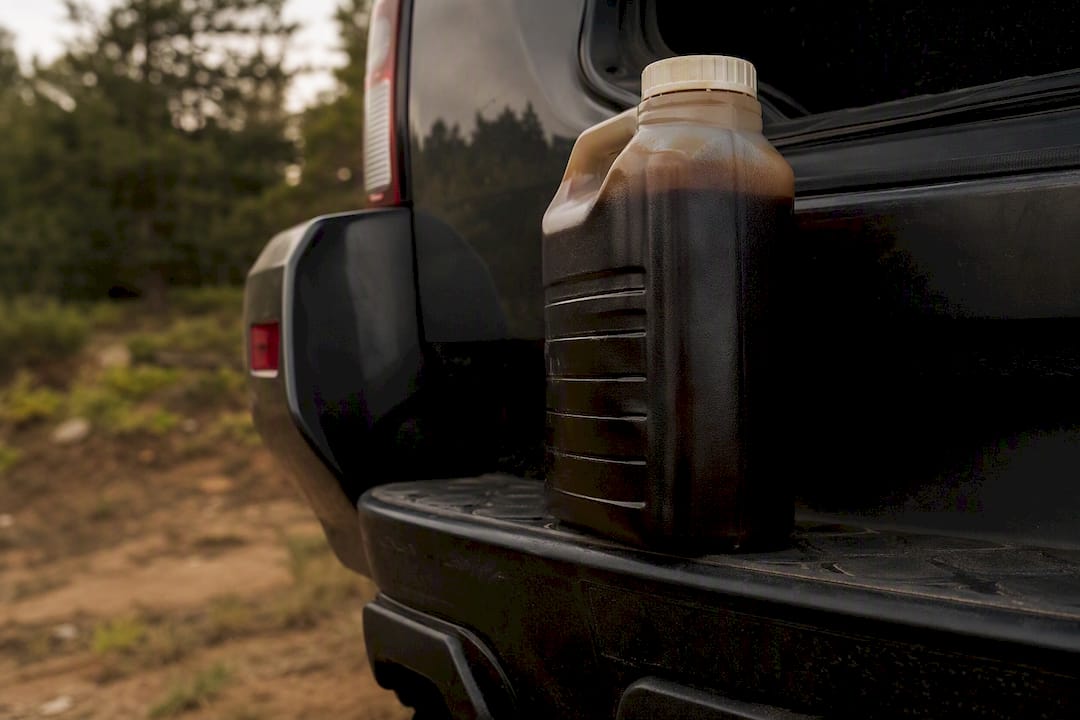
Transfer drained ATF into a sealable, labeled container and keep it upright in the trunk or truck bed, never loose in the trunk. Most auto parts stores and municipal recycling centers accept used ATF, per Castrol’s disposal guidance, but call ahead since policies vary by location. Never pour used fluid down a drain or onto the ground. It’s a persistent contaminant that municipal water systems aren’t built to filter.
Where This Transmission Maintenance Guide Comes From
Frenzycars covers hands-on maintenance work regularly, including our breakdown of oil change intervals and what they actually mean for your engine. The guidance here draws on manufacturer service documentation, AAA’s consumer maintenance advice, Castrol’s own step-by-step procedures, and repair-trade coverage from outlets like Gears Magazine.
Confirming the fill plug is reachable before you drain a single drop stops the most common DIY transmission mistake: fluid on the ground and no clear way to get more back in.
Why the Standard Transmission Advice Skips the Important Part
Most guides treat a transmission fluid change like an oil change with extra steps. It isn’t. The single biggest risk in this job has nothing to do with fluid type or even torque specs. It’s draining a transmission before confirming you can actually get fluid back in, whether that’s a stuck fill plug, a sealed system with no dipstick, or a fill tube buried behind a subframe.
The mileage question gets glossed over too. Plenty of advice treats a flush as the “thorough” option and drain-and-fill as the lazy one. That’s backward for a car with 120,000 miles and no service records. A flush on a neglected transmission can knock loose exactly the sludge that’s been sealing worn clutches, and now you’ve got debris in the valve body instead of a slow leak you never noticed.
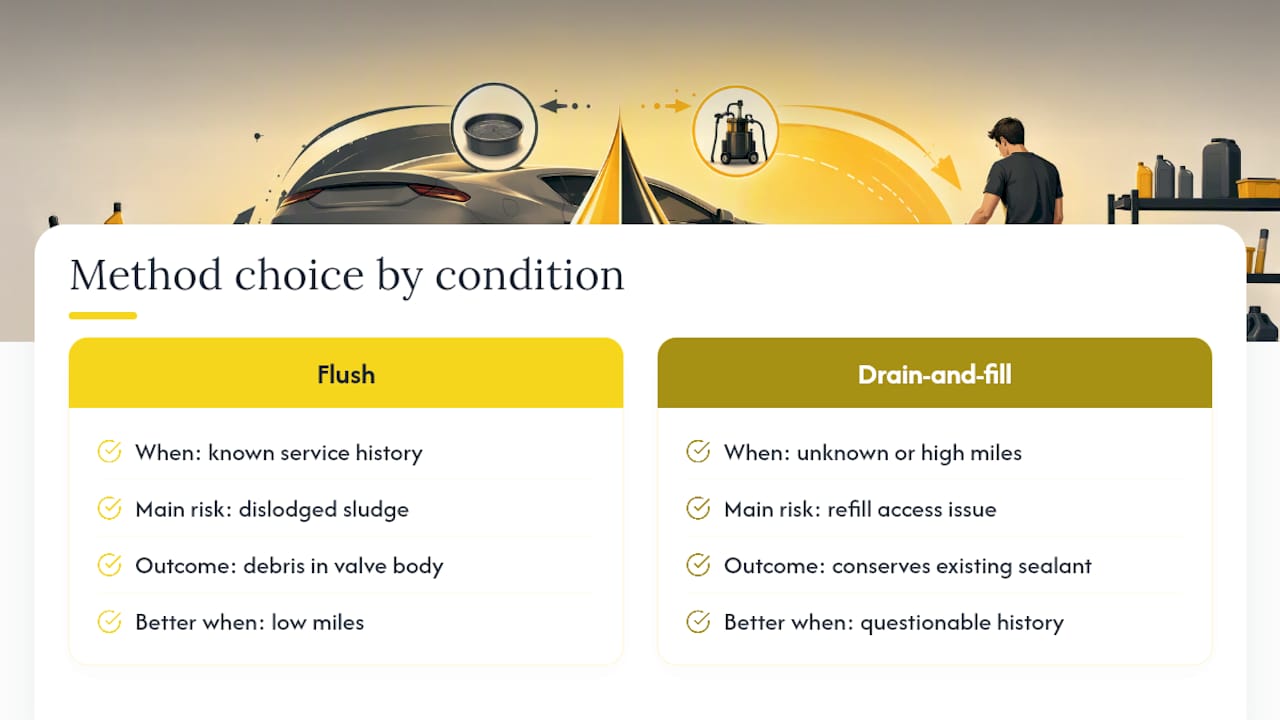
If there’s one thing to prioritize, it’s this: match the method to the vehicle’s actual condition, not to whichever service sounds more complete. A conservative drain-and-fill on a car with questionable history beats a full flush that exposes problems you didn’t know you had.
Sources
- Gears Magazine - Is It Safe to Change Transmission Fluid in High-Mileage Vehicles?
- How to check and maintain your transmission fluid | AAA
- How to Change Transmission Fluid Yourself | Castrol® USA
- Transmission Fluid Change: Boost Your Vehicle’s Performance | Lube Oil Sales
- Is a Transmission Flush Necessary To Prevent Transmission Repairs, or Is It a Waste of Money? | Elite Auto Experts