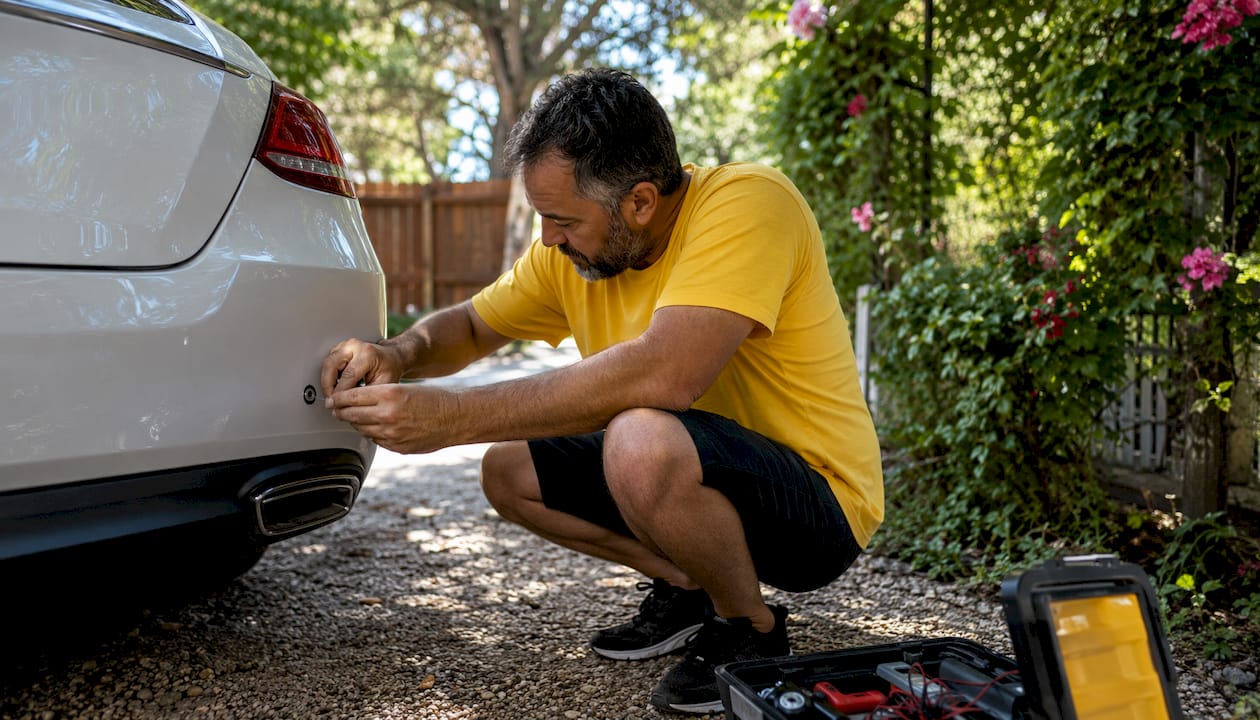
What parking sensors actually do for you
Parking sensors are proximity detection devices built to assist drivers during low-speed maneuvers. They measure the distance between your vehicle and nearby obstacles, then communicate that distance through audio beeps, visual indicators, or both. The closer you get, the faster the beeps. At a continuous tone, you’re inches away.
Most vehicles mount sensors on the rear bumper, where backing collisions are most common. Front sensors are increasingly standard too, typically activating at low forward speeds or after a reverse maneuver. According to NHTSA’s research on rear visibility, these systems were initially marketed as parking aids to help drivers detect obstacles in low-speed backing scenarios, not as full safety systems.
Key things parking sensors do:
- Detect stationary and slow-moving obstacles within a defined range
- Deliver escalating audio alerts as distance decreases
- Display visual distance indicators on dashboards or infotainment screens
- Activate automatically when reverse gear is engaged (rear sensors) or at low forward speeds (front sensors)
They are safety and convenience aids. They are not a substitute for mirrors, head checks, or driver awareness.
How parking sensors work: technology and types explained
Two core technologies power the vast majority of parking sensor systems on the road today.
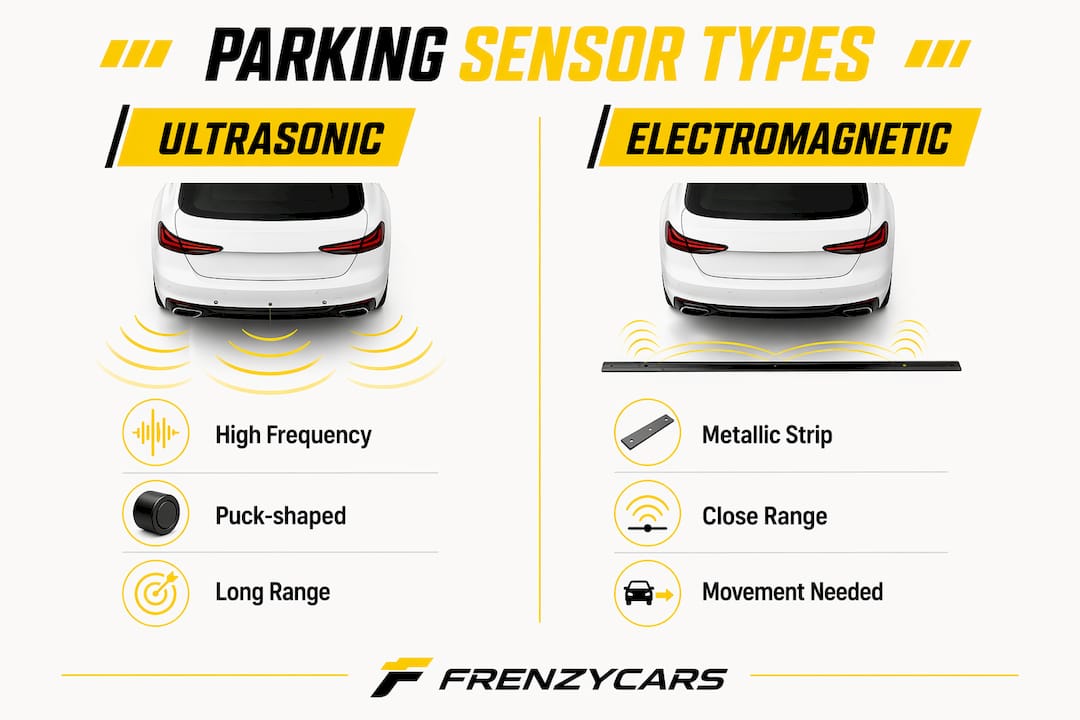
Ultrasonic sensors are the most common. Small, puck-shaped units mounted in the bumper emit high-frequency sound waves near 40 kHz and listen for the returning echo. The control unit calculates distance based on how long the echo takes to return. Slow beeps at a safe distance, faster beeps as you close in, a solid tone when you’re dangerously close. These sensors connect to the vehicle’s LIN bus for module communication and the CAN bus for central gateway coordination, which allows them to work alongside cameras and display systems.
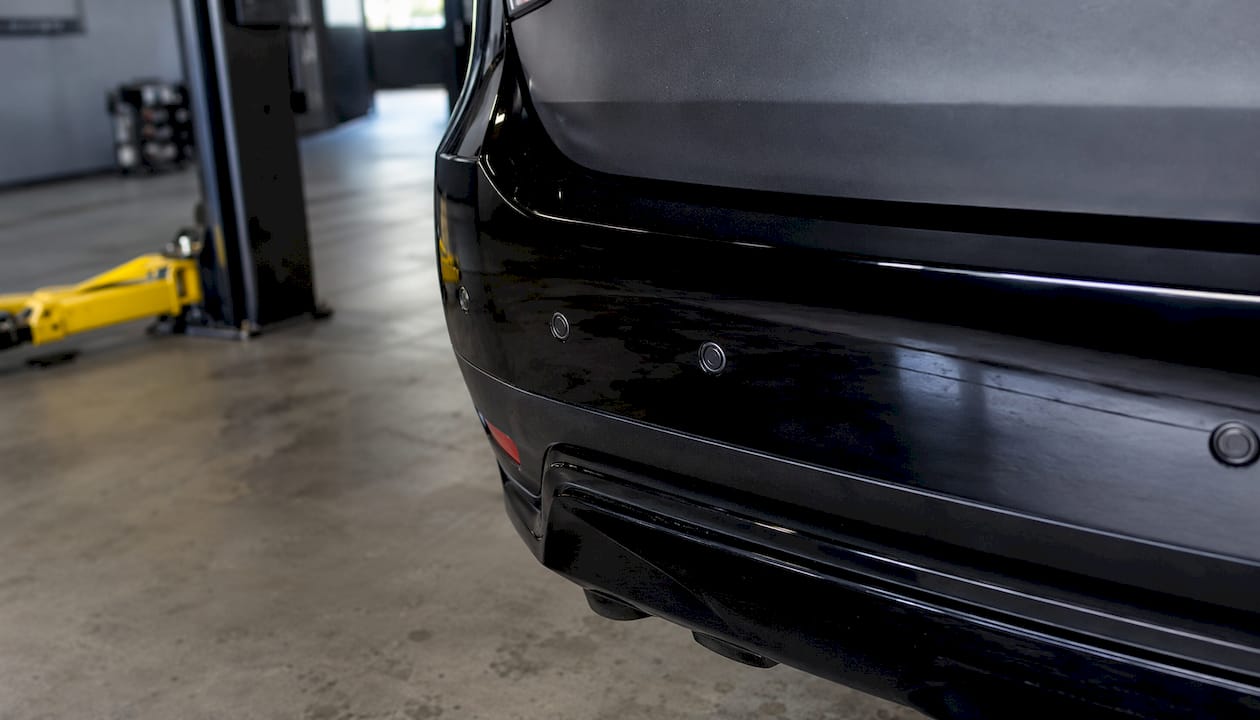
Electromagnetic sensors work on a completely different principle. A strip of metallic foil or wire tape inside the bumper generates a constant low-level electromagnetic field. When a conductive object enters that field, it creates a disturbance. The closer the object, the stronger the disturbance. Unlike ultrasonic sensors, electromagnetic systems don’t emit pulses. They monitor a continuous field, which makes them less susceptible to dirt or ice buildup on the bumper surface.
One important distinction: electromagnetic sensors require the vehicle to be moving to register a detection. They monitor field disturbances caused by motion, so a stationary object only registers when you’re approaching it.
Both sensor types feed raw data to a central control unit, which filters noise, calculates distances, and triggers the appropriate alert level. Visual feedback typically uses a color-coded display: green for clear, yellow for caution, red for danger.
Benefits and real limitations of parking sensor systems
The safety case for parking sensors is real, but it comes with honest caveats.
What they do well:
- Reduce low-speed collisions in tight parking situations
- Warn drivers of obstacles they can’t see directly, especially in large vehicles with poor rear visibility
- Lower parking stress, particularly in crowded lots and narrow garages
- Help protect the vehicle from minor bumper damage, which adds up fast
Where they fall short:
- Ultrasonic sensors can miss flat, angled, or soft objects that don’t reflect sound waves effectively
- Detection of small pedestrians, especially young children, is inconsistent and unreliable according to NHTSA testing
- False alerts occur in certain environments, including near low curbs, speed bumps, or dense vegetation
- Sensors have blind spots, particularly at the extreme edges of bumpers and very close to the ground
Parking sensors are designed to help drivers judge distances when parking at slow speeds. They are not intended to prevent collisions with unforeseen hazards, and current systems are not reliable enough to serve as fail-safe pedestrian detection devices. — NHTSA Backover Prevention Technology Study
For large vehicles with limited sightlines, sensors are especially valuable. But parking sensors benefit large vehicle drivers most when paired with mirrors and active driver attention, not used as a standalone solution.
Best practices for using parking sensors safely
The biggest mistake drivers make is trusting sensors too completely. A sensor alert tells you something is there. It doesn’t tell you what it is, how fast it’s moving, or whether braking now is enough.
How to use them well:
- Always cross-reference sensor alerts with your mirrors and a physical head check
- Learn your system’s warning distances by testing it in a safe, empty lot before relying on it in traffic
- Respond to the first beep, not the continuous tone. By the time the alarm goes solid, you’re already very close
- Keep sensors clean. Mud, ice, and road grime can block ultrasonic sensors and cause missed detections or false alerts
- After any bumper repair or aftermarket installation, verify sensor alignment
Pro Tip: Sensors are least reliable in freezing temperatures when ice coats the bumper, and when detecting narrow objects like poles or bike frames that fall between sensor coverage zones. In those conditions, slow down and rely on your mirrors more than the beeps.
For ongoing sensor health, treat them as part of your regular vehicle maintenance. The performance car maintenance checklist from Frenzycars covers sensor upkeep alongside other systems worth monitoring.
How sensors adapt to different parking environments
Parallel parking is where sensors earn their keep most visibly. As you reverse into a curbside space, rear sensors track your distance to the car behind while front sensors monitor the vehicle ahead. The audio feedback gives you a continuous read on both ends without your eyes leaving the mirrors.
Tight garage spaces present a different challenge. Sensors mounted at bumper height can miss low obstacles like wheel stops or raised curbs. In these situations, the visual display matters more than the audio, since it shows which sensor is triggering and from what direction.
Some modern vehicles combine ultrasonic sensors with a 360-degree camera system, giving you both the distance data and a live overhead view. That combination is particularly useful when pulling into angled or perpendicular spaces where a single sensor zone might not cover the full obstacle picture.
Advanced parking assist systems take this further. The car measures a potential space as you drive past, then steers itself in while you manage the throttle and brake. These systems rely on the same ultrasonic sensor array, just with more processing power behind them.
Key Takeaways
Parking sensors detect nearby obstacles and alert drivers through escalating audio and visual signals, but they are not fail-safe and must be used alongside mirrors and active driver attention.
| Point | Details |
|---|---|
| Two core sensor types | Ultrasonic sensors use sound wave echoes; electromagnetic sensors monitor a continuous field for disturbances. |
| Automatic activation | Rear sensors activate when reverse gear is engaged; front sensors trigger at low forward speeds. |
| Pedestrian detection limits | NHTSA testing found sensor-based systems inconsistent at detecting children, particularly those under 28 inches tall. |
| False alerts are real | Dirt, ice, narrow objects, and low curbs can all trigger missed detections or false warnings. |
| Sensors work best in combination | Pairing sensors with rearview cameras and mirrors gives the most complete picture during any parking maneuver. |