Bumper-to-bumper coverage wins on breadth, protecting nearly every system in the car except a short list of wear items. Powertrain warranties cover far less, just the engine, transmission, and drivetrain, but they usually run longer. The right pick depends on how long you plan to keep the car, how many electronics it has, and how much risk you’re willing to carry once the shorter bumper-to-bumper term runs out.
TL;DR:
- Bumper-to-bumper warranties typically last a few years or moderate mileage, but cover most vehicle components except routine maintenance and cosmetic damage.
- Powertrain warranties often extend longer than bumper-to-bumper but only cover engine, transmission, and drivetrain parts, leaving electronics and comfort systems excluded.
- Owners who keep their cars over seven years or drive electronics-heavy models benefit more from comprehensive bumper-to-bumper coverage due to higher failure risks.
- The coverage gap between the two warranties becomes costly if major electronic or comfort system failures occur after bumper-to-bumper expires but before powertrain coverage ends.
- Reading warranty contracts carefully for exclusions, approval procedures, and documented maintenance is essential to avoid denied claims and unexpected expenses.
What a Bumper-to-Bumper Warranty Covers (and What It Doesn’t)
A bumper-to-bumper warranty, sometimes called an exclusionary contract, works backward from most other coverage types. Instead of listing what’s included, the contract lists what’s excluded, and everything else is covered by default. That structure is why bumper-to-bumper warranties are exclusionary and typically cover nearly every vehicle component except a defined set of parts.
Here’s what typically falls on each side of that line:
- Usually covered: electrical systems, air conditioning, infotainment and navigation, power steering, suspension components, and most factory-installed electronics.
- Usually excluded: tires, brake pads, wiper blades, light bulbs, filters, fluids, and routine maintenance items.
- Also excluded: cosmetic damage and anything from an accident, which falls under your auto insurance instead.
Factory bumper-to-bumper terms tend to last a few years or cover a moderate amount of mileage, though the exact window varies by automaker. Some luxury brands extend it slightly, while a few mainstream brands trim it. Read the actual contract for your model. “Bumper-to-bumper” is a nickname, not a technical spec, and the term length is where most owners get caught off guard.
What a Powertrain Warranty Covers and How Long It Lasts
Powertrain coverage protects the parts that make the car move: the engine, the transmission, and the drivetrain (which includes drive axles and, on applicable vehicles, the transfer case). It’s narrower by design. Where bumper-to-bumper is a catchall, powertrain warranties name specific systems and stop there.
Powertrain warranties cover core propulsion components and are often longer than bumper-to-bumper terms, commonly running several years and a substantial mileage amount from the factory. Some manufacturers push that further, into 7 to 10 year territory on select models, which is one reason powertrain coverage gets marketed as the long-haul option.
What’s typically included and excluded:
- Usually covered: internal engine components, transmission internals, drive axles, and transfer case parts on 4WD or AWD vehicles.
- Usually excluded: belts, hoses, the battery, and other wear items that fail from age rather than mechanical defect.
- Rarely covered: anything electrical connected to the powertrain’s control systems, since those often fall under bumper-to-bumper instead.
If you want a deeper technical breakdown of how these systems interact, particularly on newer vehicles, our guide on how a hybrid powertrain works walks through the mechanics for hybrid-specific drivetrains.
Powertrain vs Comprehensive: A Side-by-Side Look at Real Repairs
The clearest way to see the difference is to look at actual repair bills and ask which warranty would pay for them. Bumper-to-bumper and powertrain terms typically differ by years, not just scope, with bumper-to-bumper usually covering fewer years and miles than powertrain warranties, which run longer. That gap between the two end dates is where a lot of owners get an unpleasant surprise.
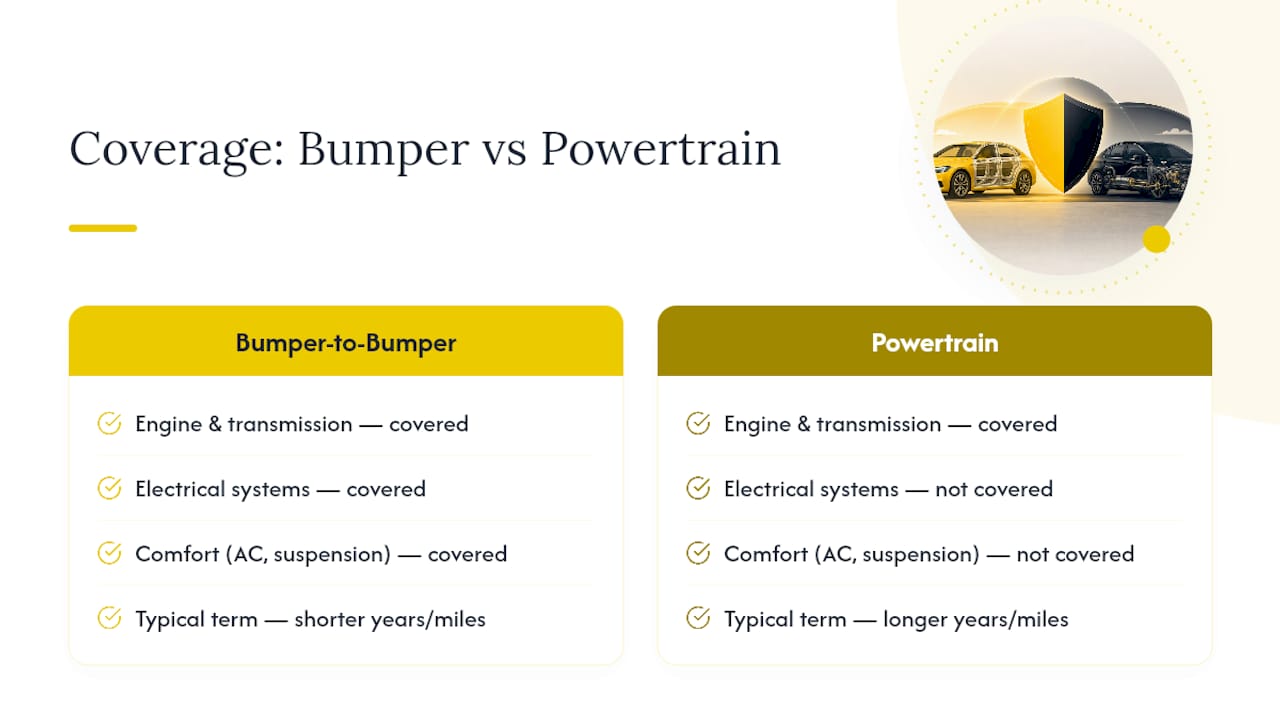
The pattern is consistent: engine and transmission failures tend to be covered by both warranty types, while electrical and comfort systems are covered only by bumper-to-bumper. Once bumper-to-bumper expires but powertrain coverage continues, you’re protected against the big-ticket engine and transmission disasters, but you’re paying out of pocket for AC, electronics, and suspension work. That’s the “gap period,” and it’s usually where the biggest unplanned automotive expenses hit.
When Powertrain Is Enough (and When You Need More)
Your ownership plan matters more than almost any other factor. Here’s how to think through it:
- Selling or trading in within 2 to 3 years? Powertrain-only coverage, paired with whatever bumper-to-bumper term came with the car, may be enough. You’ll likely move on before the gap period becomes a real problem.
- Keeping the car 7 years or longer? Bumper-to-bumper or an extended comprehensive plan makes more sense. Modern vehicles carry dozens of electronic modules, and the failure risk on those parts climbs with age, not just mileage.
- Driving a feature-loaded or luxury model? More electronics mean more potential failure points that powertrain coverage simply won’t touch. Infotainment systems, sensor arrays, and climate control units are common failure points on these vehicles.
- Tight on monthly budget? Compare the actual premium gap. The monthly cost difference between powertrain and comprehensive coverage is often modest, and it frequently costs less than some common mid-tier repair bills.
Pro Tip: Price out one AC compressor repair or one infotainment unit replacement at a local shop before you decide. If either number is close to what a year of extended bumper-to-bumper coverage would cost, the math usually favors the broader plan.
If you’re weighing warranty gaps against total-loss risk, it’s also worth understanding how new car replacement insurance fills a related but different gap, one that has nothing to do with mechanical failure.
How to Read a Warranty Contract Without Getting Burned
The fine print is where good coverage turns into a denied claim. Before you sign anything, extended plan or factory coverage, check these items:
- The full exclusions list, not just the marketing summary on the dealer’s website.
- Whether pre-authorization is required before a shop starts a repair.
- The deductible structure: per-visit, per-repair, or none at all.
- Which repair facilities are approved (dealer-only vs any licensed shop).
- Whether the warranty is transferable if you sell the car before it expires.
- Extra benefits like roadside assistance or rental car reimbursement, which many extended plans bundle in automatically.
Ask the dealer or provider directly: “What voids this contract?” and “Do I need approval before repairs, or can I get reimbursed after paying?” Pre-authorization is often required, and repairs done without it can be denied even when the failure itself would otherwise qualify.
Documentation is the other half of the equation. Claims are frequently denied for missing maintenance records or signs of neglect, so keep a simple log with dates: oil changes, belt replacements, tire rotations, and every receipt from a dealer or independent shop. If you’re shopping extended plans, our extended car warranty roundup breaks down providers by coverage type and cost.
Pro Tip: Photograph your maintenance receipts and store them in a cloud folder tied to your VIN. Paper receipts fade, get lost, or become unreadable right when you need them most.
Why Trust This Warranty Breakdown
This comparison was compiled by Ramón, an automotive writer covering vehicle ownership costs, warranty structures, and maintenance planning. The coverage details above come from manufacturer warranty pages, industry warranty analysts, and real repair-cost examples rather than marketing copy from a single dealer or provider.
The warranty comparisons are built the same way as car reviews: cross-checking claims against primary sources and flagging where contract language varies by manufacturer. For more model-specific research, our car specs database and technical guides cover the mechanical side of what these warranties actually protect.
One Warranty Type Fits Most Buyers, But Not All
If you’re buying a modern car and plan to keep it more than a few years, comprehensive bumper-to-bumper coverage is the safer default. Electronics fail more often than engines do, and that’s exactly the gap powertrain-only plans leave open. Powertrain-only makes sense in narrow cases: short ownership windows, older or simpler vehicles, or tight budgets where the coverage gap is a calculated risk rather than an oversight. Check your specific model’s reliability record and run the numbers through available comparison tools before you decide.
Compare Cars and Coverage Options Before You Buy
Warranty terms only tell half the story. The other half is which car you’re buying in the first place, since reliability, electronics load, and repair costs vary enormously between models even within the same price range. Frenzycars is built as a research resource for exactly this stage of car buying, not a warranty seller, so you can dig into the mechanical realities before you sign anything.
Start with the car specs database to check a specific model’s known reliability record, then browse best cars by category if you’re still narrowing down your options. Shopping electric or hybrid? Our best electric company cars guide flags which models carry the most complex electronics, and therefore the most to gain from comprehensive coverage. Pull up a model page and compare its warranty fine print against what you’ve just read.
Sources
- The Difference Between A Powertrain And Bumper-To-Bumper Warranty
- Your Bumper-to-Bumper Warranty: 7 Things That May Not Be Included
- Powertrain Warranty: Coverage, Cost & Providers
- Unlike part-specific warranties, exclusionary (bumper-to-bumper) plans generally cover nearly everything except routine maintenance items