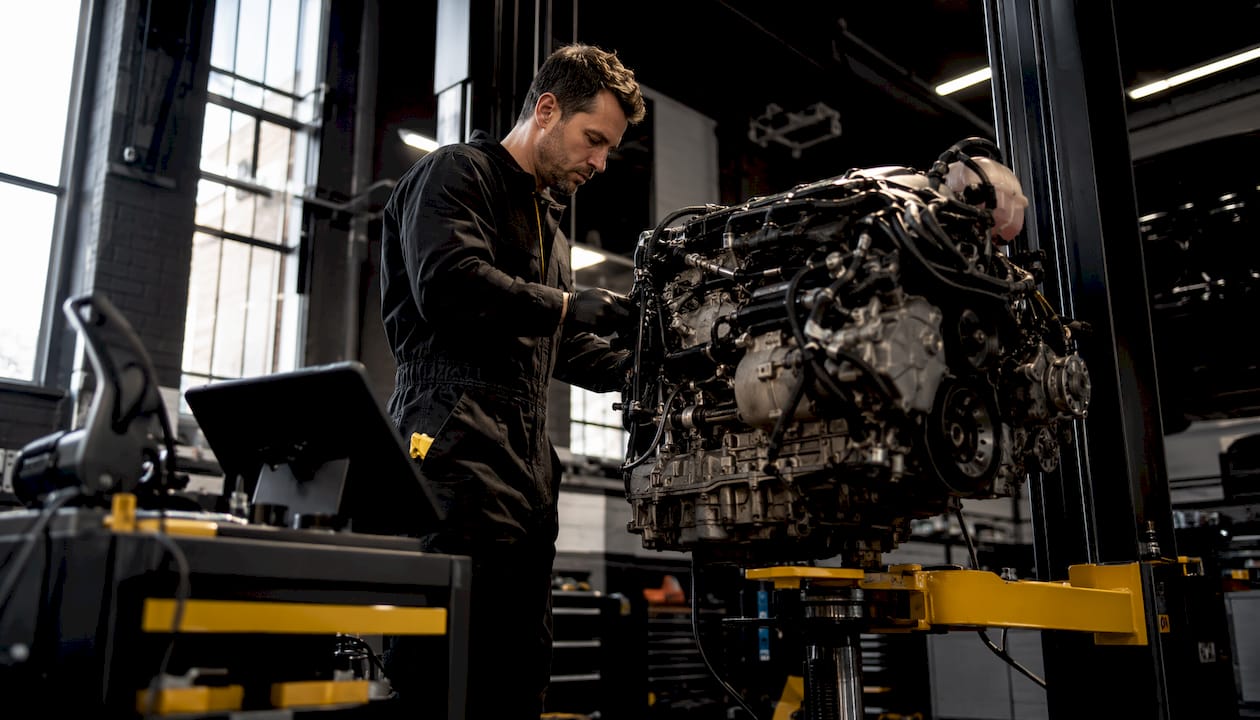
Engine mapping is the process of electronically calibrating an engine’s control unit to improve performance, fuel efficiency, and emissions across all operating conditions. The ECU (Engine Control Unit) acts as the engine’s brain, reading data from sensors and executing commands across dozens of interdependent calibration tables. When a tuner modifies those tables, that’s engine mapping in practice.
The core parameters controlled through engine mapping include:
- Fuel injection: How much fuel enters the cylinder and when
- Ignition timing: The precise moment the spark fires relative to piston position
- Boost pressure: How hard the turbocharger pushes air into the intake
- Rev and torque limiters: Factory-set ceilings that protect the drivetrain
- Thermal and exhaust gas temperature strategies: Protection systems that prevent heat damage
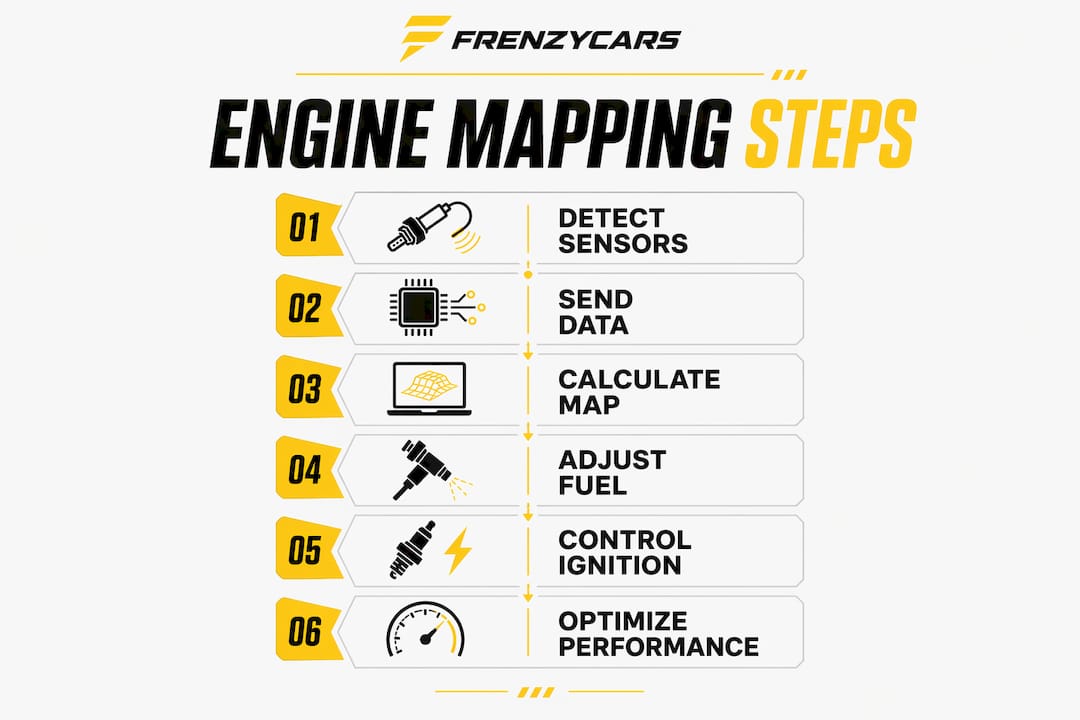
Key sensors feed the ECU in real time: the MAP (Manifold Absolute Pressure) sensor measures intake pressure, the oxygen sensor monitors exhaust gas composition to fine-tune the air-fuel ratio, and the throttle position sensor tells the ECU how aggressively the driver is demanding power. Together, these inputs let the ECU make thousands of micro-adjustments per second.
What does engine mapping actually control?
The ECU doesn’t run on a single map. Inside a modern engine control unit, you’ll find dozens, sometimes hundreds, of calibration tables, each governing a specific function. Think of it as a spreadsheet where every cell holds a value tied to engine speed and load. Change one cell, and the ripple effect touches several others.
The functions a map can influence include fuel-air mixture ratios, ignition advance curves, boost pressure targets, torque request limits, transmission torque intervention, and limp-home protection strategies. Modern ECUs layer torque modeling, exhaust gas temperature controls, and transmission torque intervention to balance performance and longevity simultaneously.
Stock maps are deliberately conservative. Automakers calibrate for global fuel quality variation, extreme climates, long warranty periods, and strict emissions standards. That caution leaves real performance potential untapped. A custom map targets your specific vehicle, your fuel grade, and your use case, rather than the lowest common denominator across every market worldwide.
Factory safety limiters are not arbitrary restrictions. They protect the gearbox, the turbocharger, and the pistons from stress that exceeds their design tolerances. A well-engineered custom map recalibrates those limiters rather than deleting them outright.
How engine mapping works at the technical level
The process follows a clear chain of command inside the ECU. On a diesel platform like the Bosch EDC17, the sequence runs: Driver’s Wish (pedal input converted to a torque request in Nm), Torque Limiter (caps that request to what the drivetrain can survive), FMTC or Fuel Measure Torque Converter (translates approved torque into fuel mass per combustion cycle), and Injection Duration (converts fuel mass plus rail pressure into injector open time in microseconds). The air side runs in parallel, with boost targets and variable turbo geometry delivering the air mass needed to burn the added fuel.
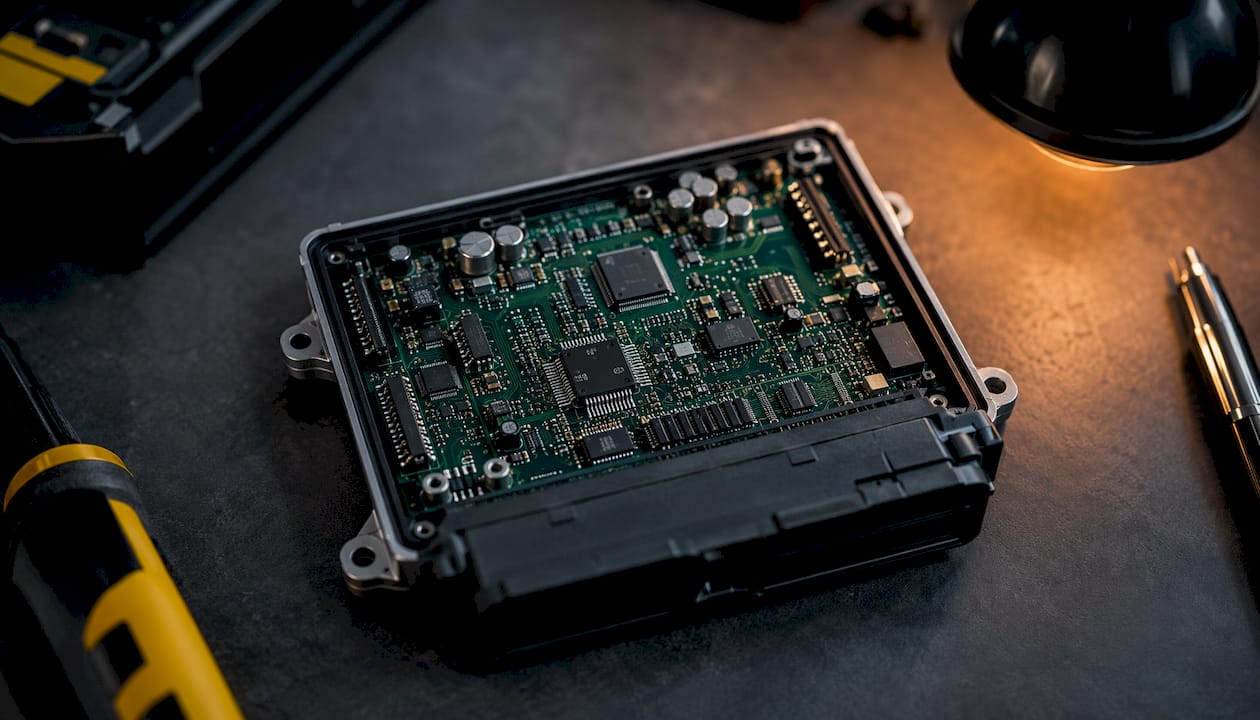
The ECU never directly controls torque. It controls fuel mass and airflow. Torque is a human concept the ECU translates into physical parameters.
Maps are interdependent. Raising the torque limiter without adjusting the FMTC, injection duration, and boost target produces an unachievable torque request. The engine’s physical limits cap it anyway, or worse, the calibration becomes unstable. This is why modifying one table in isolation almost always produces poor results.
Key sensor inputs used during real-time adjustments:
- MAP sensor: Calculates actual air mass in the manifold using the ideal gas law
- Oxygen (lambda) sensor: Closes the loop on air-fuel ratio by reading exhaust gas oxygen content
- Throttle position sensor: Translates pedal input into a torque demand signal
- EGT (Exhaust Gas Temperature) sensor: Guards against thermal damage under high load
- MAF (Mass Air Flow) sensor: Primarily used for EGR control, not AFR calculation
Pro Tip: The MAF sensor is a diagnostic tool for the calibrator, not a primary control parameter to tune. Air-fuel ratio is calculated from MAP sensor data, RPM, and fuel mass, not from MAF readings.
What performance gains can engine mapping deliver?
ECU remapping can increase power output by up to 25% and reduce fuel consumption by 5–10%, depending on the vehicle and the quality of the calibration. Those numbers aren’t guaranteed for every platform, but they reflect what’s achievable on turbocharged engines with meaningful factory headroom.
Torque delivery improves noticeably before peak power does. A well-mapped engine pulls harder from lower RPM, which translates to better real-world drivability, not just a higher dyno number. Throttle response tightens because the ECU’s fueling and boost targets respond more aggressively to pedal input.
Fuel economy gains come from economy-focused maps that lean out the mixture during part-load cruising and optimize injection timing for combustion efficiency. These maps don’t chase peak power. They target the portion of the duty cycle where the engine spends most of its time, which is light-load highway driving. Understanding real-world fuel economy gaps matters here, because even a well-mapped engine won’t always match lab-test projections.
Performance impact at a glance: Research published in Research and Innovation confirms that performance maps can increase power by up to 25%, while economy maps can reduce fuel consumption by 5–10%.
Emissions are where the tradeoffs get complicated. Aggressive overfueling at full load increases particulate matter production. A 10% increase in fuel mass can raise smoke output by roughly 100%, accelerating diesel particulate filter clogging and shortening DPF life. Illegal disabling of emissions controls during remapping increases NOx and particulate matter and carries legal penalties in the US and internationally.
Types of engine mapping strategies
Not every map chases maximum power. The goal determines the strategy, and a good tuner matches the approach to what the driver actually needs.
Performance maps advance ignition timing, raise boost targets, and increase fuel delivery at high load. They’re built for drivers who want more power and torque, typically on modified hardware like upgraded intercoolers or injectors. These maps push closer to the engine’s mechanical limits and require thorough dyno validation.
Economy maps optimize injection timing and fuel quantity during part-load operation. They don’t touch peak power significantly. The gains come from burning fuel more efficiently where it counts most, during everyday driving rather than wide-open throttle.
Custom calibration respecting factory torque models is the approach professional tuners prioritize. The best tunes harmonize with factory torque models, maintaining drivability and reliability rather than chasing peak dyno power. This means working within the ECU’s torque hierarchy rather than overriding it.
Additional strategies include:
- Boost control refinement: Adjusting turbo vane position and boost targets for smoother power delivery
- Rev limiter recalibration: Raising or softening the limiter to match upgraded valve springs or a stronger bottom end
- Transmission torque intervention alignment: Ensuring the gearbox receives torque signals it can handle without slipping or hunting gears
- Towing and load-specific maps: Optimizing low and mid-range torque for vehicles that regularly pull heavy loads
Pro Tip: Limiters are protection systems, not performance enemies. Recalibrate them when hardware upgrades justify it. Removing them outright leads to engine damage and reliability failures.
How to map an engine: the step-by-step process
Professional engine mapping follows a structured sequence. Skipping steps is where most problems originate.
- Full vehicle diagnostics. Check for fault codes, inspect turbo health, assess injector balance, and confirm the cooling system is functioning correctly. Mapping a vehicle with existing faults accelerates their failure.
- ECU data backup. Extract and save the original factory file before any modification. This is the safety net if the new calibration needs to be reversed.
- Read the original ECU map. Connect via the OBD-II port or, on older or more complex platforms, directly to the ECU’s circuit board. Specialized software extracts the binary file containing all calibration tables.
- Modify the calibration data tables. Adjust fuel maps, ignition timing curves, boost targets, torque limiters, and any other parameters relevant to the tuning goal. Every change must account for the interdependence of maps.
- Write the new map to the ECU. Upload the modified file. The ECU now governs the engine according to the revised parameters.
- Dyno testing under load. Run the vehicle on a dynamometer while logging exhaust gas temperatures, air-fuel ratios, boost pressure, and power output. This confirms the calibration is safe and effective under real stress.
- Data review and refinement. Analyze logs for anomalies: lean spikes, EGT exceedances, boost instability. Adjust and retest until the calibration is stable across the full operating range.
| Parameter | Stock setting | Custom map target |
|---|---|---|
| Boost pressure | Conservative factory ceiling | Raised to hardware limit with EGT monitoring |
| Ignition timing | Retarded for low-octane tolerance | Advanced for fuel grade and load |
| Torque limiter | Set for drivetrain protection at factory output | Recalibrated to match upgraded hardware |
| Fuel mass at full load | Lean for emissions compliance | Optimized for power and combustion efficiency |
| EGT protection threshold | Retained | Retained and monitored throughout |
A professional ECU remap stays within the safe operational window of the engine’s components, including turbocharger shaft speed, fuel injector duty cycle, and thermal limits.
Common issues and drawbacks of engine mapping
Most problems with engine mapping trace back to one source: generic, untested calibration files applied without vehicle-specific validation. Generic tuning files cause most risks because they ignore vehicle condition, injector balance, and cooling capacity.
Common issues include:
- Engine wear from aggressive boost requests: Overly high boost targets can cause premature turbocharger failure if shaft speed exceeds design specifications.
- Thermal stress from incorrect ignition timing: A lean fuel mixture combined with advanced timing raises exhaust gas temperatures to levels that damage valves and manifolds.
- Clutch and drivetrain strain: A large torque increase at low RPM can exceed the clamping force of a factory clutch, causing slippage.
- DPF clogging: Poor calibration increases soot production in diesel engines, forcing more frequent regeneration cycles and shortening filter life.
- Voided warranties: Most manufacturer warranties are voided when ECU modifications are detected, leaving repair costs entirely with the owner.
- Emissions violations: Tampering with emissions control systems is illegal under US federal law and carries financial penalties. Vehicles with on-board diagnostics may require additional defeat devices to pass inspections after aggressive remapping, which compounds the legal exposure.
- Mapping as a false fix: Engine remapping is an optimization for healthy engines, not a repair for broken ones. Tuning a failing turbo, a slipping clutch, or a fueling system with faults accelerates their failure rather than masking it.
Reviewing your vehicle’s safety ratings and reliability history before committing to a remap gives you a clearer picture of what the platform can realistically handle.
Expert insights on safe and effective engine mapping
The gap between a safe, effective remap and a damaging one comes down to engineering discipline, not the act of remapping itself.
“Safe ECU tuning is process-driven. It includes full vehicle diagnostics before calibration, ECU data backup prior to modification, custom tuning based on vehicle condition and usage, dyno validation and real-world logging, and after-sales support and refinement if required. It does not rely on generic files. It does not disable safety systems.” — Diesel Tuning Brisbane
Expert calibration technicians consistently point to torque modeling as the foundation of reliable tuning. A map that respects the ECU’s torque hierarchy, keeps gearbox torque intervention signals within spec, and retains exhaust gas temperature protections will hold up over time. One that overrides those systems to hit a bigger dyno number will not.
Key principles from professional tuners:
- Maintain thermal and torque limiters. Ignoring them leads to uncontrolled boost spikes and thermal damage before mechanical limits are reached.
- Demand dyno validation. Real-world logging under load confirms injector duty cycles, EGT, and boost stability. A tune that hasn’t been dyno-tested is a guess.
- Reject generic files. Effective engine mapping requires custom calibration per vehicle because of unique mechanical tolerances, sensor wear, and software version differences.
- Assess engine condition first. High-mileage engines with neglected maintenance face higher cylinder pressures from a performance remap and need a healthy cooling system and quality oil to handle the additional heat.
- Set realistic power goals. Chasing the highest dyno number often means sacrificing drivability, reliability, and longevity. The best tunes feel strong everywhere, not just at peak RPM.
For enthusiasts considering a performance upgrade, the condition of the engine before tuning matters as much as the quality of the calibration itself.
Final thoughts on engine mapping
Engine mapping is one of the most technically demanding modifications you can make to a vehicle, and one of the most rewarding when done correctly. A few key points worth keeping in mind:
- The ECU controls fuel, ignition, boost, torque, and thermal protection through interdependent calibration tables, not a single map.
- Performance remapping can increase power by up to 25% and improve fuel economy by 5–10% on suitable platforms.
- Safe tuning respects factory protection systems and requires custom calibration, dyno validation, and thorough diagnostics.
- Generic files are the primary source of mapping failures, not the concept of remapping itself.
- Engine mapping is an optimization for a healthy engine. It is not a substitute for mechanical repairs.
- Emissions compliance is a legal requirement, not an optional consideration.
Understanding both the technical mechanics and the practical risks puts you in a much stronger position, whether you’re evaluating a tuner’s proposal or simply trying to understand what’s happening inside your ECU. Explore car specs by make and model to understand your platform’s factory calibration baseline before any tuning conversation begins.
Key Takeaways
Engine mapping adjusts interdependent ECU calibration tables to optimize fuel, ignition, boost, and thermal controls, with gains and risks determined entirely by the quality of the calibration.
| Point | Details |
|---|---|
| Performance potential | Performance maps can increase power by up to 25%; economy maps can cut fuel consumption by 5–10%. |
| ECU complexity | Modern ECUs contain dozens of interdependent maps; changing one table without adjusting others produces unstable results. |
| Generic files are the risk | Most mapping failures trace to generic, unvalidated files that ignore vehicle-specific tolerances and sensor offsets. |
| Limiters protect the drivetrain | Factory torque and thermal limiters should be recalibrated, not deleted; removing them risks boost spikes and heat damage. |
| Mapping requires a healthy engine | Remapping accelerates existing faults; full diagnostics before calibration are non-negotiable for safe tuning. |