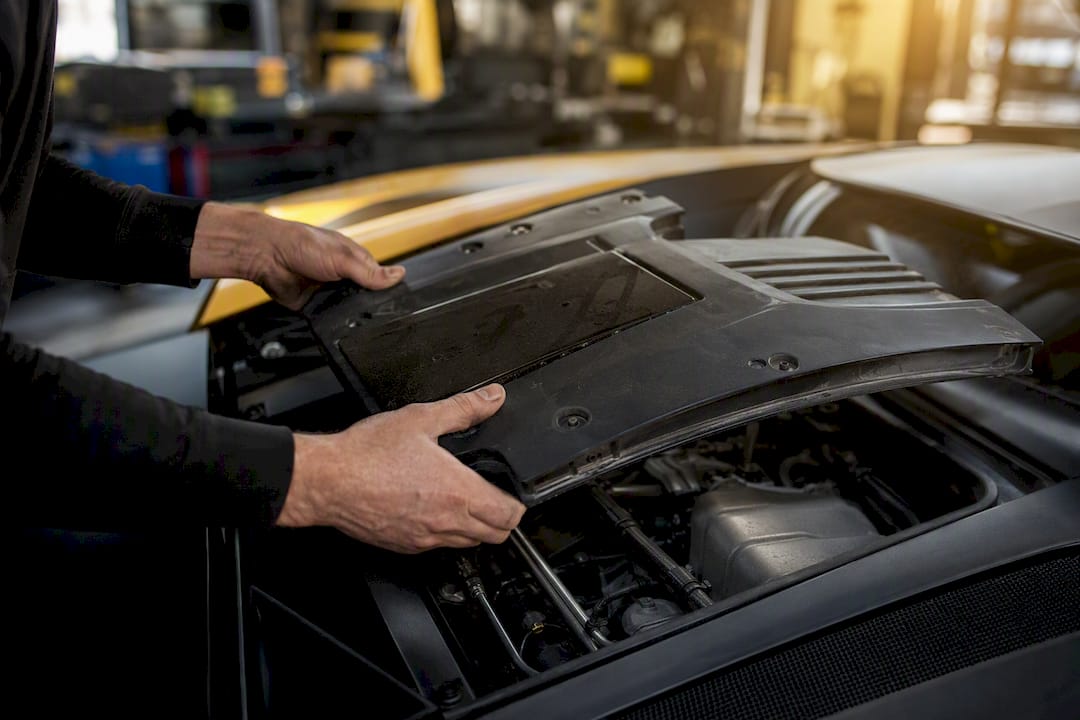
If you want a quick mental list of mid-engine sports cars, here’s the spread: modern picks like the Chevrolet Corvette C8, Porsche 718 Cayman, and Audi R8; affordable used entries like the Toyota MR2, Pontiac Fiero, and early Porsche Boxster; and iconic classics like the Ferrari F430, Lotus Elise, and Porsche 914. The layout puts the engine between the axles, and SCCA notes that centralizing mass this way tends to sharpen cornering balance, often pushing weight distribution close to the 50:50 split engineers chase.
- Chevrolet Corvette C8 — modern, supercar looks at a domestic price.
- Porsche 718 Cayman/Boxster — modern and affordable used, depending on generation.
- Audi R8 — modern, daily-driveable exotic.
- Toyota MR2 — affordable used, a cult classic on a budget.
- Pontiac Fiero — affordable used, the cheapest entry point around.
- Lotus Elise — iconic, featherweight handling purist’s choice.
- Lotus Evora — modern, a rare 2+2 mid-engine outlier.
- Ferrari F430 — iconic, V8 exotic with real racing DNA.
- Alfa Romeo 4C — modern niche, carbon-tub oddball.
- Porsche 914 — classic, the original “poor man’s Porsche.”
Key Takeaways
Mid-engine placement centralizes mass for better cornering balance, but affordability and reliability vary enormously across modern, used, and classic examples.
| Point | Details |
|---|---|
| Layout defines the category | RMR (rear mid-engine, rear-wheel drive) is the standard convention behind nearly every car on this list. |
| Affordable entry points exist | The Pontiac Fiero and Toyota MR2 offer genuine mid-engine ownership well below exotic prices. |
| Modern picks balance usability | The Porsche 718 and Chevrolet Corvette C8 deliver daily-drivable performance without exotic-only compromises. |
| Inspection matters more here | Engine mounts, subframe condition, and hidden leaks deserve extra scrutiny versus a front-engine car. |
| Iconic status drives collectibility | Scarcity, racing pedigree, and originality separate a valuable classic from a forgettable one. |
What Makes a Car “Mid-Engine,” Exactly?
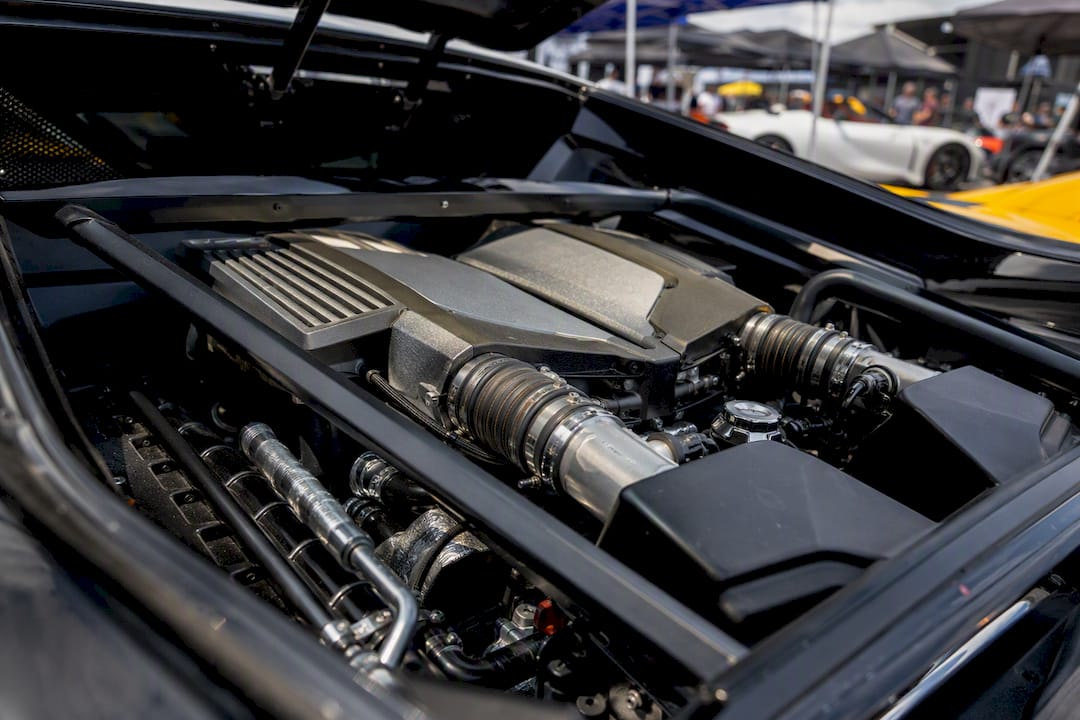
A mid-engine car has its engine mounted between the front and rear axles rather than out front or hung over the rear wheels. In practice, that almost always means rear mid-engine, rear-wheel drive (RMR), where the engine sits just behind the cabin and drives the rear wheels. That’s the layout every car in this article uses, and it’s the convention most people mean when they say “mid-engine.”
There’s also front-mid-engine (FMR), where the engine sits behind the front axle but ahead of the cabin, common in cars like the Chevrolet Corvette C7 and older Jaguars. It gets less attention because it doesn’t deliver the same packaging drama.
The tradeoff for that near-perfect weight balance is space. Since the engine occupies the area a back seat would normally use, most mid-engine sports cars are strict two-seaters:
- Cargo room is usually split between a small frunk and a rear trunk, not one big space.
- Rear visibility often suffers because the engine bay blocks the view.
- Genuine 2+2 mid-engine cars, like the Lotus Evora, exist but remain rare exceptions.
Which Modern Mid-Engine Sports Cars Should You Know?
The current crop of mid-engine sports car models spans a huge price range, and J.D. Power points out that historic affordable entries paved the way for today’s mix of attainable and exotic options.
- Chevrolet Corvette C8 — The first mid-engine Corvette, and arguably the biggest shakeup in the segment in decades. It undercuts European exotics by a wide margin while delivering supercar-level acceleration, which is why Carparts frames it as the car that reset expectations for affordable mid-engine performance. Best for: someone who wants exotic looks with a daily-drivable price tag.
- Porsche 718 Cayman and Boxster — The current generation is refined enough to daily-drive, track on weekends, and still fetch strong resale value. Best for: buyers who want one car that does everything well.
- Audi R8 — Shares its platform bones with the Lamborghini Huracán but wears a more restrained face and a friendlier interior. Best for: someone who wants exotic performance without exotic drama.
- Lotus Evora — The rare mid-engine car with usable rear seats, though “usable” is generous. Best for: enthusiasts who need occasional extra seating.
- Alfa Romeo 4C — A carbon-fiber tub wrapped around a small turbo four, with unassisted steering that rewards a good driver. Best for: purists chasing feedback over comfort.
- Ferrari 296 GTB and McLaren Artura — Both represent where mid-engine exotics are headed: hybridized powertrains without sacrificing the layout’s core handling advantage.
What Are the Best Affordable Used Mid-Engine Sports Cars?
Budget matters as much as badge for most shoppers, and the used market has real bargains if you know where to look.
- Toyota MR2 (all three generations) — Reliable Toyota mechanicals in a mid-engine shell, though the turbocharged SW20 generation carries a reputation for snap oversteer if you lift off the throttle mid-corner. Watch for: rust in the rockers and a well-documented timing belt history.
- Pontiac Fiero — Frequently cited as the most affordable route into mid-engine ownership, with average auction prices sitting well below most other mid-engine cars. Watch for: early models with a documented history of engine fires from oil starvation, largely fixed by 1988.
- Porsche Boxster (986 and early 987) — The IMS bearing issue on early cars scared off a generation of buyers, which is exactly why prices dropped low enough to make them a genuine bargain today. Watch for: confirm the IMS bearing has been replaced or verify the engine uses a later design that eliminated the issue.
- Fiat X1/9 — A cheap, tiny Italian mid-engine convertible that rarely comes up in conversation but delivers real go-kart handling. Watch for: rust everywhere, since these were never built with longevity in mind.
Why are these cars cheap? Mostly age, a spotty reliability reputation that scared off buyers when new, and the simple fact that mid-engine cars depreciate hard once they lose that “new car” shine.
Pro Tip: Before buying any used mid-engine car, pop every access panel you can find and check for oil weeping around the engine, since mid-mounted engines are harder to inspect than a front-engine bay and leaks hide longer. Also crawl underneath and check the subframe mounting points for rust or prior accident repair, since that’s structural in a way it isn’t on most front-engine cars.
What Are the Most Iconic Mid-Engine Cars Ever Made?
Some mid-engine cars transcend spec sheets. These are the ones enthusiasts bring up unprompted.
- Ferrari F430 — A naturally aspirated V8 with a soundtrack that turbocharged successors can’t replicate, and enough production volume that prices have settled into “attainable exotic” territory.
- Porsche 914 — Co-developed with Volkswagen and long dismissed as the budget Porsche, it’s earned real respect and the nickname “poor man’s Porsche” as clean examples get harder to find.
- Lotus Elise — Barely 1,700 pounds, unassisted steering, and a chassis that made Lotus’s “simplify, then add lightness” mantra famous worldwide.
- De Tomaso Pantera — An Italian body over a Ford V8, brutal and analog in a way nothing built today can replicate.
- Ferrari 308 GTB — The car most people picture when someone says “classic Ferrari,” thanks in no small part to a certain TV detective’s Testarossa-red example.
Collectibility on these hinges on scarcity, racing pedigree, and originality. A numbers-matching Elise with its original chassis plate, or an F430 with full service records, commands real premiums. Watch for replaced VINs, non-original engines, and modified suspensions, since all three tank resale value fast.
How Does a Mid-Engine Layout Change the Way a Car Drives?
Centralizing mass between the axles improves cornering balance, but Motor1 is right to caution that the layout alone doesn’t guarantee a car handles well. Engine design matters too.
Benefits:
- More weight over the driven rear wheels improves traction under acceleration and braking.
- A short engine, like a Porsche flat-six, keeps mass close to the car’s center for quick, predictable direction changes.
Trade-offs:
- Long or heavy engines, think old V12s, can create a pendulum effect that makes the car harder to catch once it starts to slide.
- Engine access for maintenance is worse than a front-engine layout, and interior/cargo space always takes the hit.
Pro Tip: Mid-engine cars tend to reward smooth inputs over aggressive ones. Trail-brake gently into corners rather than stabbing the brakes late, since a mid-engine chassis can snap from understeer to oversteer faster than a front-engine car once weight transfer shifts rearward.
What Should You Check Before Buying a Used Mid-Engine Car?
- Inspect engine mounts and the subframe for cracks, rust, or signs of prior accident repair.
- Check for coolant and oil leaks around the mid-mounted engine bay, harder to spot than on a front-engine layout.
- Test suspension bushings for play, since mid-engine cars rely on precise geometry for their handling advantage.
- Pull a vehicle history report and look for frame damage or salvage titles.
- Look for uneven tire wear that points to alignment issues from a bent subframe.
Ownership costs break down roughly into three tiers: classics like the Fiero or 914 run lower routine costs but occasional hard-to-source parts bills; modern used cars like the Boxster or MR2 sit in the moderate range with mainstream parts availability; exotics like the F430 or R8 carry high specialist labor costs. If a seller can’t produce service records on a mid-engine car older than 15 years, walk away or insist on a specialist pre-purchase inspection before you negotiate further.
Which Mid-Engine Car Fits Your Goals Best?
- Best daily driver: Porsche 718 Cayman. It handles beautifully and doesn’t punish you on a rough commute.
- Best track-day value: Toyota MR2 (SW20 or later). Cheap to buy, cheap to modify, forgiving once you learn its quirks.
- Best bargain buy: Pontiac Fiero. Nothing else gets you into mid-engine ownership for less.
- Best collectible: Ferrari F430. Naturally aspirated V8 Ferraris are only getting harder to find at reasonable prices.
Frenzycars builds these picks around real ownership tradeoffs, not just spec sheets, and you can dig deeper into detailed model specs before you shop.
Why We Keep Coming Back to Mid-Engine Cars
There’s something about a chassis built around one idea, balance, that never gets old to write about.
Sources
- Pobst position: How engine placement affects handling | SCCA
- Why are mid‑engine cars better? — Motor1
- What Is a Mid‑Engine Car? — J.D. Power
- Pontiac Fiero Is The Cheapest Used Mid‑Engined Sports Car In 2025 — HotCars