TL;DR:
- A systematic brake upgrade improves stopping power, heat dissipation, and pedal feel by matching parts to driving demands.
- Most drivers benefit from starting with pads, fluid, and brake lines before considering larger rotors or calipers, especially for frequent high-temperature braking.
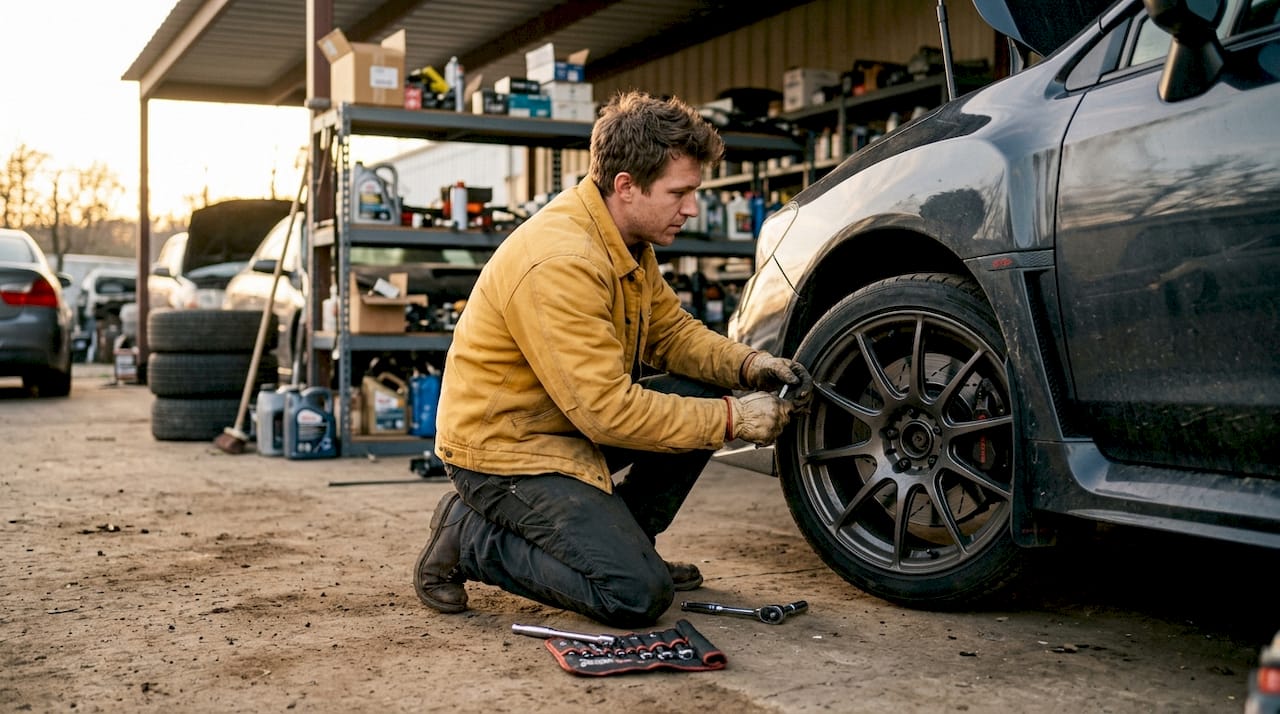
A brake upgrade for performance cars is any system-level modification that improves stopping power, heat resistance, and pedal feel beyond factory specifications. The term covers everything from swapping pad compounds to installing a full Big Brake Kit (BBK). Frenzycars covers this topic because the wrong upgrade sequence wastes money and can actually hurt braking consistency. The right sequence follows a clear logic: fix thermal management first, then match pads and rotors to your driving demands, and only then consider larger calipers and rotors. A complete system approach prevents the mismatched brake bias that plagues cars with one upgraded component and three stock ones.
What are the main brake upgrade tiers for performance cars?
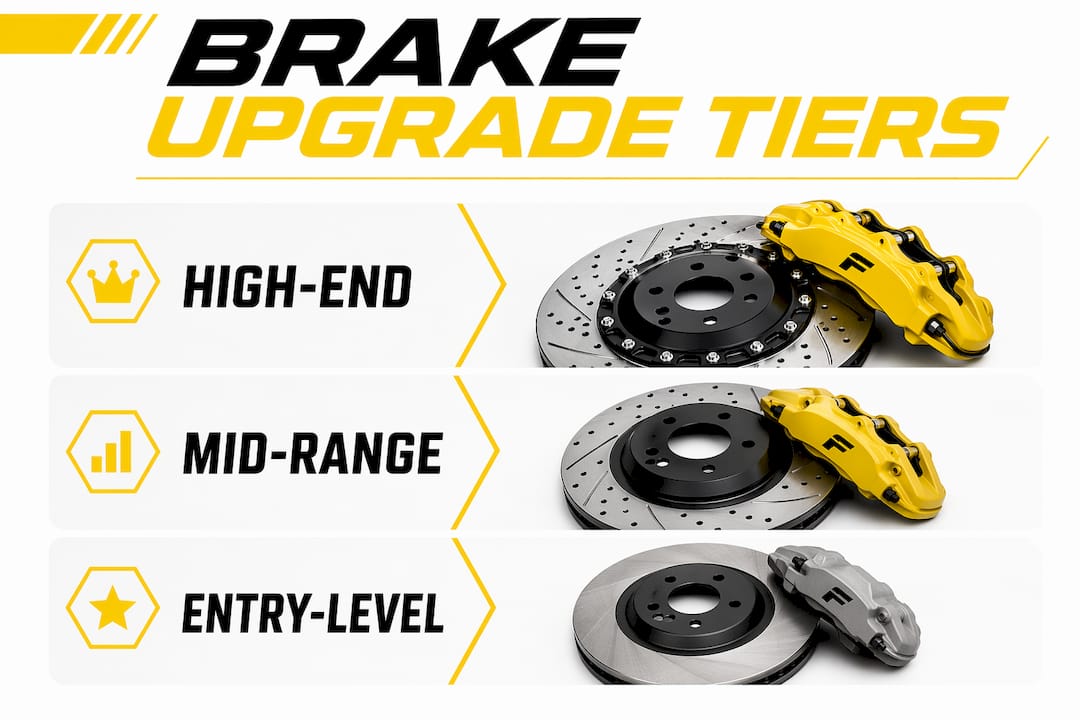
Brake system upgrades fall into three tiers based on cost, use case, and thermal demand. Knowing which tier fits your driving style prevents overspending on hardware you will never stress.
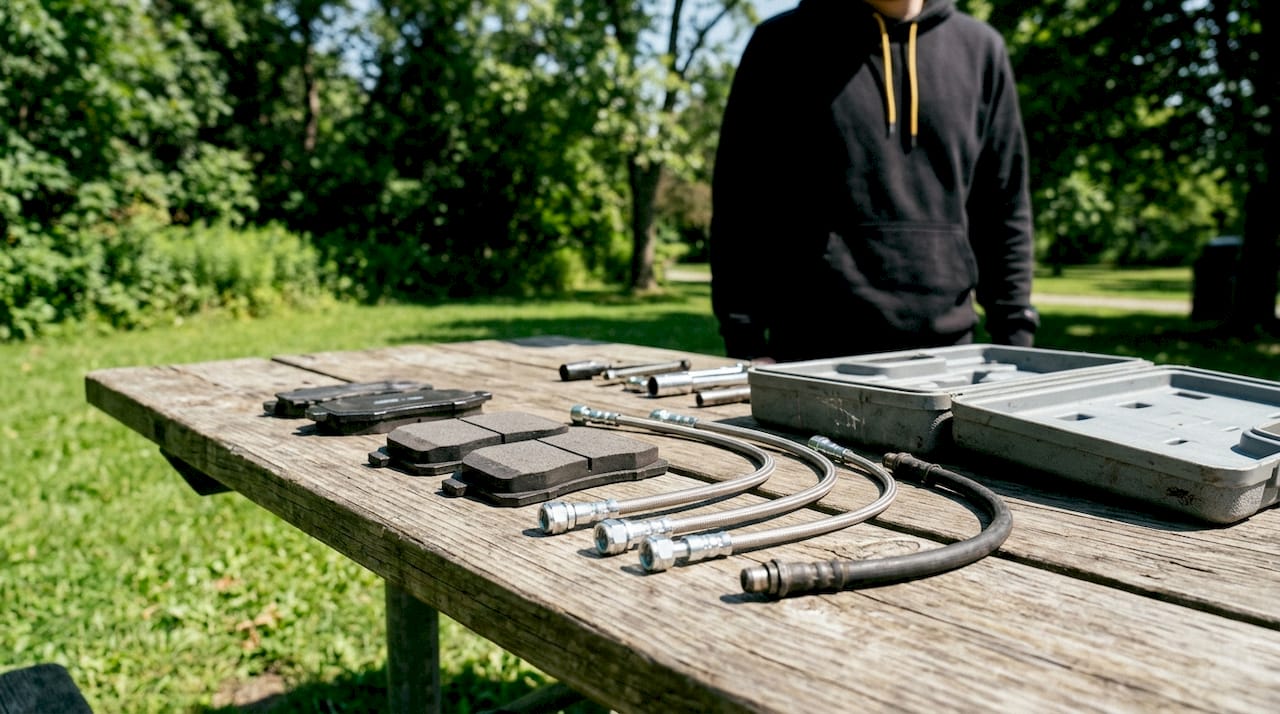
Entry level ($250–$400) covers performance brake pads and braided stainless steel lines. Braided lines replace the rubber OEM hoses that expand under pressure, giving you a firmer, more consistent pedal. This tier suits spirited street driving, canyon runs, and occasional track days where brake temperatures stay moderate.
Mid range ($1,000–$2,500) adds slotted rotors and upgraded two or four-piston calipers. Slotted rotors channel heat away from the pad surface and scrape debris off the pad face, keeping bite consistent during repeated hard stops. This tier handles most amateur track days and high-performance street cars without the complexity of a full kit.
High end ($2,500–$8,000+) means a full Big Brake Kit: multi-piece rotors and multi-piston calipers engineered for sustained track use. BBKs use forged aluminum calipers and two-piece vented rotors that reduce unsprung weight while maximizing thermal capacity. This tier is for dedicated track cars, heavy performance vehicles, or drivers who consistently push brakes to their thermal limits.
Pro Tip: Match your upgrade tier to your actual driving frequency, not your aspirations. A weekend driver who hits one track day per year gets more value from a $350 pad and line upgrade than a $5,000 BBK.
The tier you choose depends on three factors: how often you brake hard, how much power your car makes, and whether you drive on the street, the track, or both. A system-level upgrade philosophy that matches pads, rotors, fluid, and lines to one use case always outperforms a mix of mismatched parts from different tiers.
How does brake cooling affect upgrade performance?
Thermal management is the most underrated variable in any brake system upgrade. Before you spend money on larger rotors or more pistons, address how heat leaves your brakes.
Brake ducting directs cool air from the front bumper directly onto the rotor face. Ducting to stock brakes can improve rotor cooling efficiency by up to 30%. That gain often delivers better lap consistency than bolting on a larger rotor without fixing airflow first.
The reason is straightforward. Brake fade happens when rotor and pad temperatures exceed the thermal threshold of the materials. A bigger rotor stores more heat but does not necessarily shed it faster. Ducting actively removes heat from the system, keeping temperatures in the operating range of your pad compound. The result is a consistent pedal feel across multiple hard braking zones, not just the first one.
Cooling options worth considering:
- Brake ducts: Flexible hose kits routed from the front splitter or bumper opening to the rotor hat. Cost-effective and highly impactful.
- Vented rotor hats: Two-piece rotor designs allow air to circulate through the hat and into the rotor vanes.
- Brake cooling shields: Direct airflow away from wheel bearings and toward the rotor face.
- Wheel design: Open-spoke wheels improve passive airflow to the brake assembly compared to covered designs.
Pro Tip: Install brake ducting before your next track day and note pedal feel on lap 5 versus lap 1. The difference will tell you more about your thermal needs than any spec sheet.
Thermal management is often the step that makes a mid-range brake kit perform like a high-end one. Fix the cooling first, then reassess whether you actually need bigger hardware.
What pads and rotors suit different driving scenarios?
Pad compound and rotor style are the two decisions that most directly shape how your brakes feel and perform. Getting them wrong creates noise, dust, cracking, or inconsistent bite.
Pad compounds explained
Ceramic pads produce low dust, low noise, and consistent feel across a wide temperature range. They suit daily drivers and light performance use. Their weakness is that they do not reach peak friction until they warm up, which makes them less effective for cold emergency stops in aggressive driving.
Semi-metallic pads generate more heat transfer to the rotor but offer stronger bite across a broader temperature range. They work well for spirited street driving and occasional track use. Expect more dust and slightly more noise than ceramics.
Track and race compounds (carbon-metallic or full-race formulations) require heat to activate. They deliver maximum friction at high temperatures but perform poorly when cold. Running race pads on a daily driver means reduced stopping power during the first few minutes of every drive.
Aggressive performance pads on daily drivers cause increased noise, brake dust, and poor cold-weather performance. OEM-style or mild performance pads suit the vast majority of street drivers far better.
Rotor styles compared
| Rotor style | Best use | Key advantage | Key risk |
|---|---|---|---|
| Smooth/OEM | Daily driving | Quiet, low dust, long life | Limited heat dissipation |
| Slotted | Track and performance street | Vents gas, scrapes pad debris | Slightly faster pad wear |
| Drilled | Light performance street | Looks appealing, mild cooling | Stress cracks under thermal cycling |
| Two-piece | Dedicated track | Reduces unsprung weight, replaceable hat | Higher cost |
Slotted rotors are the preferred choice for track use because they vent gas and scrape the pad face without creating the stress points that drilled holes introduce. Drilled rotors look aggressive but crack under repeated thermal cycling at sustained high temperatures. Two-piece rotors take the slotted design further by separating the hat from the rotor face, allowing partial replacement and reducing unsprung weight.
Pro Tip: If you want the look of drilled rotors without the cracking risk, choose a slotted-and-drilled hybrid rotor for street use only. Never run drilled-only rotors on a dedicated track car.
When does a Big Brake Kit actually make sense?
A Big Brake Kit is the right investment in a narrow set of conditions. Understanding those conditions saves you thousands of dollars.
BBKs prove their value when you consistently hit brake temperatures above 1,200°F (650°C) during track sessions. At those temperatures, stock rotors and calipers cannot shed heat fast enough to maintain consistent pedal feel. BBKs only justify their cost when other upgrades are already in place and thermal limits are still being reached.
The most common mistake is buying a BBK before addressing the real limiting factors. Tire grip is the primary constraint on braking distance for most cars. Stock brakes can trigger ABS well before the rotor reaches its thermal limit. Upgrading tires improves stopping distance more than larger brakes in most real-world emergency stops.
The correct upgrade sequence is:
- Step 1: Upgrade to performance pads and high-temperature brake fluid (DOT 4 or DOT 5.1).
- Step 2: Replace rubber brake lines with braided stainless steel lines.
- Step 3: Add brake ducting to manage rotor temperatures.
- Step 4: Upgrade to slotted or two-piece rotors if thermal limits are still being reached.
- Step 5: Install a BBK only after all prior steps are in place and you are still experiencing fade.
A Big Brake Kit does not make a slow car fast or a street driver safer. It makes an already well-sorted brake system more consistent at sustained high temperatures. If you are still on stock tires and stock fluid, a BBK is the most expensive way to solve the wrong problem.
Modern high-performance brake kits use forged aluminum calipers and two-piece vented rotors that reduce unsprung weight and improve rigidity. Those engineering advantages matter at the track. On the street, they are largely invisible to the driver.
BBKs also add complexity. Larger rotors require larger wheels to clear the caliper. Multi-piston calipers need careful bedding and specific pad compounds to perform correctly. Factor in those requirements before committing to the investment.
Key Takeaways
A brake upgrade for performance cars delivers real gains only when the full system, including pads, fluid, lines, cooling, and rotors, is matched to the driving use case.
| Point | Details |
|---|---|
| Upgrade in sequence | Start with pads and fluid, then lines and cooling, before moving to larger rotors or calipers. |
| Cooling before size | Brake ducting improves rotor cooling by up to 30%, often outperforming a larger rotor without airflow. |
| Match pads to use | Track compounds need heat to work; daily drivers perform better with ceramic or OEM-style pads. |
| Slotted beats drilled | Slotted rotors handle sustained track heat without the cracking risk that drilled holes introduce. |
| BBKs are a final step | Big Brake Kits only justify their cost when brake temps consistently exceed 1,200°F and all other upgrades are in place. |
The upgrade most drivers skip first
After years of reading track reports and talking to drivers who have spent real money on their brake systems, one pattern stands out. The enthusiasts who get the best results spend their first $400 on pads, fluid, and braided lines. The ones who spend $4,000 on a BBK first often come back asking why their brakes still fade.
The physics are not complicated. Your tires limit how fast you can stop. Your pad compound and fluid limit how consistently you can stop when hot. Your rotor size and caliper piston count limit how long you can sustain that consistency at extreme temperatures. Most drivers never reach step three in real-world conditions.
I have seen the Ford Mustang GTD’s braking data from Nürburgring laps, and even at that level, the engineers obsess over cooling and pad compound before rotor diameter. The sequence matters at every level of the sport.
The other thing most guides skip is the tire conversation. Sticky tires on stock brakes will cut your stopping distance more than a BBK on all-season tires. That is not a popular opinion when someone wants to spend money on shiny calipers, but it is the truth.
My honest recommendation: follow the performance car maintenance checklist approach and treat brakes as a system. Audit your current setup, identify the weakest link, and fix that first. The weakest link is almost never the rotor size.