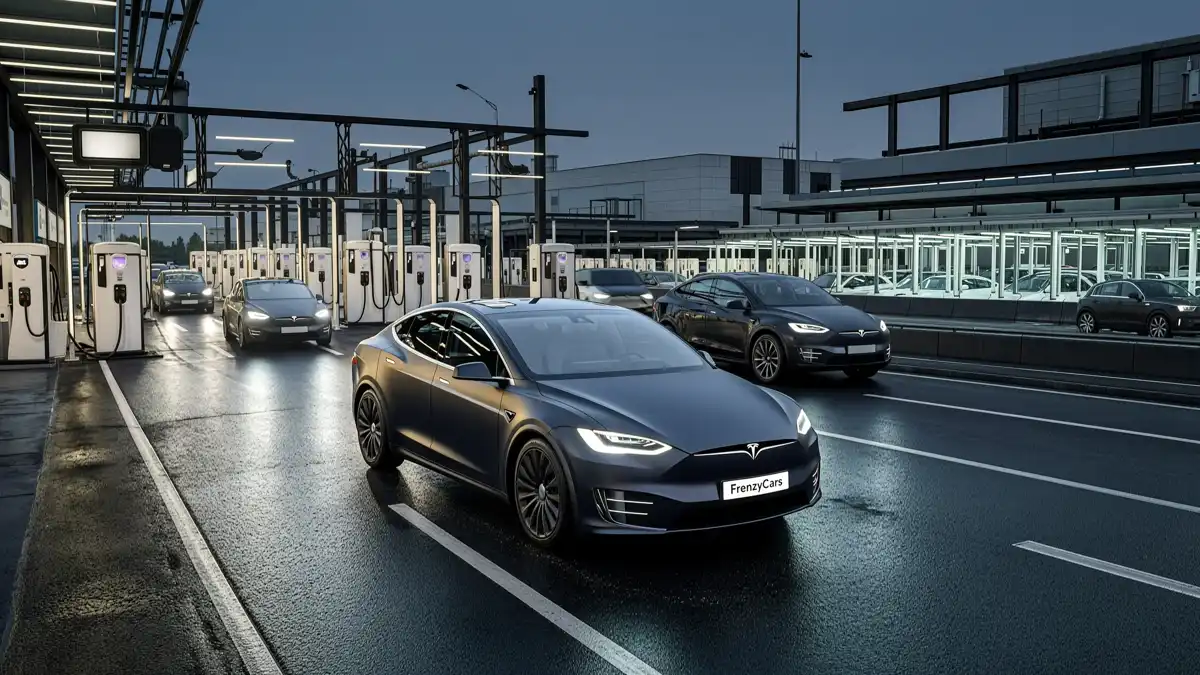
Tesla just turned its robotaxi into a rolling satellite receiver. On Monday, the company confirmed that the production version of the Cybercab will come with a factory-installed Starlink V5 terminal—embedded directly into the roof structure. The announcement, published simultaneously on Tesla and Starlink social media accounts, shows a clean cutaway of the Cybercab’s roof with the new satellite antenna clearly labeled alongside the usual hardware: cameras, GPS unit, and 5G LTE antenna. This isn’t a sketch or a speculative render; it’s a definitive engineering declaration from both Tesla and SpaceX’s satellite division. The move comes just one day before Tesla is set to report its second-quarter 2026 earnings, and as the company races to prove that its autonomous ride-hailing business can scale beyond initial launch markets.
Starlink V5 Integration: Official and Factory-Integrated
The Cybercab will be the first vehicle in Tesla’s lineup to carry direct Starlink V5 integration, embedding the latest generation of SpaceX’s satellite terminal into a purpose-built robotaxi. The hardware isn’t bolted on as an aftermarket add-on; it’s a structural part of the vehicle from day one. According to the announcement, the terminal sits alongside the Full Self-Driving computer, GPS antenna, and 5G hardware, all neatly packaged in the roof area. The integration was all but confirmed earlier when test cars with temporary satellite dishes appeared on Austin streets, but Monday’s official confirmation makes it clear: every production Cybercab will have always-on satellite connectivity from the factory. For a vehicle designed to operate without a human driver, constant, reliable internet is not a luxury—it’s a necessity. While 5G can cover most urban and many suburban areas, Starlink provides a backup (and primary) link in rural zones, tunnels, or areas with weak cellular coverage. This means the Cybercab can maintain a data connection for over-the-air updates, real-time routing, passenger entertainment, and remote monitoring no matter where it roams.
Robotaxi Rollout Accelerates: Orlando and Tampa Join the Network
Tesla isn’t waiting for the Cybercab to launch before expanding its robotaxi ambitions. On Tuesday, the company expanded its autonomous ride-hailing service to Orlando and Tampa, Florida, according to a Reuters report. The move comes just ahead of Wednesday’s earnings call and underscores Tesla’s urgency to demonstrate that its robotaxi network can scale beyond the initial markets. By adding two major Florida cities, Tesla is now covering a significant portion of the state’s population, and the timing is deliberate: investors have been pressing for concrete evidence that the robotaxi push is generating real revenue and not just promises. The Cybercab, once it enters production, will be the vehicle purpose-built to serve this expanding network, and Starlink V5 integration ensures that every ride—whether in downtown Tampa or a remote stretch of Highway 75—remains connected.
Why Always-On Connectivity Matters for a Driverless Fleet
For an enthusiast or buyer, the Starlink V5 integration isn’t just a geeky spec—it fundamentally changes what the Cybercab can offer. A driverless taxi might need to navigate areas with spotty cell service; with satellite backup, it won’t lose its link to the fleet command center. Plus, passengers can stream video, work, or stay connected during rides without relying on their own mobile data. For Tesla, the integration also means the Cybercab can receive critical software updates and send diagnostic data even when parked underground or in a rural garage that lacks cellular coverage. This is a key differentiator in the autonomous ride-hailing market, where competitors often depend on cellular networks alone.
Earnings Context: The Stakes for Tesla’s Q2 Report
Tesla reports second-quarter earnings after Wednesday’s market close, and the Cybercab Starlink announcement is clearly designed to keep attention on the company’s autonomy narrative. Wall Street has been skeptical: Tesla is now in negative free cash flow for the first time in more than two years, largely due to rising AI and autonomous driving expenditures. Investors want to see that spending translate into a real, scalable business—not just promises. The expansion of robotaxi service to Orlando and Tampa provides a concrete data point, and the Starlink integration shows Tesla is thinking through the operational details of a fully driverless fleet. However, with a “sell” rating from Glj Research and a price target of $24.86, the stock faces headwinds. Tuesday’s 2.5% rise to $378.93 (with a high of $384.07) suggests some optimism, but the real test will come when Elon Musk answers questions about how Tesla plans to turn AI hype into cash flow.
Tesla is expected to provide further details on Cybercab production timing and robotaxi network expansion during its Q2 earnings call on Wednesday. For now, one thing is clear: when the Cybercab hits the road, it will have a direct line to orbit.