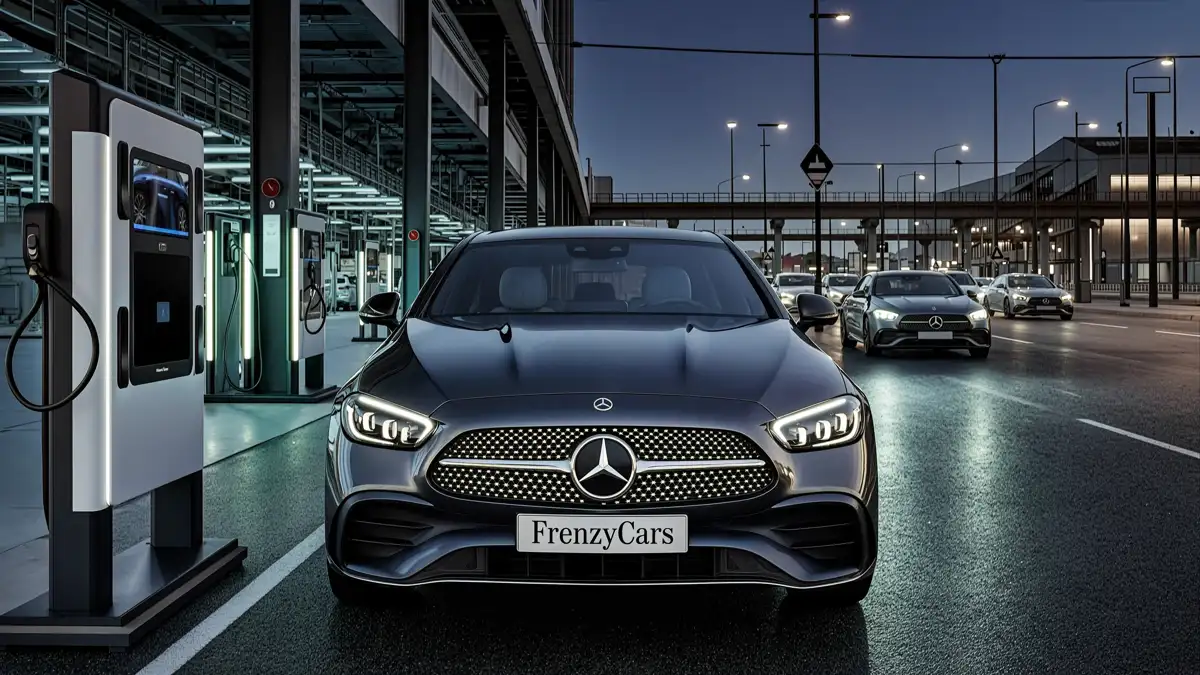
It has the familiar compact-sedan proportions, but Mercedes-Benz wants the updated C-Class to feel like a very different machine. The company has revealed a comprehensively updated C-Class sedan and estate, calling it the most extensive technical upgrade in the nameplate’s history. That is not the kind of language Mercedes typically uses for a mid-cycle facelift, and the scope confirms it: the changes go well beyond a new grille and a few trim pieces, encompassing exterior design, the cabin, and the electronics that run the car. According to Mercedes-Benz, the updated C-Class is being pulled closer to the software-driven direction of the automaker’s newest models, which matters for buyers because the C-Class has long been the entry point into Mercedes’ core luxury experience.
A Sharper, More Imposing Face With S-Class DNA
The exterior changes are immediately visible, and they lean hard into the design language of the bigger S-Class. The refreshed C-Class gets a more imposing front end with an enlarged grille and a new “starry headlight” treatment, according to the design details revealed with the car. Mercedes is clearly positioning the C-Class as a small S-Class in visual terms, and that is a meaningful shift for a model that has spent years in the shadow of its bigger siblings. It also matters in the showroom: the C-Class fights directly against the BMW 3 Series in a segment where design freshness is a major factor, and an aggressive, upscale front end can be the difference between a shopper walking past or stopping for a closer look. Both the sedan and the estate get the same treatment, so wagon buyers are not left with a diluted version of the new look.
MB.OS, AI Assistants, and a Cabin That Goes Beyond a Screen Swap
Mercedes has described this as its biggest technical upgrade for the C-Class, and the cabin is where that claim carries the most weight. The updated car introduces MB.OS, Mercedes’ proprietary operating system, along with AI-driven assistants and Google Gemini integration. This is a major step for the compact executive segment because MB.OS is the software backbone of Mercedes’ newest models, including the recently launched electric C-Class. For owners, the presence of MB.OS should mean that the C-Class is not starting from a technology disadvantage against newer rivals or against Mercedes’ own flagship models. The AI assistants are intended to make interactions with the car more natural, and the inclusion of Google Gemini indicates that this update is as much about software capability as it is about horsepower. The overall cabin presentation has also been revised as part of the overhaul, reinforcing the impression that the interior is meant to mirror the S-Class experience in a smaller, more accessible package.
New Powertrains: Mild-Hybrid Punch and a Plug-In With Real Range
The technical side of the update extends under the hood. One of the key new powertrains is a 2.0-liter turbo with a 48-volt mild-hybrid system that produces 255 hp and 295 lb-ft of torque, with the integrated starter generator adding an extra 23 hp and 151 lb-ft. That gives the mild-hybrid C-Class more usable torque and a response advantage when pulling away from a stop, not just a token electrical assist. The update also includes a temporary 27-hp boost function on certain versions, adding a useful surge without a larger engine. At the higher end of the lineup, the C 400 e 4MATIC pairs a 100-kW electric motor with a 19.53-kWh battery and is rated at up to 62 miles of electric-only range. For a car in this class, that is a significant number: it allows many owners to complete a daily commute in pure EV mode while still having the comfort and capability of a traditional C-Class for longer trips. Mercedes is continuing to offer internal-combustion versions of the C-Class alongside its new electric models, but the new electrified powertrains show that the ICE side of the family is not being left behind.
What This Means for Buyers
The C-Class has always occupied a special place in the Mercedes lineup. For decades it has been the car that introduces buyers to the brand’s comfort, luxury, and engineering, and the updated version takes that role more seriously than ever. Mercedes is calling this facelift the most extensive technical upgrade in the nameplate’s history, and the arrival of MB.OS, AI assistants, and revised powertrains suggests the company is trying to future-proof the C-Class against newer competition. The timing also matters: the update follows the European market launch of the electric C-Class, and it shows that the internal-combustion C-Class will continue to receive serious investment even as Mercedes builds out its EV lineup. There is also a confirmed early 2027 arrival for Australia, giving buyers a clear timeline for when the updated model will land in showrooms.