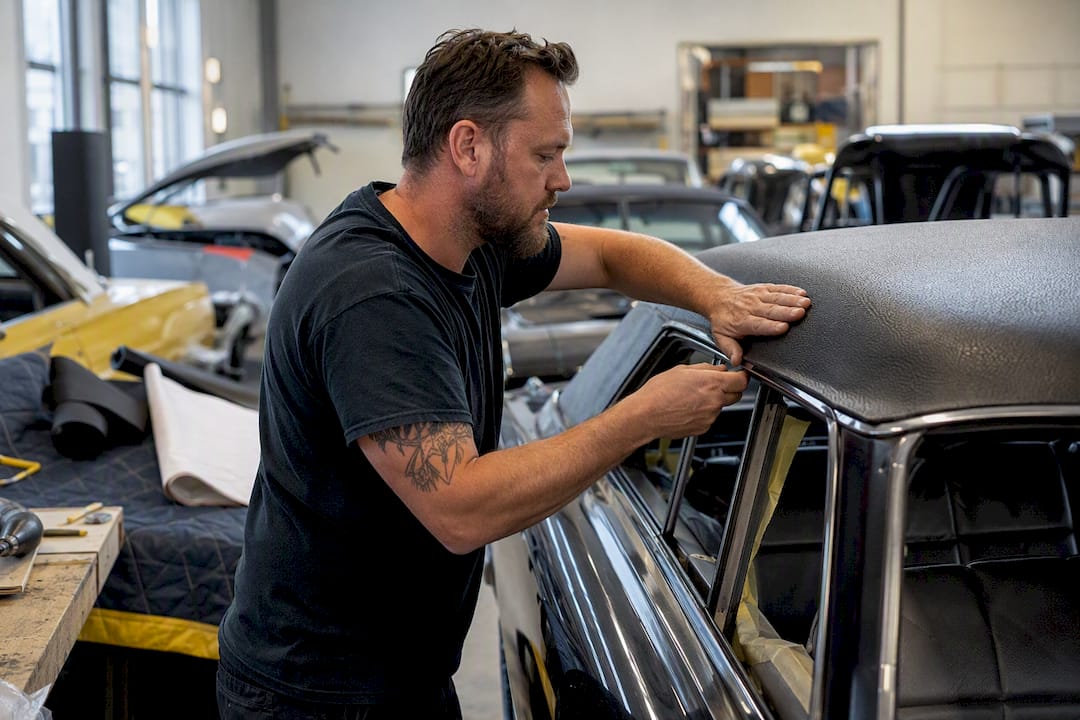
A vinyl roof car is a vehicle with a sheet of vinyl bonded over its fixed steel roof to mimic the look of a convertible top or leather upholstery. This guide covers the short history behind the look, the styles and materials you’ll run into on a project car, the failure modes that actually matter, and the real choices in front of you: repair, replace with an OEM-style top, or go with a modern wrap.
Here’s what’s ahead:
- A quick history of why landau bars and padded vinyl became a design signature
- Style types and material specs worth knowing before you buy anything
- Common failure points, from bubbling to seam splits
- Cost ranges and a decision framework for repair versus replacement
- Where to source restoration-grade vinyl and how to vet an installer
Key Takeaways
Getting a vinyl roof restoration right depends on catching rust early, matching authentic materials, and choosing a repair path that fits your budget and authenticity goals.
| Point | Details |
|---|---|
| Inspect metal first | Check for bubbling and rust under the vinyl before deciding on repair or replacement. |
| Match grain and padding | Use OEM-style grain patterns and correct padding specs for authentic restorations. |
| Choose the right fix | Small patches work for surface wear; bubbling or rust demands a full re-cover. |
| Budget realistically | Expect $600 to $2,500+ depending on rust repair needs, plus $300 to $800 for a wrap alternative. |
| Research your model first | Frenzycars’ model spec pages help you confirm factory trim details before ordering materials. |
How Did the Vinyl Roof Car Get Its Start?
The vinyl roof began as a practical covering in the 1920s, long before it became a status symbol. Automakers used it to protect early roof construction methods, but the styling potential took over once designers realized a vinyl top could make a hardtop look like a convertible or a leather-trimmed coupe without the cost or complexity of either.
The real turning point came in the 1960s. Ford’s Thunderbird Landau helped push vinyl roofs from a niche option into a mainstream expectation, and by the mid-1960s the treatment had spread across nearly every major American manufacturer’s lineup, according to Curbside Classic’s history of the vinyl roof. The look peaked through the 1970s, when landau bars, padded tops, and embossed grain patterns became visual shorthand for luxury trim levels, then faded through the 1980s and 1990s as aerodynamic “aero” styling took over.
Key moments in the timeline:
- 1920s: Vinyl and fabric coverings used mainly for practical roof construction
- Early 1950s: Rare factory experiments, including coverings on models like the Kaiser Dragon
- Mid-1960s: Near-ubiquitous adoption across U.S. brands, driven by Thunderbird-style Landau trims
- 1970s: Peak popularity, with padded and two-tone vinyl treatments as premium options
- 1980s to 1990s: Steady decline as design trends moved toward smoother, unadorned rooflines
Statistic callout: Ford’s Thunderbird Landau helped drive the vinyl roof from a rare option to a nearly standard feature on American cars within about a decade, a shift Curbside Classic traces directly to the model’s early sales success.
What Styles and Materials Show Up on Vinyl Roof Cars?
Not every vinyl top is built the same way, and knowing the difference matters when you’re trying to match an original look or spec a replacement. The common styles you’ll encounter on classic and vintage cars include:
- Full vinyl roof: Covers the entire roof panel from windshield header to rear window
- Landau or half top: Covers only the rear portion, often paired with a landau bar for the classic Lincoln or Thunderbird look
- Canopy top: A narrower band that wraps the roof like a convertible silhouette
- Halo top: A roof insert framed by a painted or chrome border
- Padded top: Any of the above with foam padding underneath for a plush, quilted appearance
Material matters as much as shape. Original vinyl tops use a PVC face bonded to a fabric backing, typically cotton or a foam laminate, and the surface texture, or “grain,” is a big part of authenticity. Levant grain, pebble grain, and alligator-style embossed patterns all read differently under light, and matching the wrong grain to a factory-correct restoration is one of the fastest ways to lose points at a concours event.
Construction is where old and new diverge sharply. Classic factory tops were thick, heavier-gauge vinyl bonded with heavy-duty contact cement and often installed over a foam or fiber padding layer. Modern vehicle wraps, by contrast, are thin, heat-sealed films designed to stretch over contours without padding. They look similar from ten feet away but behave completely differently in the sun, in cold weather, and over the long haul.
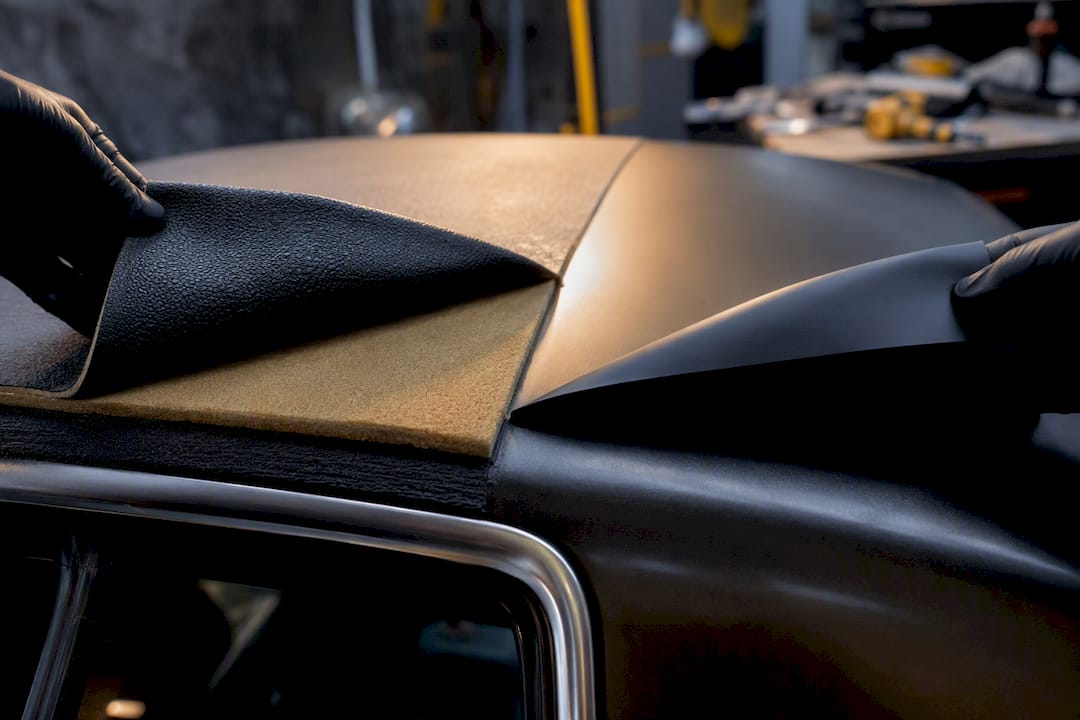
If you’re trying to identify an original top versus an aftermarket replacement, check the stitch pattern along seams, how the material terminates at trim moldings, and whether the deck lid or C-pillar pattern matches factory photos for that model year.
Advantages, Drawbacks, and Common Failure Points
A well-executed vinyl roof still turns heads at a car show, adds a period-correct look that’s hard to fake, and dampens road noise a bit compared to bare steel. It’s also one of the more forgiving upgrades to source, since popular models like the Charger, Thunderbird, and Continental have active reproduction markets.
The drawbacks are just as real. UV exposure dries out the plasticizers in vinyl over time, adhesive bonds weaken with age and heat cycling, and once water gets underneath the material, it has nowhere to go. That trapped moisture is what turns a cosmetic problem into a structural one.
Watch for these failure signs:
- Bubbling or delamination: Usually means moisture or rust has gotten underneath
- Alligatoring or cracking: UV damage and plasticizer loss drying out the surface
- Seam splitting: Adhesive failure or years of thermal expansion and contraction
- Shrinkage at the trim: Vinyl pulling away from moldings, often the first visible sign of aging
Community reports on classic car forums consistently point to one culprit above all others: water trapped beneath the vinyl. Checking bond integrity and the condition of the metal underneath before doing anything cosmetic is the single most repeated piece of advice from experienced restorers.
Any bubbling should be treated as a warning sign, not a cosmetic annoyance. It almost always means rust is active underneath, and covering it back up without addressing the metal only buys a few more years before the problem returns worse than before.
Repair, Replace, or Wrap: How Do You Choose?
Start by assessing what you’re actually dealing with. Surface fading and minor cracking are one problem. Bubbling, rust, or widespread seam failure is a different, more expensive one. Your answer depends on three things: the extent of the damage, whether you’re chasing concours authenticity or just want a solid driver, and what your budget allows.
- Surface-only wear (fading, minor scuffs, small cracks): A quality vinyl conditioner or a localized patch can buy you several more years without a full re-cover.
- Bubbling, moderate rust, or seam failure: This calls for a full replacement. Patching over trapped moisture or active rust only delays a bigger repair bill later.
- Structural rust in the roof panel itself: Budget for metal repair before any new vinyl goes on. Skipping this step is the most common reason a fresh top fails within a year or two.
A quality replacement top, properly installed with correct adhesive and padding, can last 15 to 20 years with reasonable care. That longevity assumes the metal underneath was sound before installation, which is why skipping prep work is such an expensive shortcut.
A modern vinyl wrap is worth considering if you want the visual effect without the commitment to a period-correct restoration. However, it won’t satisfy judges at a concours show and typically has a shorter service life than a proper bonded top.
Here’s a realistic range for what these jobs tend to cost and how long they take:
Whatever route you choose, a proper professional replacement should include full removal of the old vinyl and adhesive, metal inspection and rust repair where needed, fresh padding if the original design calls for it, correct adhesive selection and even tensioning during install, and precise trim and seam reinstallation. Ask about warranty coverage before you commit. Reputable shops back their work with some guarantee against seam failure or delamination within a defined period.
Where Can You Buy Restoration-Grade Vinyl Roof Materials?
Sourcing the right material starts with matching the grain, backing, and pattern to your specific make and model, not just picking whatever vinyl looks close enough. Topsonline and OEM AutoFabric are two suppliers restorers frequently turn to for reproduction tops, largely because they offer documented grain options and pattern references tied to specific factory years rather than generic “classic car” vinyl.
When comparing vendors, look for:
- OEM-style grain choices (levant, pebble, or alligator pattern) matched to your model year
- Correct backing and padding specifications, not a generic one-size-fits-all liner
- Photographic fit references showing the pattern installed on your specific make and model
- Clear warranty terms covering seam and adhesive failure
Beyond dedicated reproduction specialists, local upholstery shops that handle convertible tops often carry compatible aftermarket vinyl and can install it, and general aftermarket fabric suppliers can work for drivers who aren’t chasing factory-exact authenticity. Before you commit to any installer, ask about their pattern source, the exact material specification (PVC weight and backing type), their adhesive method, and whether they document the removal and any rust repair with photos. A shop that photographs the process before covering it back up is telling you something about how they work, and it gives you a paper trail if problems show up later.
Compare quotes on craftsmanship and documentation, not just the bottom-line price.
Expert Tips Before You Start a Vinyl Roof Restoration
Pro Tip: Before you sign off on any new vinyl top, insist on a full inspection of the roof metal for rust, and make sure the panel is properly prepped. Original-style vinyl tops use minimal padding, so any dent, wave, or corrosion underneath will telegraph right through the new material.
A proper replacement sequence follows this order:
- Remove trim, moldings, and glass as needed for access
- Strip the old vinyl and adhesive completely
- Repair rust, dents, or rot in the roof panel
- Apply new padding if the original design used it
- Fit the new vinyl, tension it correctly, and reinstall trim
The restorers who consistently get the best results share a few habits: they match the original grain pattern instead of settling for “close enough,” they use factory-correct padding rather than skipping that step to save time, and they document the whole process with before-and-after photos. That documentation is worth more than it seems. It’s your proof of quality if you ever sell the car or need warranty support later.
Why Vinyl Roofs Still Matter to Restorers
There’s something genuinely satisfying about getting a vinyl roof right. It’s one of those details that either screams “correct” or “wrong” to anyone who knows the model, and getting the grain, the padding, and the seams accurate is harder than it looks from the outside. At Frenzycars, we treat this kind of detail work as central to what makes a restoration credible, not cosmetic.
Find Your Model and Plan Your Next Restoration Move
Vinyl roof restoration is easier to plan once you know exactly what your car came with from the factory, and that’s where matching specs to the right model year makes or breaks the project. Frenzycars’ model and spec pages let you look up factory trim details for your specific make and model before you order material or call a shop, so you’re not guessing at grain patterns or padding specs. Frenzycars also covers ongoing maintenance topics that pair naturally with a roof restoration, including a performance car maintenance checklist worth running through once your top is done. Start by pulling up your model’s spec page and confirming the original trim details before you request a single quote.
Sources
- Vinyl roof — Wikipedia
- Automotive History: The History of the Vinyl Roof, Part 1 - Origins - Curbside Classic
- Replacing a worn-out vinyl top on a 1969 Dodge Charger — Modern Rodding
- Vinyl roof coverings were created to be retro in 1928; now the on-and-off fad is making a comeback — Classic Cars Today
- Everything You Need to Know About Vinyl Top Replacement – Amegas