TL;DR:
- Choosing a home charger reliably determines whether a pure electric car is financially practical. Without it, hybrids often provide better value due to lower upfront costs and easier fueling, especially in cold weather.
Choosing between a hybrid and an electric car comes down to one factor above all others: whether you can reliably charge at home. Without a Level 2 home charger, the math on EV ownership shifts dramatically against you. The average American driver covers roughly 37 miles per day, a distance well within EV range, but daily charging access determines whether that range translates into real savings. Federal tax credits, residential electricity rates, and your typical trip distances all shape the final answer. This guide walks you through every major cost, lifestyle, and reliability factor so you can make a confident call.
How do upfront and ongoing costs compare between hybrids and EVs?
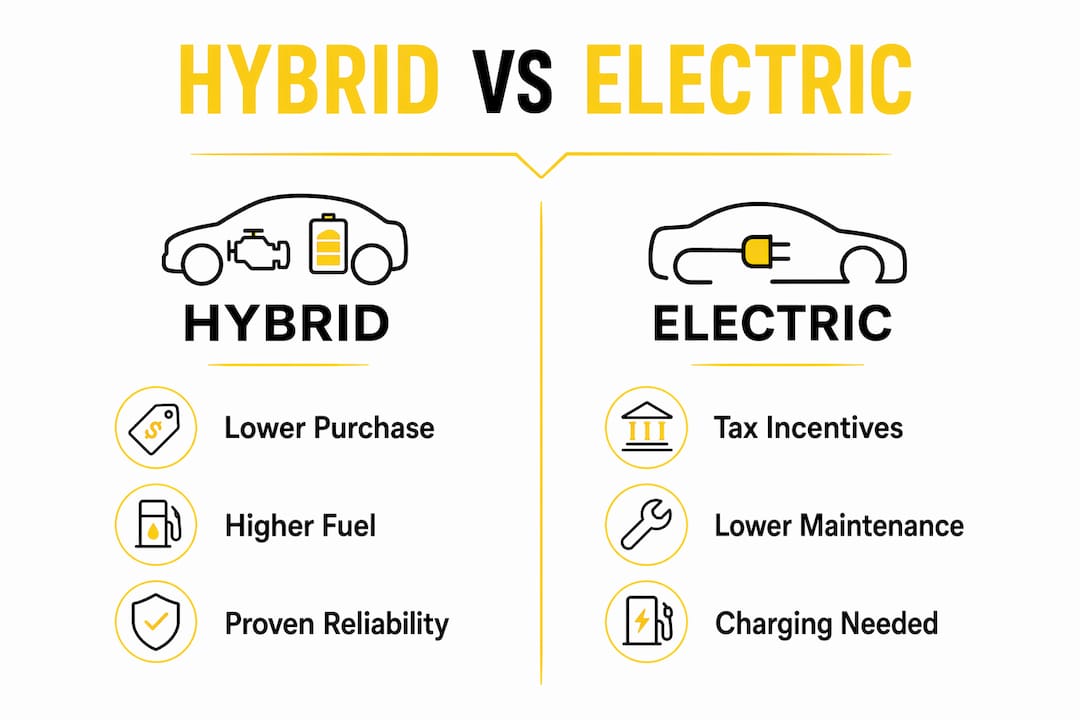
The sticker price gap between hybrids and electric vehicles widened sharply in 2026. The $7,500 federal EV tax credit expired in september 2025, pushing EV prices roughly $10,000–$15,000 above comparable hybrids without any credit offset. That gap matters most in year one, but the five-year picture is more nuanced.
Purchase price and total cost of ownership
EVs can be $4,000–$11,000 cheaper than hybrids over five years if you have home charging and qualified for federal incentives. Without home charging, that advantage flips. Hybrids generally deliver better five-year value for buyers who rely on public stations.

Maintenance costs favor EVs clearly. EV maintenance runs roughly $750–$2,000 over five years compared to $3,500–$7,000 for hybrids. EVs skip oil changes, spark plug replacements, and transmission service entirely. That said, EVs do show higher tire wear due to heavier curb weight and instant torque delivery.
Fuel and charging expenses
Home charging on Level 2 costs roughly $500–$600 annually for typical driving at around $0.15 per kWh. Public DC fast charging runs $0.30–$0.65 per kWh, which is 2.5–3.5 times more expensive per unit of energy. A driver who relies entirely on public fast charging can erase the EV’s fuel cost advantage within a year.
| Expense category | Hybrid (5-year estimate) | EV with home charging (5-year estimate) |
|---|---|---|
| Fuel or energy cost | Moderate (gas dependent) | Low ($500–$600/year) |
| Maintenance | $3,500–$7,000 | $750–$2,000 |
| Insurance (monthly) | ~$185 | ~$209 |
| Purchase price premium | Lower baseline | $10,000–$15,000 higher in 2026 |
| 5-year TCO vs hybrid | Baseline | $2,500 better to $11,000 better (with home charging) |
Insurance and registration
EV insurance averages about $209 per month versus $185 for hybrids, an 18%–25% premium driven by higher repair costs and expensive battery components. Some states also charge higher registration fees for EVs as a road-use tax offset. Check your state’s fee schedule before finalizing your budget. For a deeper look at how vehicle type affects coverage costs, Frenzycars covers insurance cost factors in detail.
Pro Tip: Search your utility provider’s website for EV rate plans. Many utilities offer off-peak rates as low as $0.08–$0.10 per kWh overnight, which cuts annual charging costs significantly below the standard $0.15 average.
What lifestyle factors influence the hybrid vs electric decision?
The pivotal factor for most buyers shifted from federal incentives to practical infrastructure like home charging availability. That shift reflects a real behavioral reality. Owning an EV is not just a different car. It is a different fueling routine.
Charging infrastructure realities
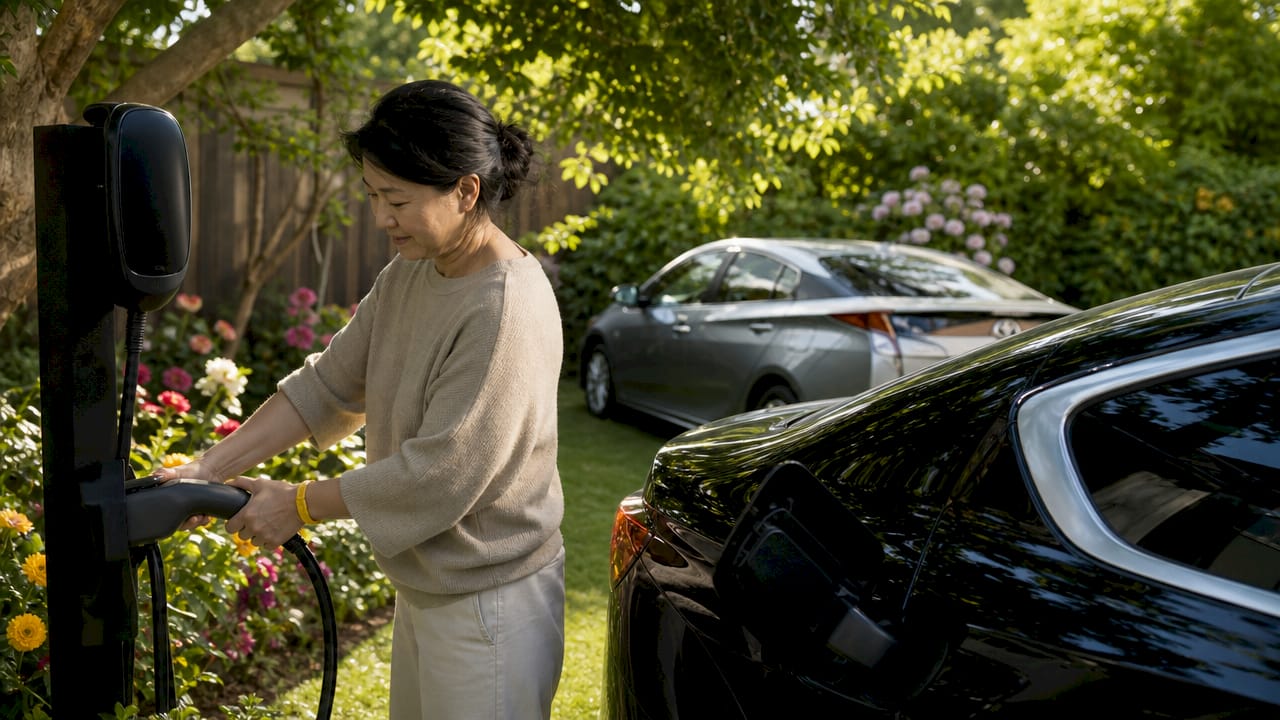
Home charging is the foundation of practical EV ownership. Public charging reliability remains a significant issue, with 1 in 5 sessions encountering problems. That failure rate creates real friction for drivers who depend on public networks daily.
Public fast charging adds 20–30 minutes per stop, though fast chargers can recover 100+ miles in 15–18 minutes under ideal conditions. Hybrids refuel in under five minutes at any gas station. For buyers without a garage or dedicated parking spot, that time difference compounds across every week of ownership.
Key questions to ask yourself before buying an EV:
- Do you have a dedicated parking spot where you can install a Level 2 charger?
- Does your apartment building or employer offer charging?
- How far is the nearest reliable DC fast charger from your home?
- Do you regularly take road trips longer than 250 miles?
Range anxiety and cold weather
Range anxiety is less about distance and more about the mental load of managing charging session reliability on the road. Most EV owners report that anxiety fades within weeks of daily home charging. The stress returns on long trips or in unfamiliar areas with sparse charging networks.
Cold weather reduces EV battery range by 20%–40% in real-world conditions. A vehicle rated at 300 miles of range may deliver 200 miles on a January morning in Minnesota. Hybrids are unaffected by cold in the same way because the gas engine provides backup power and cabin heat without drawing from the traction battery.
“Hybrids fit better for consumers wanting no lifestyle change. EVs demand adapting to new fueling habits and route planning. The buyers who thrive with EVs are those who treat charging like charging a phone: plug in at home every night and forget about it.”
Pro Tip: Use apps like PlugShare or the Department of Energy’s Alternative Fuels Station Locator to map charging stops before a road trip. Planning two or three charging stops in advance eliminates most of the stress.
A plug-in hybrid, or PHEV, sits between the two. PHEVs offer electric range plus a backup gas engine, but they cost more upfront than standard hybrids and no longer qualify for the federal credit as of 2026. They work best for buyers who want electric commuting without full commitment to EV infrastructure.
How do resale value and long-term reliability compare?
Hybrids benefit from 25+ years of proven durability, which translates directly into stable resale values and lower depreciation risk. Toyota and Honda hybrid platforms in particular hold value well because demand for fuel-efficient vehicles remains strong regardless of EV adoption trends.
Resale value after five years
Resale value holds at about 46% for hybrids versus roughly 41% for some EVs after five years. That five-point gap represents thousands of dollars in real money at trade-in time. For a $45,000 vehicle, the difference is roughly $2,250 in retained value.
EV depreciation is more volatile for two reasons. First, rapid technology advancement makes older battery packs feel obsolete faster. Second, battery replacement costs, which can reach $10,000–$20,000 depending on the model, create uncertainty for used-car buyers. Frenzycars covers EV battery lifespan in detail, including what real-world degradation looks like after 100,000 miles.
| Reliability factor | Hybrid | Electric vehicle |
|---|---|---|
| Technology maturity | 25+ years field-proven | 10–15 years, rapidly evolving |
| Resale value (5-year) | ~46% | ~41% |
| Battery replacement risk | Low (smaller assist battery) | Moderate to high ($10,000–$20,000) |
| Maintenance complexity | Moderate (gas + electric systems) | Low (fewer moving parts) |
| Cold weather impact | Minimal | Significant (20%–40% range loss) |
Battery warranties and long-term costs
Most EV manufacturers offer 8-year or 100,000-mile battery warranties, which covers the most expensive component. That warranty matters, but it does not cover gradual capacity loss below a threshold. A battery that degrades to 70% capacity may still be “within warranty” while delivering noticeably shorter range.
Hybrids use mature technology with over 25 years of field experience, simplifying maintenance and supporting stable resale value. EV technology is newer, with ongoing concerns around battery degradation and technological obsolescence. Buyers planning to keep a vehicle for 10+ years face more uncertainty with current EV platforms than with proven hybrid drivetrains. For guidance on maximizing trade-in value regardless of powertrain, Frenzycars has a practical trade-in value guide worth reading before you sell.
What steps should you take to decide which vehicle fits your needs?
The right choice between a hybrid and an electric car is personal. No single spec sheet answers it. A structured self-assessment cuts through the noise faster than any comparison chart.
Follow these steps in order:
- Check your charging situation. Do you have a garage or dedicated parking spot? If yes, get a quote for Level 2 charger installation (typically $500–$1,500 including hardware). If no, map the nearest reliable public chargers to your home and workplace.
- Calculate your annual mileage. If you drive fewer than 12,000 miles per year on predictable routes, an EV covers your needs with room to spare. If you drive 20,000+ miles with frequent long hauls, a hybrid’s flexibility wins.
- Research local electricity rates. Contact your utility or check their website for EV-specific rate plans. Off-peak rates change the cost math significantly.
- Check state and local incentives. Several states offer their own EV credits, rebates, or HOV lane access even after the federal credit expired. California, Colorado, and New York all maintain active programs.
- Factor in your insurance and registration costs. Get quotes for both vehicle types before deciding. The $24 monthly insurance difference between hybrids and EVs adds up to nearly $1,500 over five years.
- Test drive both. EV acceleration and cabin quiet are genuinely different experiences. Some buyers switch after one drive. Others find the charging routine too disruptive after living with it.
| Decision factor | Favors hybrid | Favors EV |
|---|---|---|
| Charging access | No home charging available | Home Level 2 charger installed |
| Annual mileage | Highly variable or 20,000+ miles | Predictable, under 15,000 miles |
| Upfront budget | Tighter budget in 2026 | Can absorb $10,000–$15,000 premium |
| Road trips | Frequent long-distance travel | Mostly local or regional driving |
| Maintenance preference | Comfortable with oil changes | Wants minimal service visits |
Pro Tip: If you are genuinely undecided, rent an EV for a week through a platform like Turo or a traditional rental agency before committing. One week of real charging logistics tells you more than any review article.
Key Takeaways
Home charging access is the single most decisive factor when choosing between a hybrid and an electric vehicle in 2026.
| Point | Details |
|---|---|
| Home charging is the deciding factor | Without it, hybrids deliver better value through lower purchase price and fuel flexibility. |
| EVs win on maintenance costs | Five-year maintenance runs $750–$2,000 for EVs versus $3,500–$7,000 for hybrids. |
| Hybrids hold resale value better | Hybrids retain about 46% of value after five years versus roughly 41% for some EVs. |
| Insurance costs more for EVs | EV insurance averages $209/month versus $185 for hybrids, adding up over five years. |
| PHEVs offer a middle path | Plug-in hybrids suit buyers who want electric commuting without full infrastructure commitment. |
The charging question settles it faster than any spec sheet
I have spent years reviewing cars and talking to buyers who regret their choice. The pattern is almost always the same. EV buyers who love their vehicles have home charging. The ones who feel burned are apartment dwellers who underestimated public charging friction.
The total cost of ownership argument for EVs is real, but only under specific conditions. Home charging, predictable routes, and a budget that absorbs the 2026 sticker premium all have to align. When they do, the EV wins clearly over five years. When even one condition is missing, the hybrid is the smarter financial choice, not a compromise.
What surprises most buyers is how quickly EV ownership becomes second nature when the infrastructure is right. Plugging in at home takes ten seconds. You wake up to a full charge every morning. The “range anxiety” that dominates online forums is almost entirely a public-charging problem, not an EV problem.
My honest advice: do not let enthusiasm for new technology override a clear-eyed look at your parking situation. A hybrid driven for seven years beats an EV you resent after six months of hunting for chargers. Get the charging situation right first. The car choice follows naturally from there.
Recommended
- Best Electric Company Cars in the US (2026): Top Picks After the Tax Credit Cutoff | FrenzyCars
- Evaluate Car Safety Ratings: A 2026 Buyer’s Guide | FrenzyCars
- How Long Do EV Batteries Last? Real-World Lifespan Explained (2026) | FrenzyCars
- Hyundai Ioniq 5 N Wins Performance EV of the Year | FrenzyCars