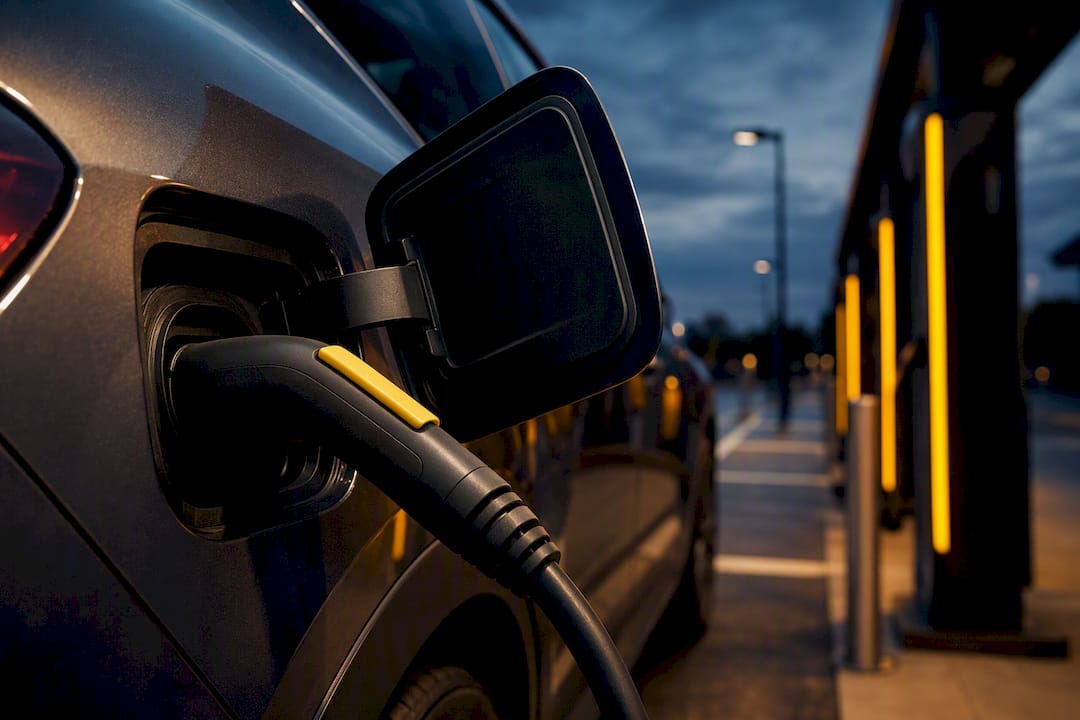
Home charging on an off-peak utility plan is the cheapest way to power an EV, typically running $0.03 to $0.07 per mile. Public Level 2 charging lands in the middle, and DC fast charging is the most expensive routine option, often $0.10 to $0.22 per mile or more. Your actual number depends heavily on your local electricity rate and how much you rely on public fast chargers versus plugging in at home.
TL;DR:
- Home charging on off-peak plans can cost as little as $0.03 to $0.04 per mile, especially with utility discounts for overnight rates.
- Public Level 2 charging typically costs $0.15 to $0.30 per kWh, while DC fast charging ranges from $0.26 to $0.69 per kWh, with subscriptions offering savings.
- State electricity rates vary widely, which can cause annual charging costs to differ by $200 to $500 based on your location.
- Charging an EV at home generally costs less than $12 for a full 60 kWh battery at the national average rate, representing significant savings over gas.
- Relying heavily on public fast chargers may reduce cost advantages and sometimes eliminate savings compared to traditional gasoline vehicles.
EV Charging Costs at Home: Rates, Off-Peak Plans, and Equipment
The U.S. average residential electricity rate sits at 18.34 cents per kWh, according to EIA Table 5.6.A, but that number swings hard depending on where you live. Most of your charging costs get set at home anyway. EV owners plug in at home for 80 to 90 percent of their charging, which means your residential rate plan matters more than any public network’s pricing.
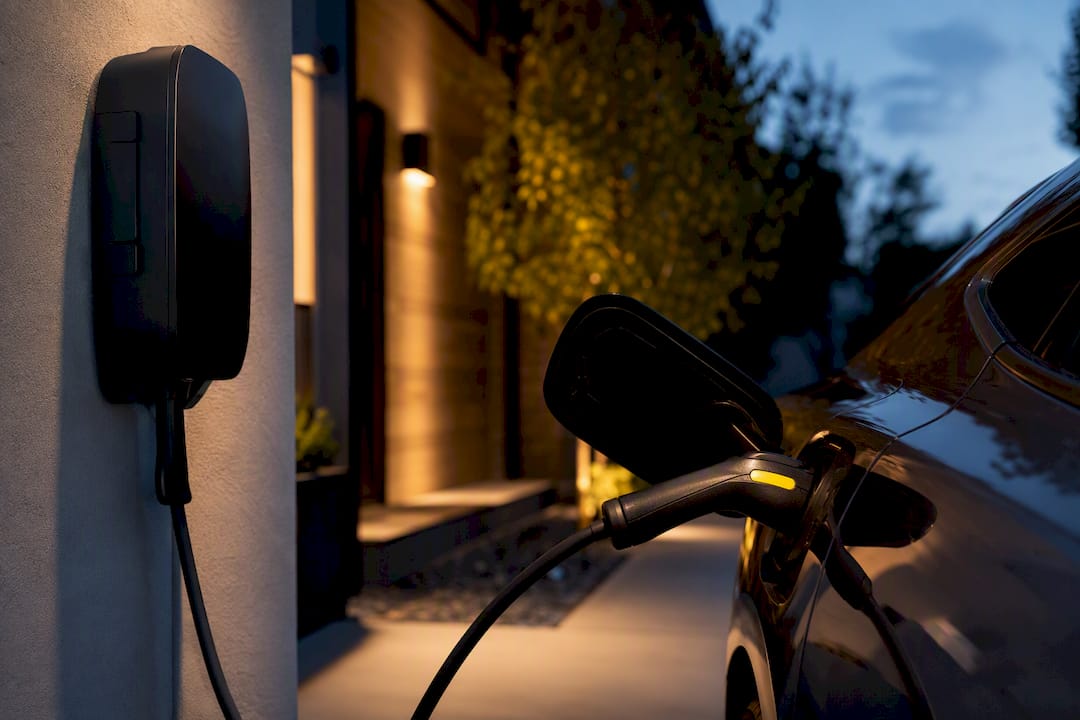
Level 1 charging (the standard 120-volt outlet) works fine for plug-in hybrids or drivers with low daily mileage, but it delivers only 3 to 5 miles of range per hour. Level 2 charging, run on a 240-volt circuit, adds 20 to 40 miles per hour and is what most home installations use.
Time-of-use (TOU) plans are where the real savings show up. Utilities in many states offer EV-specific TOU rates that drop overnight pricing by 25 to 50 percent compared to a flat residential rate. A car that costs $0.06 per mile on a flat plan can drop closer to $0.03 to $0.04 per mile charging between midnight and 6 a.m.
- Level 2 home charger hardware: roughly $300 to $700
- Professional installation: $400 to $1,700, depending on panel capacity and wiring runs
- Many utilities and states offer rebates that cover part of the equipment or installation cost
Pro Tip: Call your utility before you buy a charger. Some offer a free or discounted TOU meter swap, and enrolling before installation can qualify you for a better rebate tier.
Public Charging: Level 2 Networks and DC Fast Charging Costs
Public charging splits into two very different cost categories. Public Level 2 stations, often found at malls, workplaces, and hotels, either charge a modest per-kWh or per-hour fee or run free as a destination perk. When there’s a fee, expect something in the range of $0.15 to $0.30 per kWh, well below what you’ll pay at a fast charger.
DC fast charging is where costs spike. Ad-hoc, pay-as-you-go rates on major networks typically run $0.35 to $0.69 per kWh, while monthly subscriptions on networks like Electrify America, EVgo, or Blink can pull that down to roughly $0.26 to $0.36 per kWh.
A driver adding 50 kWh at an ad-hoc rate of $0.55/kWh pays $27.50 for that session. The same 50 kWh on a subscription plan at $0.30/kWh costs $15.00, a savings that adds up fast for anyone charging on the road every week.
Some networks bill per minute instead of per kWh, which can quietly penalize lower-power vehicles since you’re paying for time plugged in, not energy delivered. Check the pricing model before relying on a station for regular use.
How to Calculate Your EV Charging Cost Step by Step
The math behind any charging session comes down to one formula: kWh added × price per kWh = session cost. To find kWh needed, multiply your car’s consumption rate (kWh per 100 miles) by the miles you’re adding, divided by 100.
Efficiency losses matter too. Level 2 home charging is modeled at roughly 88 percent effective once you account for onboard conversion, while DC fast charging is measured closer to 92 percent at the meter.
- Find your car’s kWh per 100 miles (check the EPA sticker or your model’s specs)
- Multiply by miles driven, divide by 100, then divide by the efficiency factor
- Multiply the result by your rate per kWh
- Multiply the per-charge cost by your typical charging frequency for a monthly estimate
State Electricity Rates and Why Your Bill Won’t Match the National Average
Residential rates vary enormously by state, and that variation flows straight into your charging bill. EIA’s Table 5.6.A shows Hawaii and California sitting well above the national average of 18.34 cents per kWh, while several Plains and Mountain states run far below it.
- A driver in a low-rate state might pay $0.03 per mile at home
- The same car in a high-rate state can cost $0.07 to $0.09 per mile, more than double
- Over 12,000 miles a year, that gap alone can mean $200 to $500 in extra annual charging costs
Run your own state’s rate through the formulas above rather than trusting a national average, since the spread between cheap and expensive states is wider than most people expect.
Is Charging an EV Cheaper Than Gas?
Yes, in most cases, especially if you charge at home. A rough rule of thumb: compare kWh per 100 miles against your old car’s miles per gallon, then weigh the per-unit price. A gas car averaging 30 MPG at $3.50 per gallon costs about $11.67 per 100 miles. A midsize EV at 35 kWh/100mi on the national average rate costs roughly $6.42, less than half.
- Over 12,000 to 15,000 miles a year, that gap typically translates to $400 to $700 in annual fuel savings
- Heavy reliance on DC fast charging shrinks that gap significantly, sometimes erasing it entirely
- Drivers without home charging access, or those on unusually high residential rates, may see the EV cost advantage disappear altogether
Comparing hybrid and electric ownership costs side by side is worth doing before you assume an EV automatically saves money.
A Frenzycars Take on Getting Your Numbers Right
The math in this guide comes from EIA rate tables, current network pricing snapshots, and the efficiency assumptions used by dedicated charging calculators, not guesswork. Plug in your own car’s kWh/100mi figure and your utility’s actual rate, and the formulas above will get you within a few cents of your real bill. Ramón covers EV ownership costs regularly for Frenzycars, and the consistent finding across every state and vehicle type is the same: your charging habits matter more than your car’s badge.
Where to Check Live Rates and Run Your Own Numbers
Check EIA’s rate tables for your state, use the AFDC station finder for public charging, and try a charging cost calculator for session estimates.
Sources
- Electric Power Monthly - U.S. Energy Information Administration (EIA)
- Home vs. Public EV Charging Costs in 2026: Real Rates, the Math, and How to Save | EV Charger Scout
- EV Charging Cost Calculator 2026: Home vs TOU vs DC Fast (18.44c/kWh US Average)
- Alternative Fuels Data Center (AFDC) — Benefits of electricity and charging infrastructure