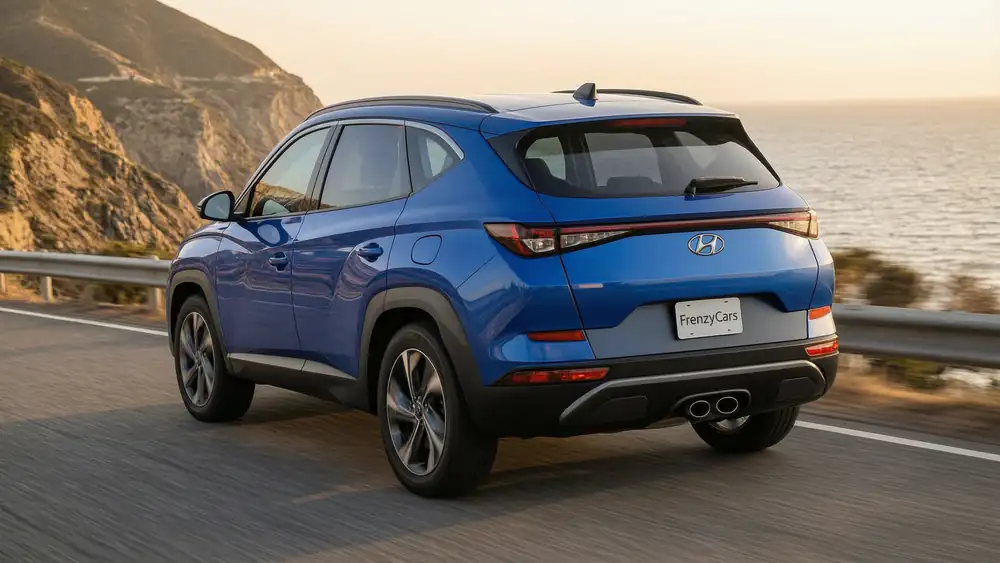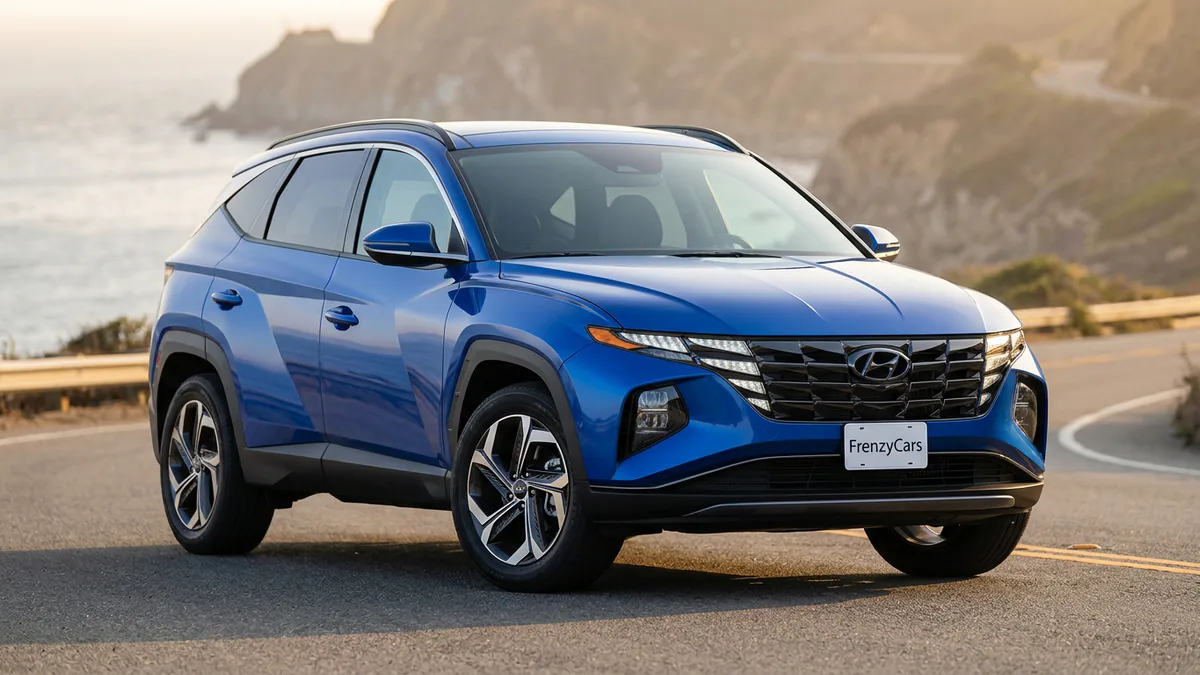
The 2026 Hyundai Tucson starts at about $28,750 with a 187-hp 2.5-litre four, or a 226-hp hybrid rated at 38 mpg combined. The hybrid is the one to buy. On the used market, 2024-and-newer cars sidestep the infotainment and stalling complaints owners reported on 2022-2023 examples.
Somebody in Hyundai’s design studio won an argument, and the 2026 Tucson is what winning that argument looks like from the driver’s seat.
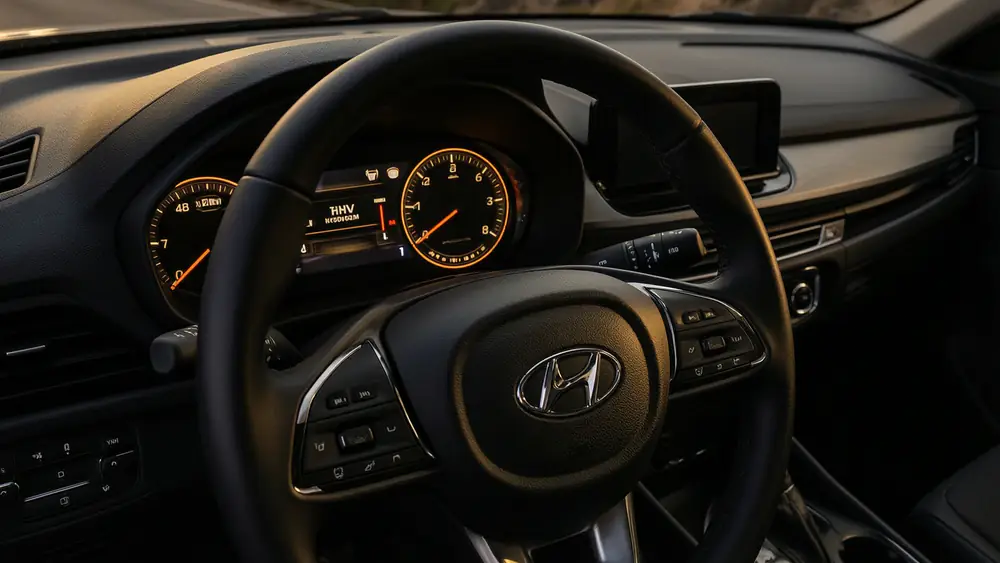
Every other compact SUV at this price was drawn by a room full of people who had already agreed on the answer. The Tucson got a wraparound dashboard, controls that stay invisible until they light up, and available dual curved displays that would be the headline feature on a car costing fifteen thousand dollars more. You sit down in it and something unusual happens for the money: you notice where you are.
Trims and hybrid pricing
The range runs SE through Limited, with the hybrid powertrain available from SEL Convenience upward. The hybrid costs more. Pay it.
The Limited Hybrid tops the range with a panoramic sunroof, digital key, and a driver-assist suite that several German brands still charge extra for, on cars that cost twice as much, while running an ad campaign about how much they care about your safety. Hyundai just includes it.
Which years to avoid
The 2022 and 2023 cars are the ones people keep searching for, and the question is a fair one. Owners reported infotainment that froze. Owners reported infotainment that rebooted on its own. A smaller number reported engine stalling under certain conditions. Hyundai handled most of it with software updates and running changes, which is the industry’s polite way of confirming that it was real.
I don’t need a long-term fleet test to tell you what to do about it. Buy 2024 or newer. If you are looking at an earlier car, get the recall work confirmed in writing before any money moves, and walk away if the seller shrugs at the question.
Driving and everyday use
The base 2.5-litre makes 187 hp, which is plenty right up to the moment you load four adults and a weekend into it. After that it becomes a negotiation. The engine is not bad; it is simply the part of the car nobody in that design studio was arguing about.
The hybrid rewrites the sentence. 226 hp, 195 lb-ft, 0-60 mph in around 7.9 seconds, and 38 mpg combined — numbers that hold their shape next to the RAV4 Hybrid and the CR-V Hybrid instead of apologizing to them. The ride stays flat over broken pavement and the cabin keeps road noise where it belongs, which at this price is not the default. It is a choice somebody made.
Interior and technology
The cabin is the reason this car exists, and I say that as someone who does not hand out credit for dashboards — a nice interior is the cheapest thing a carmaker can sell you, and most of them know it. Hyundai spent the money anyway: 38.7 cubic feet behind the rear seats, materials that do not announce their price, and a layout that treats the driver like an adult.
Then it puts the climate controls on a touch panel. Touch panels are a decision made in a rendering, by someone who has never worn gloves. You adjust to it. You should not have to.
Hyundai Tucson vs. Toyota RAV4 vs. Kia Sportage
Against the RAV4, the Tucson is cheaper and better looking inside, and the RAV4 will hold its resale value better — that is the whole trade, and anyone who tells you it is more complicated is selling one of them.
Against the Kia Sportage it is stranger, because they share the hybrid platform underneath. Same bones, same economy, same competence. Choosing between them is choosing a shape and a dealer, and nothing else, and you should feel free to pick on exactly that basis.
So: the studio won the argument at Hyundai, and you can see the win from the driver’s seat every time you get in. Make sure the accountant did not win the one about the engine. Buy the hybrid, buy 2024 or newer, and this is the smartest thing in the segment.