
The best examples of modern analog sports cars available right now are the Mazda MX-5 Miata, Subaru BRZ, Toyota GR86, Toyota GR Corolla, Nissan Z, Lotus Emira, Porsche 718 Cayman GT4, and Porsche 911 GT3. For this article, “analog” means a car with a manual gearbox option, minimal active driver aids, and steering or throttle feel that communicates directly with the driver rather than filtering it through software.
Here’s the quick scan:
- Entry-level: Mazda MX-5 Miata, Subaru BRZ, Toyota GR86
- Mid-range performance: Toyota GR Corolla, Acura Integra Type S, Nissan Z, Ford Mustang Dark Horse
- Track-focused: Lotus Emira, Porsche 718 Cayman GT4 / GT4 RS, Porsche 911 GT3
- Halo/collector: Porsche Carrera GT, Ferrari F50, Ford GT, Lamborghini Murciélago LP670-4 SV
Enthusiasts are increasingly drawn to analog cars because they prioritize direct controls and unfiltered feedback over electronic assistance. That pull is cultural as much as mechanical: when a car doesn’t catch your mistakes, every clean corner feels earned.
Key Takeaways
The most capable modern analog sports cars combine a manual gearbox, defeatable driver aids, and direct throttle and steering feel, with the Porsche 718 Cayman GT4 and 911 GT3 at the top and the Mazda MX-5 Miata as the most accessible entry point.
| Point | Details |
|---|---|
| Best entry-level analog | The Mazda MX-5 Miata and Subaru BRZ offer the purest analog feel under $35,000 new. |
| Manual-only commitment | The GR Corolla and Acura Integra Type S ship with no automatic option, a rare and meaningful signal. |
| Core analog checklist | Look for: manual gearbox, fully defeatable stability control, no synthetic sound, and direct throttle response. |
| Halo collector demand | Auction activity for the Carrera GT, F50, and Ford GT shows rising values tied directly to analog character. |
| Ownership reality | Insurance, specialist maintenance, and tire costs add significantly to the sticker price on track-focused analogs. |
Modern analog sports cars worth knowing, from entry-level to halo
Each model below earns its place by meeting the core criteria: a manual transmission option, limited or defeatable driver aids, and a driving character that rewards skill rather than concealing its absence.
Mazda MX-5 Miata
Transmission: 6-speed manual | Power: ~181 hp (ND RF) | Price: ~$30,000–$35,000 new | Availability: New
The MX-5 is the clearest entry point into analog driving. Curb weight sits around 2,400 lbs, the throttle response is immediate, and the steering communicates every surface change. Traction control exists but is easily switched off. Nothing about this car tries to make you feel faster than you are.
Subaru BRZ / Toyota GR86
Transmission: 6-speed manual | Power: ~228 hp | Price: ~$30,000–$33,000 new | Availability: New
The BRZ is widely cited as one of the last accessible modern sports cars that emphasizes analog driving traits: lightweight, naturally aspirated, and available with a manual gearbox. The GR86 is mechanically identical with a slightly different suspension tune. Both reward a driver who wants to feel the rear step out rather than have software prevent it.
Toyota GR Corolla
Transmission: 6-speed manual only | Power: ~300 hp | Price: ~$37,000–$42,000 new | Availability: Limited new
Toyota offers the GR Corolla exclusively with a manual gearbox. No automatic option exists, which is a deliberate statement. The GR-Four all-wheel-drive system is mechanical, not electronically torque-vectored in the conventional sense, and the car’s stability systems are defeatable. At 300 hp in a compact hatchback body, it’s the most accessible hot-hatch analog on this list.
Acura Integra Type S
Transmission: 6-speed manual only | Power: ~320 hp | Price: ~$43,000–$46,000 new | Availability: New
Like the GR Corolla, the Type S ships with no automatic option. The limited-slip differential is mechanical, the steering weight is well-calibrated for feel, and the chassis communicates load transfer clearly. It’s heavier than the BRZ at around 3,100 lbs, but the power-to-weight ratio and manual-only stance put it firmly in the analog camp.
Nissan Z
Transmission: 6-speed manual | Power: ~400 hp | Price: ~$42,000–$55,000 new | Availability: New
The Z’s twin-turbocharged V6 is the one concession to modernity here. Turbo torque delivery is less linear than a naturally aspirated engine, but Nissan kept the manual gearbox, kept the rear-wheel-drive layout, and kept the driver aids defeatable. The Nismo variant adds a mechanical limited-slip differential. For buyers who want genuine power without a paddle-shift-only transmission, the Z fills a gap that few other new cars do.
Lotus Emira
Transmission: 6-speed manual (Toyota-sourced) or 8-speed auto | Power: ~400 hp (i4 Turbo) | Price: ~$95,000–$115,000 new | Availability: Limited new
Lotus built the Emira as its last internal-combustion model, and the manual variant is the one to buy if analog feel is the priority. The mid-engine layout, low curb weight (~3,200 lbs for a car with this power), and Lotus’s traditional emphasis on chassis communication over electronic correction make it stand out. The steering is direct, the body roll is controlled but present, and the car tells you exactly what it’s doing.
Porsche 718 Cayman GT4 / GT4 RS
Transmission: 6-speed manual (GT4) or PDK only (GT4 RS) | Power: 414 hp (GT4) / 493 hp (GT4 RS) | Price: ~$100,000–$165,000 new | Availability: Limited new
The GT4 with the manual gearbox is one of the most complete analog sports cars built in the last decade. The naturally aspirated flat-six from the 911 GT3, a mid-engine layout, and a manual transmission that requires real commitment from the driver combine into something that feels genuinely rare in the current market. The GT4 RS uses a PDK only, which makes it faster but less analog by this article’s definition.
Porsche 911 GT3
Transmission: 6-speed manual or PDK | Power: ~502 hp | Price: ~$230,000+ new | Availability: Limited new
The GT3 manual is the benchmark. Naturally aspirated flat-six, rear-engine, rear-wheel-drive, and a manual gearbox that Porsche has refined across multiple generations. Stability control is present but fully defeatable on track. The steering communicates more than almost any other new car at this price. It’s expensive, allocation-limited, and worth every dollar for a driver who wants the most capable analog sports car currently in production.
Ford Mustang Dark Horse
Transmission: 6-speed manual | Power: ~500 hp | Price: ~$57,000–$65,000 new | Availability: New
The Dark Horse is the most accessible 500-hp manual car on this list. Ford tuned the suspension specifically for driver feedback, added a mechanical limited-slip differential, and kept the manual gearbox as the performance choice. The electronics are present but defeatable. At this price, nothing else offers this combination of power, rear-wheel drive, and a proper three-pedal setup.
How these cars compare on the dimensions that matter
TC = traction control, SC = stability control. “Defeatable” means fully switchable off by the driver.
What actually makes a car analog? A practical checklist
A workable definition of “analog” focuses on control directness: mechanical throttle, limited driver aids, and owner-serviceability, rather than model age alone. A 2024 car can be more analog than a 1995 one if it’s built with that philosophy.
Here’s the checklist to apply to any car you’re evaluating:
- Manual transmission available. Not just offered as a trim option buried in a configurator, but genuinely supported with a proper clutch feel and gear throw.
- Throttle response is direct. Drive-by-wire systems vary widely. The best ones are nearly indistinguishable from cable throttles; the worst introduce a lag or a software-smoothed response that kills feel.
- Steering communicates surface and load. Electric power steering (EPS) is now universal on new cars. The question is whether the tune preserves feedback or filters it out entirely. The GT3 and Cayman GT4 do this well. Many crossovers with “sport mode” do not.
- Traction and stability control are fully defeatable. “Sport mode” that merely raises the intervention threshold doesn’t count. The driver should be able to switch these systems completely off.
- No synthetic engine sound enhancement. Active sound management systems that pipe amplified or synthesized engine noise through the speakers are the opposite of analog. The engine should sound like the engine.
- Limited drive-mode-driven behavior change. A car that transforms its steering weight, throttle map, suspension, and exhaust note based on a rotary dial is, by definition, software-defined. Analog cars have one character.
- Mechanically serviceable systems. OBD-II diagnostics are standard on every car built after 1996, and that’s fine. The question is whether the car’s core mechanical systems (brakes, suspension, drivetrain) can be maintained without proprietary dealer software.
Pro Tip: A manual gearbox alone doesn’t make a car analog. If the throttle is heavily software-smoothed, the traction control can’t be fully disabled, and the steering is tuned for comfort over feel, you have a manual-equipped car with an analog aesthetic, not an analog driving experience.
The naturally aspirated engine is worth a separate note. Turbocharged cars deliver torque in a surge that software partially manages; a naturally aspirated engine’s power delivery is a direct function of throttle position and revs. That linearity is part of what enthusiasts mean when they say a car “talks to you.”
How to choose the right analog sports car for your situation
The honest answer is that the right car depends on one question first: will this be a daily driver or a weekend/track car? That single decision eliminates half the list.
For daily use: The MX-5, BRZ, GR86, and Integra Type S are the realistic choices. They have reasonable ride quality, modern safety features, and parts availability at any dealer. The GR Corolla adds practicality with its hatchback body.
For weekends and occasional track days: The GR Corolla, Nissan Z, Mustang Dark Horse, and Lotus Emira move up. These cars are harder to live with daily but reward the driver who uses them as intended.
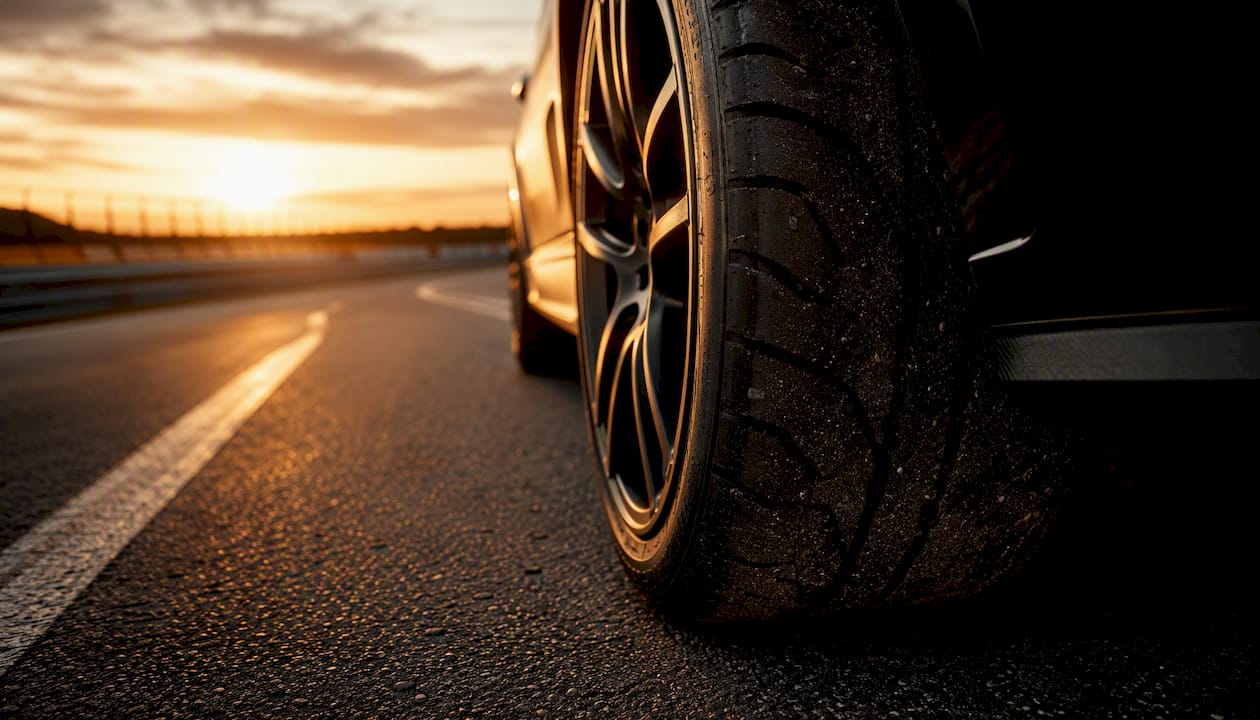
For serious track use or collector ownership: The Cayman GT4, 911 GT3, and the halo cars covered below are the answer. Expect higher running costs, more specialized maintenance, and insurance premiums that reflect the replacement value.
Red flags to watch for when shopping:
- “Sport mode” marketed as the analog experience, with no option to fully disable stability control
- Heavy curb weight (above 3,500 lbs) combined with “analog” claims, which usually means the car relies on power rather than balance
- Limited local service support for the brand, particularly relevant for Lotus buyers outside major metro areas
- Overstated “manual available” claims where the manual is a single trim level with a long dealer wait and a markup
- Drive-by-wire throttle with a noticeable lag at small openings, which is the most common feel-killer on otherwise capable cars
Quick buyer checklist for in-person inspection:
- Confirm the stability control has a full-off mode, not just a reduced-intervention sport setting
- Ask the dealer or seller whether the limited-slip differential is mechanical or electronically simulated
- Test the throttle response at low speed in a parking lot before committing to a test drive
- Check whether the steering has a genuine weight change with speed or just a software-simulated one
- For used cars, verify the clutch wear and confirm the car hasn’t been tracked hard without corresponding maintenance
What analog ownership actually costs
The purchase price is the easy part. The ongoing costs are where analog ownership gets real.
Insurance on a manual sports car runs higher than a comparable automatic in most cases, because insurers classify manual performance cars as higher risk. A Porsche 911 GT3 can carry annual premiums above $5,000 depending on your state, driving record, and storage situation. The MX-5 and BRZ are far more manageable, typically in the $1,500–$2,500 range annually for a clean record.
Maintenance on naturally aspirated engines is generally simpler than turbocharged equivalents. Fewer heat-stressed components, no intercooler or boost-related systems to service. The Cayman GT4’s flat-six shares architecture with the 911 GT3 engine, which means it’s well-understood by independent Porsche specialists. Lotus ownership is the outlier: parts availability varies by region, and not every independent shop is comfortable with the Emira’s Toyota-sourced powertrain combined with Lotus-specific chassis components.
Depreciation on the most desirable analogs is running in reverse. Auction and collector activity has increased for late-analog supercars, signaling rising values for cars perceived as low-electronic and driver-focused. The 911 GT3 manual, in particular, has held value exceptionally well over recent model cycles. The MX-5 and BRZ depreciate normally as daily drivers.
OBD-II and DIY serviceability: Every car on this list uses OBD-II diagnostics, which is standard post-1996. That means a basic scan tool can read fault codes, but deeper calibration work on modern cars (suspension geometry, throttle mapping, ABS module resets) often requires dealer or specialist software. This is a meaningful difference from pre-OBD analog cars, where a competent home mechanic could service nearly everything. Budget for specialist labor on anything beyond routine maintenance.
Ownership questions worth answering before you buy:
- Do you have a garage or covered storage? Analog sports cars with low ride heights suffer more from street parking exposure.
- Is there a specialist mechanic within reasonable distance who knows the brand?
- Can you afford the insurance on a track day? Standard policies often exclude on-track incidents.
- What’s your realistic annual mileage? High-mileage daily use on a GT4 or GT3 is expensive and reduces collector value.
- Have you budgeted for tires? Performance-spec tires on a GT3 or Dark Horse can run $1,200–$2,000 per set.
The halo cars that define what analog means at its peak
The collector market for analog supercars isn’t nostalgia. It’s a direct response to what modern performance cars have become.
-
Porsche Carrera GT (2004–2006): A 5.7-liter naturally aspirated V10, a 6-speed manual with a ceramic clutch, and no traction control in the conventional sense. The Carrera GT is widely considered the last great analog Porsche supercar. RM Sotheby’s has reported strong auction results for clean examples, with values reflecting both the car’s rarity and its unfiltered driving character.
-
Ferrari F50 (1995–1997): A Formula 1-derived naturally aspirated V12, a 6-speed manual, and no electronic driver aids beyond ABS. The F50 was criticized at launch for being too raw. Collectors now pay a premium for exactly that rawness. Auction results at RM Sotheby’s have placed clean examples well above their original list prices.
-
Ford GT (2005–2006): Supercharged V8, 6-speed manual, and a mid-engine layout that Ford developed as a direct homage to the GT40. The electronics package was minimal by design. Bring a Trailer listings for clean examples have shown consistent collector demand, with prices reflecting the car’s limited production and analog character.
-
Lamborghini Murciélago LP670-4 SV (2009–2010): The SV (SuperVeloce) variant stripped weight and reduced electronic intervention compared to the standard Murciélago. A 6.5-liter naturally aspirated V12, a 6-speed e-gear transmission (not a traditional manual, but with minimal electronic smoothing), and a chassis tuned for driver involvement over comfort. Robb Report’s coverage of the analog supercar market specifically highlights cars like the Murciélago SV as examples of rising collector demand.
What these cars teach buyers about modern limited editions: when a manufacturer markets a new car as “analog” or “driver-focused,” the halo examples above are the standard to measure against. A car with 14 drive modes and a carbon-ceramic brake warning system that requires dealer recalibration is not analog, regardless of the marketing language.
Why the analog revival is real, not just marketing
The cultural and market evidence for the analog revival is specific enough to take seriously.
Hagerty’s market analysis describes the pull toward analog cars as a direct reaction to the increasing digital density of modern performance vehicles. The value, as Hagerty frames it, lies in direct controls and unmasked driver feedback. That’s not a niche position anymore.
Robb Report’s auction coverage reinforces the market side: collectors are paying premiums for models with minimal driver aids. That’s a financial signal, not just an enthusiast preference. When a Carrera GT or F50 commands prices well above inflation-adjusted original MSRP, the market is pricing in the scarcity of genuine analog character.
Frenzycars has covered the cultural fight to preserve manual transmissions in depth, and the pattern is consistent: the cars that enthusiasts remember and return to are the ones that demanded something from the driver. The MX-5 has been in continuous production since 1989 not because it’s the fastest or most powerful car in its class, but because it’s the most honest.
The regulatory pressure is real too. Emissions standards, pedestrian safety requirements, and crash-test regulations add weight and complexity to every new car. The GR Corolla and Cayman GT4 exist because their manufacturers made a deliberate choice to absorb that complexity while preserving the analog core. That choice gets harder and more expensive with each model generation. Porsche has already confirmed an all-electric 718 Boxster for 2027, which means the current Cayman GT4 manual may be among the last of its kind.
The analog revival deserves more honesty than it gets
The conventional take on analog sports cars tends to romanticize the past and underestimate the present. You’ll read that “they don’t make them like they used to” as if the GR Corolla and Cayman GT4 don’t exist. They do, and they’re better than most of their predecessors by every objective measure except one: they’re harder to find and more expensive to buy.
The more useful observation is that the analog experience has never been about age. It’s about the manufacturer’s choices. A 2024 car with a manual gearbox, a defeatable stability system, and a naturally aspirated engine is more analog than a 1998 car with a slushbox and an early traction control system that can’t be switched off. The checklist in this article is the standard to apply, not the model year.
What most buyers underestimate is how much the ownership context shapes the experience. A Cayman GT4 driven twice a year to a track day is a completely different proposition from a BRZ used as a daily driver. Both are analog. Neither is wrong. But the costs, the maintenance demands, and the practical trade-offs are entirely different, and most “best analog cars” lists skip that conversation entirely.
The red flag worth repeating: “manual available” in a press release does not mean the car is analog. Check whether the stability control has a genuine off switch. Check whether the throttle response is direct at small openings. Check whether the steering actually changes with speed and load or just simulates it. Those three checks will tell you more than any spec sheet.
The cars on this list passed those checks. Most new cars don’t.
Sources
- Why enthusiasts love analog cars - Hagerty Media
- Old-School Analog Supercars Are Heating Up the Market—Here’s Why - Robb Report