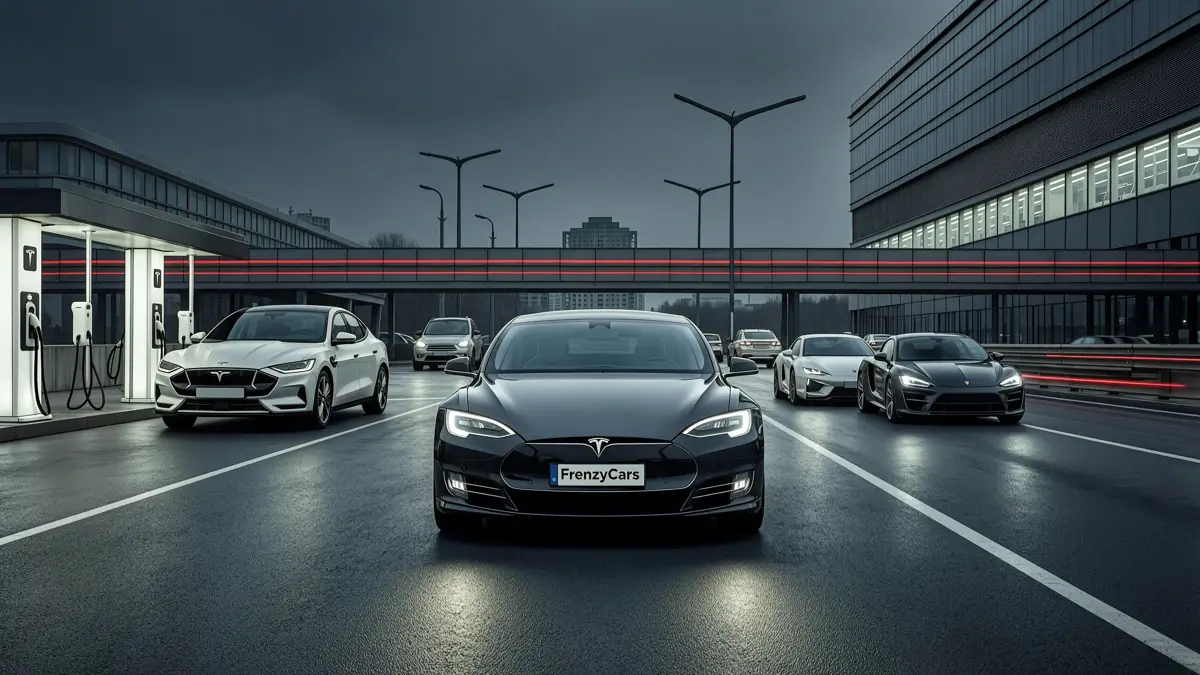
Tesla may still be the name most people think of when they hear “electric car,” but the competitive landscape in 2026 is vastly different from just a few years ago. According to a comprehensive analysis by FourWeekMBA, Tesla’s rivals now span not only traditional automakers and ambitious startups but also high-end performance marques and even tech companies vying for leadership in energy storage and autonomous driving. For enthusiasts and buyers, that means more choice, more innovation, and a much tougher fight for the EV crown.
The Electric Automaker Arena: Legacy Giants and Startup Challengers
The core of Tesla’s business—building electric vehicles—faces pressure from nearly every major automaker. FourWeekMBA identifies Ford, Mercedes-Benz, Porsche, Lamborghini, Audi, Rivian, Lucid Motors, and Toyota as direct competitors in this space. Each brings a distinct playbook. Ford, with its Mustang Mach-E and F-150 Lightning, is going after Tesla’s mass-market and truck customers. Rivian, meanwhile, targets the adventure-oriented buyer with its R1T pickup and R1S SUV, directly challenging Tesla’s Cybertruck and Model X. Lucid Motors aims squarely at the luxury end with the Air sedan, boasting class-leading range and a premium interior that takes the fight to the Model S.
Perhaps the most surprising names on the list are Porsche and Lamborghini. These are brands built on internal-combustion heritage, but their entry into the EV space signals that the performance segment—once Tesla’s safe haven with the Roadster and Plaid models—is no longer uncontested. Porsche’s Taycan has already proven that an electric car can blend driving excitement with daily usability, while Lamborghini’s upcoming electrified lineup promises to retain the drama and emotion the brand is known for. Audi, with its broad e-tron range, offers everything from crossovers to sporty sedans, covering multiple segments where Tesla once had little competition.
Even Toyota, a company that long hesitated on full battery-electric vehicles, is now a factor. With the bZ4X and future models, Toyota brings global scale, reliability reputation, and a massive dealer network. Mercedes-Benz, through its EQ sub-brand and upcoming AMG electric models, is targeting both luxury and performance buyers. For Tesla, this means every price point and lifestyle niche is being contested. The days of being the only serious EV player are over; now it’s about defending market share against a dozen determined rivals.
Beyond Cars: Tesla’s Energy and Autonomy Rivals
Tesla is not just an automaker. The company also operates Tesla Energy, encompassing solar panels and battery storage (including the SolarCity acquisition), and it develops autonomous driving technology under the Full Self-Driving (FSD) banner. FourWeekMBA notes that these divisions face their own sets of competitors.
In the energy realm, Tesla goes head-to-head with Sunrun, SunPower, and Vivint Solar. These companies are well-established in residential solar installation and battery storage. While Tesla’s Powerwall and solar roof have generated buzz, the competition is fierce. Sunrun, in particular, leads in U.S. residential solar installations, and SunPower offers high-efficiency panels. For homeowners considering an integrated solar-and-storage setup, these alternatives mean Tesla can’t coast on brand recognition alone. The battle for the energy-conscious consumer’s rooftop is real and intensifying.
On the autonomy front, Tesla’s FSD software competes with Zoox, Waymo, and Baidu. Waymo, a subsidiary of Alphabet, has years of real-world autonomous taxi operations in Phoenix, while Zoox (owned by Amazon) has developed a purpose-built robotaxi. Baidu’s Apollo platform is a major player in China. Tesla’s approach—relying on cameras and neural networks rather than lidar—is unique, but it faces skepticism from regulators and competitors who argue that sensor redundancy is safer. As autonomous driving inches toward broader deployment, the winner may not be the best-known brand but the one that proves reliability and safety first.
Tesla’s triple-threat business model looks smart on paper, but it also means the company must excel in three distinct industries simultaneously. A misstep in one area can weaken the whole ecosystem. With established players in each arena, the margin for error is shrinking.
What This Means for Buyers and Enthusiasts
The diversification of Tesla’s competition is ultimately good news for consumers. More automakers means more choices in design, range, performance, and price. Enthusiasts who once had to choose between a Tesla and nothing now have electric options from brands they already trust—or are curious about. Rivian and Lucid have shown that new companies can deliver compelling products, while Porsche and Lamborghini prove that electrification doesn’t have to mean sacrificing soul.
At the same time, Tesla retains advantages: its Supercharger network remains the most extensive and reliable fast-charging infrastructure, its over-the-air updates keep cars fresh, and its founder-led culture (as noted by The Motley Fool) drives rapid innovation. But those advantages are being eroded. Ford has partnered with Tesla to adopt NACS connectors, giving its customers access to Superchargers. Legacy automakers are catching up on software and charging partnerships.
Looking ahead, the 2026 model year will be a pivotal moment. Tesla is expected to refresh its lineup and potentially launch a more affordable mass-market vehicle. But it will do so in a market where Ford, Rivian, Lucid, and others are already well-established, and where Porsche and Lamborghini have proven they can build electric cars that enthusiasts crave. The competition is no longer a future threat—it’s here, and it’s aggressive.
For now, Tesla remains the benchmark, but the gap is closing fast. Buyers shopping for an EV in 2026 have more compelling options than ever, and that’s a win for everyone who loves performance and innovation.