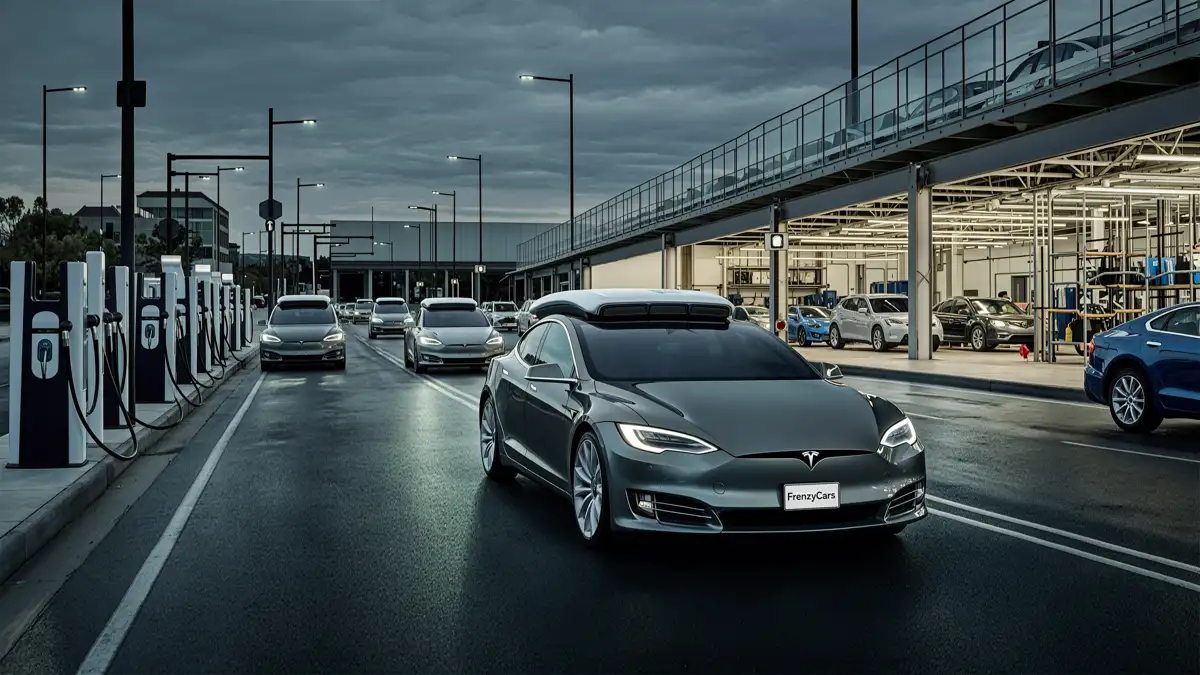
Tesla’s long-promised robotaxi network may be about to take a concrete step toward reality. A recent report from the San Antonio Report reveals that Tesla robotaxis could come to San Antonio, while Waymo—already the dominant player in commercial autonomous ride-hailing—is preparing to return to the city. The news signals a potential escalation of the autonomous vehicle battle in Texas, a state that has become a favored proving ground for self-driving technology.
The exact timeline and scope of Tesla’s San Antonio plans remain unclear, but the report suggests the company is actively exploring deployment. For enthusiasts and potential riders, this could mean access to a fleet of self-driving Teslas in a major U.S. city—something Tesla CEO Elon Musk has teased for years but has yet to deliver at scale. Waymo, meanwhile, already operates commercial robotaxi services in other cities like Phoenix and San Francisco, and its return to San Antonio would rekindle competition in a market that is increasingly looking like a live lab for autonomous mobility.
Real-World FSD Testing: 20,000 Miles and Counting
While the San Antonio news grabs headlines, a separate data point underscores the real-world chops of Tesla’s Full Self-Driving (FSD) system. A Washington man has let his Tesla Model 3 rack up over 20,000 consecutive miles using FSD, essentially a non-stop joyride where the car does nearly all the driving. The milestone, reported by multiple outlets, highlights the growing confidence some owners have in the system—and the vast amounts of data Tesla is collecting from real-world use.
For a company that plans to launch a robotaxi network, this kind of long-duration, unsupervised operation is precisely the validation needed to convince regulators and the public that the technology is ready. While FSD is not yet truly driverless in all conditions (Tesla requires attentive drivers), the 20,000-mile feat shows the system can handle extended drives with minimal intervention. If Tesla can replicate that reliability in a dense urban environment like San Antonio, the robotaxi dream edges closer to reality.
Wall Street’s Patience Wears Thin on Autonomous Spending
Despite the technological progress, Tesla’s stock has been hammered amid investor unease over the mounting costs of Musk’s robotaxi and AI ambitions. Shares hit a new 52-week low mid-week, trading as low as $297.38 before recovering slightly, according to financial reports. The Motley Fool noted that Tesla suffered its worst weekly performance since 2022, falling 18% as investors balked at the company’s massive spending plans for autonomous driving and artificial intelligence.
The stock’s decline—roughly 3% in a single session on Wednesday—reflects a broader clash between Tesla’s long-term vision and the market’s short-term appetite for profitability. As one analyst put it, the market is questioning whether the billions poured into robotaxis and AI will pay off before margins are squeezed further. For car buyers and enthusiasts, this financial turbulence may not affect immediate product availability, but it could influence how aggressively Tesla rolls out its autonomous services. A cash-constrained company might delay or scale back its San Antonio plans, while a stock rebound could accelerate them.
The contrast between the operational progress (the 20,000-mile FSD run) and the financial pessimism (the 18% weekly plunge) captures the dual nature of Tesla today: a company that can push the technological envelope while simultaneously frustrating Wall Street. In San Antonio, all eyes will be on whether Tesla can turn its robotaxi promises into a paid service—and whether Waymo’s return will steal the spotlight first.
As San Antonio’s Zoning Commission weighs the implications of another driverless car entrant, the stage is set for a fascinating showdown. No official launch dates have been announced, but both Tesla and Waymo are clearly positioning for a piece of the city’s autonomous-ride future. For now, enthusiasts will have to watch, wait, and—if the Washington man is any guide—possibly let their own Teslas do the driving.