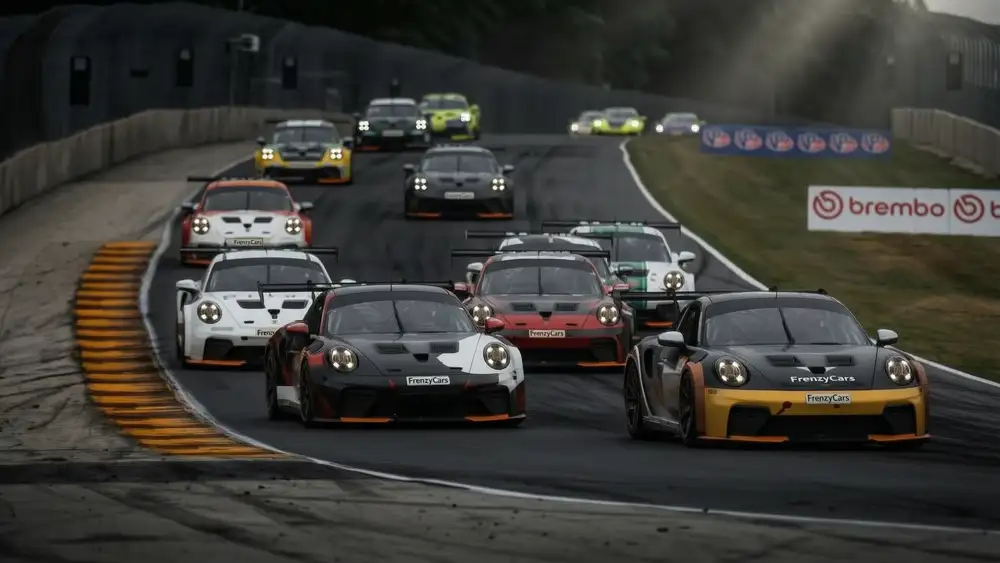
The fifth round of the Porsche Carrera Cup North America season took the grid to Road America, and the weekend produced a stat line that stands out even for a series built on competitive parity: three different winners, according to Porsche’s official race report from the event.
In a one-make championship, the equipment is equalized by design. Every car in the field is built to the same specification, which shifts the battle from engineering one-upmanship to racecraft, setup detail, and nerve. When three different drivers reach the top step at the same round, it is a direct signal that the field is deep and that the win window is wide open.
A Three-Way Winner Split Is More Than a Stat Line
In many race series, one dominant driver or team can make a round predictable before the lights go out. Road America was the opposite. Three different winners means three separate victory celebrations, three moments of momentum, and three names added to the championship conversation. For anyone who lost out, the weekend also limited the points damage, because the maximum reward was shared rather than hoarded by a single competitor. That is the kind of outcome that changes how teams approach the rest of the season. It also matters beyond the immediate results. Porsche Carrera Cup North America has become a proving ground for sports car professionals and a serious battleground for ambitious privateers. When a round produces three different winners, it broadens the list of realistic contenders and makes every remaining session mean more. Drivers can no longer assume that matching one rival is enough; the pace at the front is spread across a wider group.
Road America’s Character Makes a Rotating Cast of Winners Logical
The venue deserves part of the credit. Road America, the fast and flowing natural-terrain circuit in Elkhart Lake, Wisconsin, is famous for long straights, sweeping corners, and elevation changes that reward a well-balanced car. Slipstreaming is part of the game there, and the track’s demanding rhythm punishes small mistakes while allowing confident drivers to make moves. That combination tends to keep the racing close and gives more than one driver a realistic shot at the flag.
For the Carrera Cup field, this round was also a physical and mental test. The circuit’s sustained high speeds and heavy braking zones put a premium on concentration and consistency over the course of the race. Any driver who got the setup right and kept the car on the limit could step forward, and the final scoreboard reflected exactly that. Those are the conditions that make Porsche Carrera Cup North America such an important part of the sports car ladder. Unlike categories where a difference in engineering budget can show up in straight-line speed or downforce, a one-make series keeps the hardware identical. The winner is the driver who reads the race best, looks after the tires longest, and chooses the right moment to attack. Road America, with its high-speed rhythm and low margin for error, is a demanding classroom for exactly those lessons.
What the Result Means for the Championship Road Ahead
The most immediate consequence of a three-way winner split is a points picture that is tighter and more unpredictable. Instead of one contender leaving the round with a large haul, the reward was distributed across the entry list, which raises the value of consistent results. A single retirement or mistake now carries more weight, because the leaders are unlikely to put multiple race wins between themselves and the rest of the field. There is also a psychological effect. Every winner at Road America leaves with real momentum, and every non-winner leaves knowing the gap is small. The next round will be the first chance to see whether this was a one-off weekend of unpredictability or the start of a wide-open title fight. Either way, Porsche Carrera Cup North America has a new talking point before the series moves on.