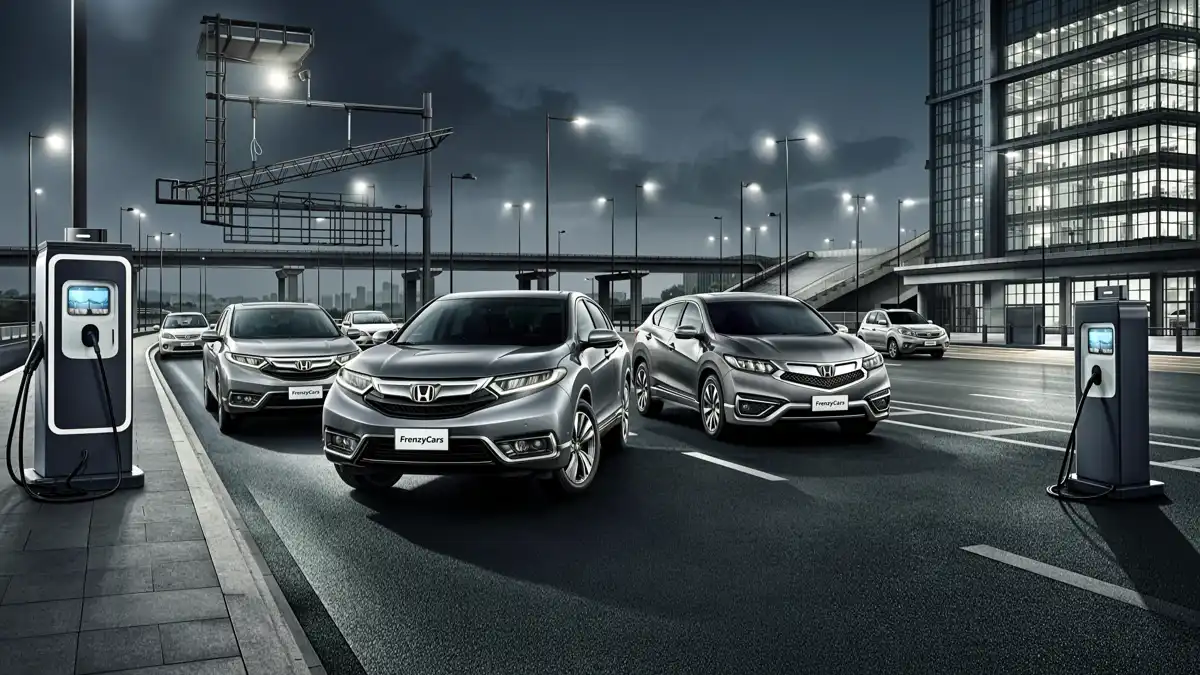
Honda has officially pulled the plug on its Prologue EV and the Acura ZDX EV, marking the latest casualties in a broader industry shift away from pure electric vehicles and back toward hybrids and internal combustion. The decision, confirmed by Honda last week, comes as automakers recalibrate their electrification strategies amid slowing EV demand and evolving consumer preferences. Even Tesla—the EV pioneer—has dropped its Model S and Model X, underscoring the magnitude of the trend.
The Prologue and ZDX were Honda’s first serious entries into the mainstream EV space, both co-developed with General Motors and sharing Ultium architecture. For enthusiasts and buyers, this cancellation means fewer affordable electric options from a brand traditionally known for efficient, reliable cars. Instead, Honda is likely to lean harder into hybrid powertrains and ICE models, a move that aligns with the current market reality where hybrids are outselling pure EVs in many segments.
The Prologue and ZDX Join a Growing List of EV Casualties
Honda’s cancellation is not an isolated event—it reflects a market-wide recalibration. Automakers across the industry are slowing EV launches, scaling back production targets, and redirecting investment toward hybrid and plug-in hybrid systems. Even Tesla, the company that nearly single-handedly drove EV adoption, has discontinued its lower-volume Model S and Model X as it focuses on the Model 3, Model Y, and Cybertruck. For Honda, the Prologue and ZDX were always stopgap solutions; built on a GM platform, they lacked the integration of a fully in-house Honda EV. Their removal from the lineup suggests Honda may wait for its own dedicated EV architecture (the e:Architecture) to arrive before committing further to all-electric models.
What does this mean for current Prologue and ZDX owners? Residual values could soften as the market absorbs the end of production, but Honda will likely continue to support service and parts for years. For shoppers, the cancellation narrows the field of available EVs in the mainstream segment, leaving models like the Chevrolet Blazer EV, Ford Mustang Mach-E, and Hyundai Ioniq 5 as alternatives.
Recalls and Acquisitions: A Busy Week for Honda
While the EV news dominated headlines, Honda also issued a recall affecting 3,933 model-year 2026 Pilot and Passport SUVs. According to American Honda Motor Co., rear subframe bolts were not tightened to specification during assembly—a defect that federal safety regulators say could compromise vehicle stability. Owners will be notified and dealers will inspect and retorque the bolts free of charge. For owners of these popular SUVs, the recall is an immediate action item, though no incidents have been reported.
In a separate but equally significant move for the enthusiast community, Honda’s tuning ecosystem saw a shake-up. Engineered Performance Technologies Group (EPT) acquired Hondata in May, the company known for providing ECU tuning solutions for Honda and Acura owners. Hondata gives enthusiasts the ability to modify engine control units to increase power, adjust air-fuel ratios, and unlock hidden performance—an essential tool for the aftermarket. The acquisition by EPT, which already owns other performance software and hardware brands, could mean more integrated tuning packages or expanded support, but also raises questions about the future of Hondata’s independent ethos. For DIY tuners and shop owners, this change bears watching.
Honda’s Vision for Electric: Not Just Cars
Amid the cancellations and recalls, Honda also revealed an autonomous electric vehicle—but it’s not designed for the road. The ProZision Autonomous is a battery-electric lawn mower that can reproduce a previously recorded mowing route without an operator, using satellite positioning, radar, and LiDAR to navigate around obstacles. It’s a niche application, but it shows Honda is still investing in EV technology, albeit in sectors where autonomous operation is more immediately viable. For car enthusiasts, it’s a reminder that Honda’s engineering prowess isn’t limited to automobiles; the same know-how that produces VTEC engines and SH-AWD systems now drives a robotic mower. Whether this translates into more advanced automotive EVs remains to be seen, but it signals that Honda hasn’t abandoned electric propulsion entirely.
As the market continues to shift, Honda’s strategy appears to be a pragmatic retreat from pure EVs while doubling down on hybrids and ICE. The Prologue and ZDX will soon be gone, but the brand’s long-term electrification plans are still in motion. In the meantime, Honda owners have a recall to address, a tuning icon to monitor, and—if they have a lawn to mow—a new autonomous EV to consider.