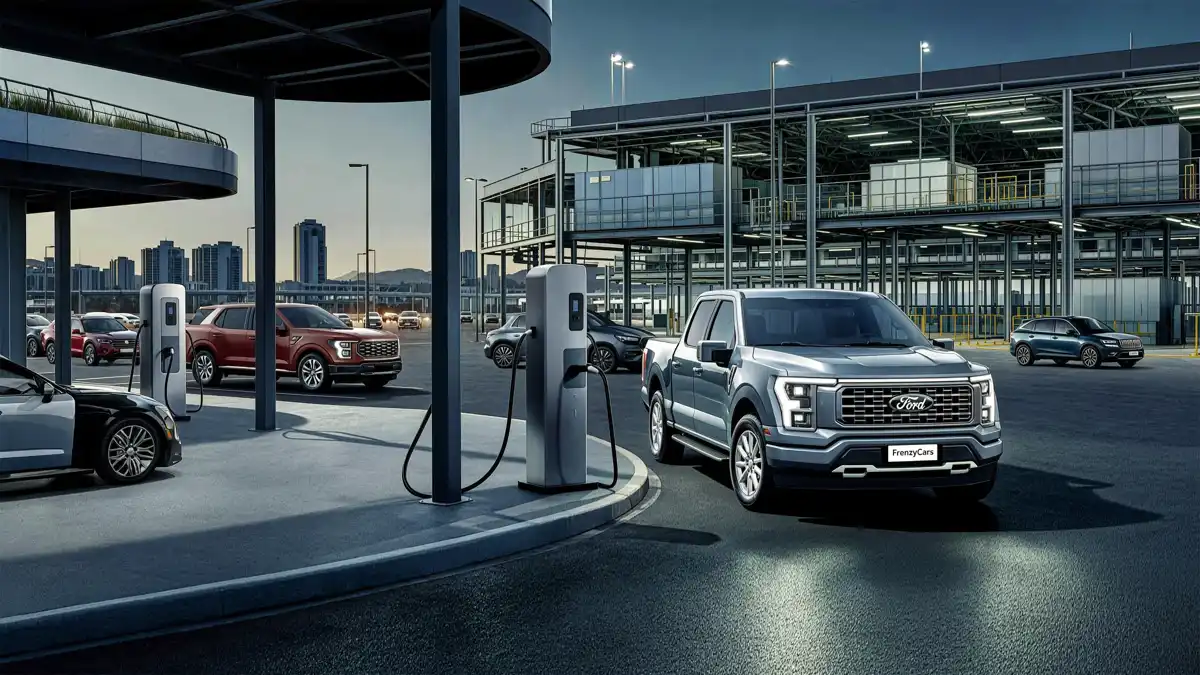
Ford has announced a new product designed to make it easier for F-150 Hybrid and Lightning owners to use their trucks as home backup power sources. The announcement, which came without extensive details on pricing or availability, signals the automaker’s continued push to make bidirectional charging a practical, everyday feature for truck buyers.
For enthusiasts and owners, the ability to power a home during an outage is one of the most compelling benefits of an electrified truck. Ford’s Lightning already offered Ford Intelligent Backup Power through the 80-amp Charge Station Pro, but the system required specific hardware installation and a compatible home setup. The new product appears aimed at reducing that complexity—potentially offering a simpler, more affordable pathway to whole-home backup.
The F-150 PowerBoost Hybrid, with its 7.2 kW Pro Power Onboard, has long been capable of running essential appliances via bed outlets, but it lacked a direct integration with a home’s electrical panel without third-party kits. Ford’s new offering could bridge that gap, giving hybrid owners a seamless solution that doesn’t rely on aftermarket workarounds.
Why This Matters for Lightning Owners
The Lightning’s existing V2H capability is already class-leading, but adoption has been limited by the need for a compatible inverter and home integration system. By introducing an easier-to-install product, Ford is addressing the biggest hurdle: the complexity and cost of installation. This move could dramatically expand the pool of Lightning owners who actually use the truck’s backup capability, turning a theoretical feature into a practical one.
For buyers considering the Lightning, this new product removes a significant friction point. Instead of researching third-party equipment or coordinating a specialized electrician visit, owners may soon have a turnkey solution straight from the dealer. That simplification is a major selling point, especially for those in areas prone to severe weather or grid instability.
What It Means for Hybrid Owners
The PowerBoost Hybrid’s Pro Power Onboard has always been a standout feature, offering up to 7.2 kW of mobile generator-style power. But without a direct home backup integration, owners were limited to extension cords and selective appliance coverage. Ford’s new product likely aims to bring the hybrid into the full home-backup fold, giving it parity with the Lightning in terms of whole-house capability.
This is a game-changer for the F-150 Hybrid buyer who wants peace of mind without stepping up to a full EV. The hybrid already delivers excellent fuel economy for a full-size truck, and now it can double as a backup generator that runs off its gas engine or battery pack. The product could make the PowerBoost Hybrid the most versatile powertrain option in Ford’s lineup.
Context: Ford’s Growing V2H Ecosystem
Ford has been a leader in vehicle-to-home technology since launching the Lightning with bidirectional charging capability. The new product builds on that foundation, potentially offering a standardized solution that works across both the hybrid and electric F-150 models. This simplifies the buying decision—buyers no longer need to choose a powertrain based solely on backup power capabilities.
Rivals like General Motors have also invested in V2H technology, but Ford’s advantage lies in the sheer volume of F-150s on the road. By making home backup easier, the company is positioning its trucks as essential household infrastructure, not just transportation. This could resonate strongly with owners who value self-sufficiency and preparedness.
What Comes Next
Ford has not yet announced specific pricing, availability, or installation requirements for the new product. However, the announcement suggests a rollout is imminent. Dealers are likely to be key distribution points, and installation may be included or offered through Ford’s network of certified electricians. Owners and prospective buyers should expect more details in the coming weeks.
For now, the message is clear: Ford is doubling down on the F-150’s role as a mobile power source, and the barrier to using that power has just been lowered.