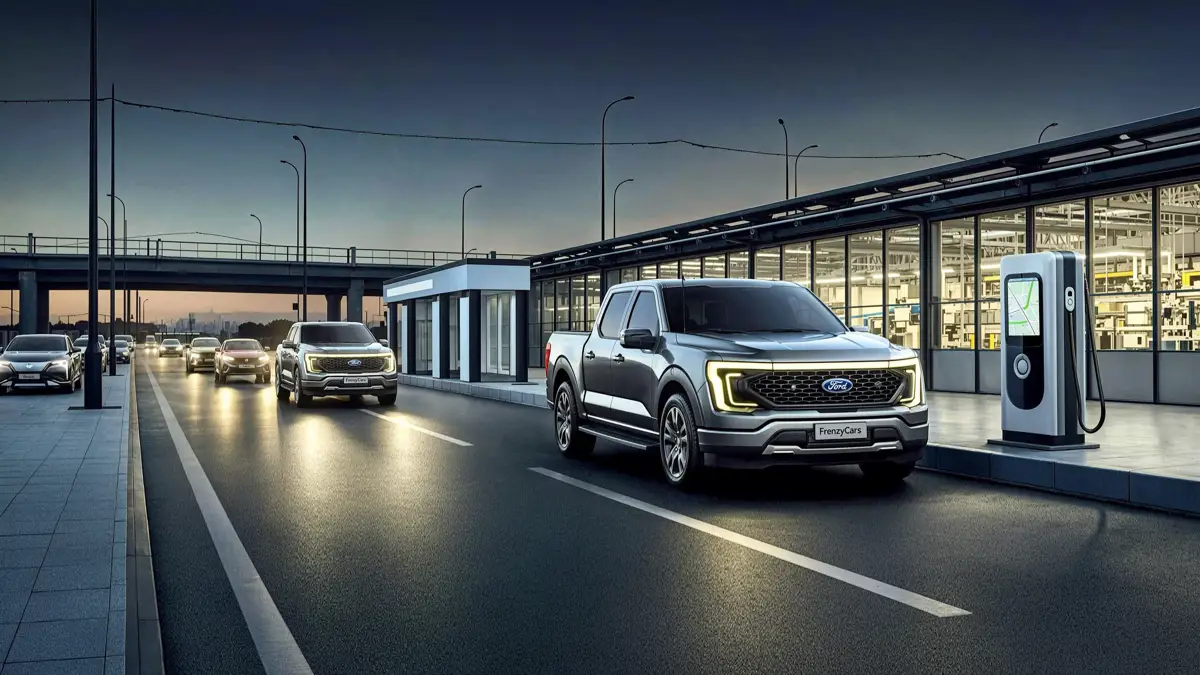
Ford has made two major announcements that reshape its electric vehicle strategy: the integration of Apple Maps as the native navigation system in its next-generation EVs, and a manufacturing joint venture with Geely in Spain. Both moves signal Ford’s commitment to lowering costs, expanding its EV lineup, and delivering a more seamless ownership experience for buyers.
Apple Maps Takes Over Navigation in Ford’s Universal EV Platform
Ford will embed Apple Maps directly into its Universal Electric Vehicle (UEV) platform, replacing Google Maps as the built-in navigation system. The first vehicle to ride on this platform will be a $30,000 midsize electric pickup truck, scheduled for release in 2027. According to Ford’s announcement, Apple Maps will provide turn-by-turn directions, EV-specific route planning, and real-time charging station information — all without requiring an iPhone to be connected. This is made possible by Apple’s new MapKit for Automotive software development kit (SDK), which allows automakers to integrate Apple Maps natively into the vehicle’s infotainment system. Ford is the first automaker to adopt this SDK, giving it a head start in leveraging Apple’s mapping ecosystem.
For EV shoppers, the switch matters because route planning is critical for electric vehicles. Apple Maps has improved its EV routing capabilities in recent years, including elevation-aware range estimates and charging stop suggestions that adapt to battery state. By embedding the software directly into the UEV platform, Ford can ensure that navigation is consistent and independent of the driver’s smartphone platform — a key differentiator from automakers that rely on phone projection systems like Apple CarPlay or Android Auto. The integration also feeds road data into Ford’s BlueCruise hands-free driving system, enhancing its ability to handle highway navigation and lane changes. Ford says the mapping data will improve BlueCruise’s performance in future vehicles, though it has not disclosed specific features beyond using Apple Maps’ road information for driver-assistance functions.
Geely Joint Venture Secures European Production and a Broader EV Lineup
Parallel to the Apple Maps news, Ford announced a manufacturing joint venture with China’s Geely Auto at Ford’s existing assembly plant in Valencia, Spain. Ford will own 66% of the joint venture, with Geely holding the remaining 34%. Operations are expected to begin in the first half of 2027, with four models rolling off the line starting in 2028. The models will include both Ford and Geely-branded vehicles, including electric SUVs from Geely and a jointly developed model specifically for the European market. The partnership aims to improve factory utilization, lower production costs, and expand the range of low- and zero-emission vehicles Ford can offer in Europe.
For Ford, the Valencia plant had been at risk of closure amid declining demand for its traditional internal-combustion models. The joint venture secures the plant’s future and creates a pathway for Ford to build EVs in Europe without shouldering the full investment burden. Geely gains a European production foothold without having to build a factory from scratch, and it can leverage Ford’s existing supply chain and distribution network. The collaboration also signals a broader industry trend: automakers are increasingly willing to partner with Chinese manufacturers to accelerate EV development and reduce costs. While Ford has not confirmed which specific models will be built beyond the two Geely electric SUVs, the joint venture positions both companies to compete with European and Chinese rivals in the growing EV market.
Ford’s next-generation EVs will likely arrive in showrooms with Apple Maps as a signature feature, while the Geely partnership ensures those vehicles can be built at competitive cost in Europe. The $30,000 pickup is the first flagship of the UEV platform, but more models are expected to follow. Ford has not yet announced pricing or availability for the Apple Maps-equipped EVs beyond the 2027 timeline for the pickup, but the combination of integrated navigation and expanded European production capacity could make Ford a more compelling option for EV buyers on both sides of the Atlantic.