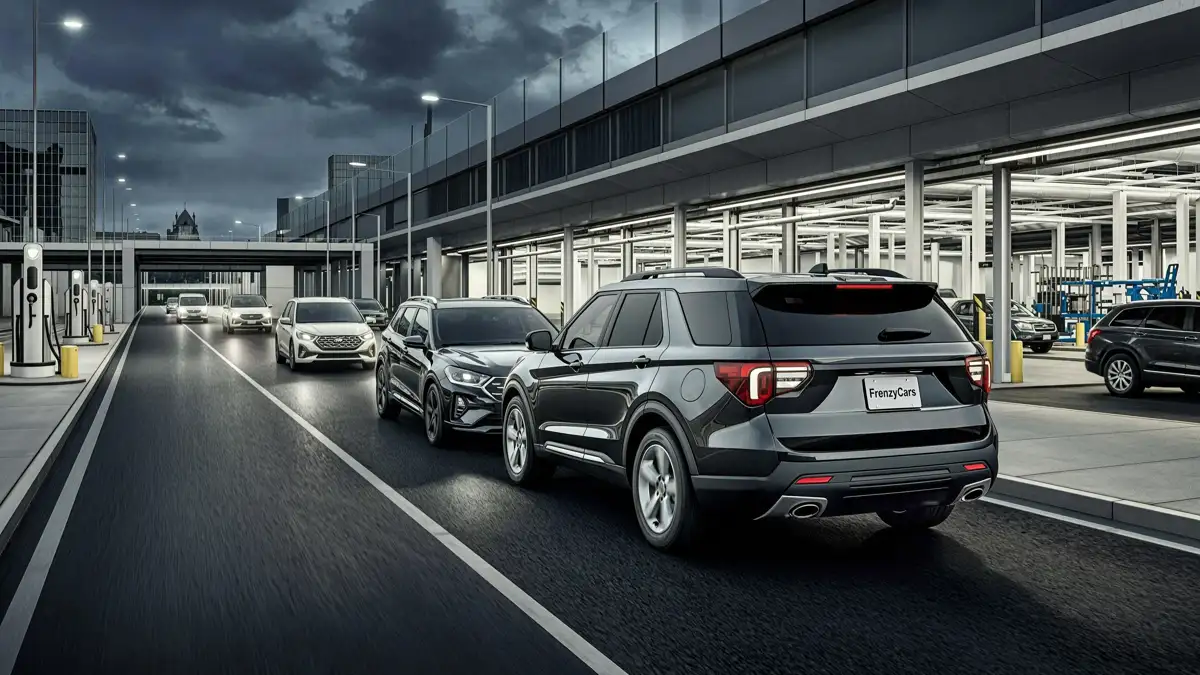
The last thing any driver expects is a piece of their SUV flying off while cruising down the highway — but that’s exactly the risk Ford is addressing with a new safety recall. This week, Ford issued a recall covering 288,314 model-year 2016–2019 Explorer SUVs whose roof rail covers can loosen and detach while the vehicle is moving. For owners of one of America’s most popular three-row SUVs, this is more than a nuisance; it’s a potential hazard to everyone on the road.
According to Ford’s official safety recall announcement, the roof rail covers on the affected Explorers may separate from the vehicle at highway speeds. A detached piece of trim could strike another car, a pedestrian, or cause the driver of the affected vehicle to swerve unexpectedly. Given the Explorer’s widespread use — it’s long been a top seller in the midsize SUV segment — the recall touches a large number of families, commuters, and enthusiasts who rely on the model for daily driving and road trips.
The recall covers Explorers built between the 2016 and 2019 model years, a period when the fifth-generation Explorer was sold with roof rails as standard or optional equipment on many trims. While roof rails are typically seen as rugged, utilitarian additions for carrying cargo boxes, bikes, or kayaks, their covers are cosmetic pieces that snap over the metal rail structure. If those covers loosen, they can catch the wind like a sail and tear loose at speed.
What’s Going Wrong with the Roof Rails?
Ford has not yet detailed the specific root cause in its preliminary recall filing, but the condition is serious enough to warrant a full safety campaign. The roof rail covers are plastic or composite trim pieces attached to the metal rails that run along the roof. Over time, vibration, sun exposure, or improper installation can cause the clips or adhesive bonds to fail. Once loosened, the covers can flutter at highway speeds and eventually separate entirely.
For context, Ford has dealt with roof-related issues on the Explorer before. The model has been the subject of prior recalls for roof structural concerns and glass delamination. This new recall focuses entirely on the trim, not the load-bearing function of the rails themselves. Owners who carry cargo on the roof — a common scenario for ski trips or camping gear — should note that the recall addresses only the cosmetic covers, not the integrity of the rails for carrying weight. Still, a flying piece of trim is dangerous regardless of whether the roof is loaded.
The recall population of 288,314 vehicles makes this a medium-sized campaign for Ford, but the potential consequences elevate its urgency. A detached roof rail cover at interstate speeds can act much like a projectile. In worst-case scenarios, it can shatter a windshield, cause a cyclist to lose control, or trigger a multi-vehicle collision. The National Highway Traffic Safety Administration (NHTSA) requires automakers to conduct recalls for safety defects, and Ford is complying proactively by notifying owners.
What Explorer Owners Should Do Next
If you own a 2016–2019 Ford Explorer, the first step is to check whether your specific vehicle is included. Ford will mail recall notices to registered owners of affected vehicles, but you don’t have to wait for the letter. Visit Ford’s recall website or enter your vehicle identification number (VIN) on the NHTSA recall portal. The recall is active as of this week, so the database should reflect the new campaign.
Once identified as affected, owners should schedule an appointment with a Ford dealership. The remedy — which will be performed free of charge — involves inspecting the roof rail covers and replacing or securing them as needed. Ford has not announced a specific repair timeline, but dealers typically prioritize safety recall work. If the covers are loose, some dealers may be able to apply adhesive or replace clips on the same day. Owners can also contact Ford’s customer service hotline for additional details.
For now, if you notice that the plastic covers on your Explorer’s roof rails look wobbly or are lifting at the edges, exercise caution at high speeds. While driving gently to a dealership is generally safe, prolonged highway travel with a loose cover increases the risk of detachment. Ford has not issued a “do not drive” order, but affected owners should treat the condition with the seriousness it deserves.
Forward-looking, this recall adds to Ford’s recent safety campaign activity as it works to address quality concerns across its lineup. The Explorer remains a core model for Ford, and the company’s willingness to recall nearly 300,000 vehicles over a trim issue shows a commitment to preventing accidents from seemingly small components. Owners should act promptly once notified — a few minutes checking your VIN and scheduling a service slot can keep your Explorer safe and roadworthy for miles to come.