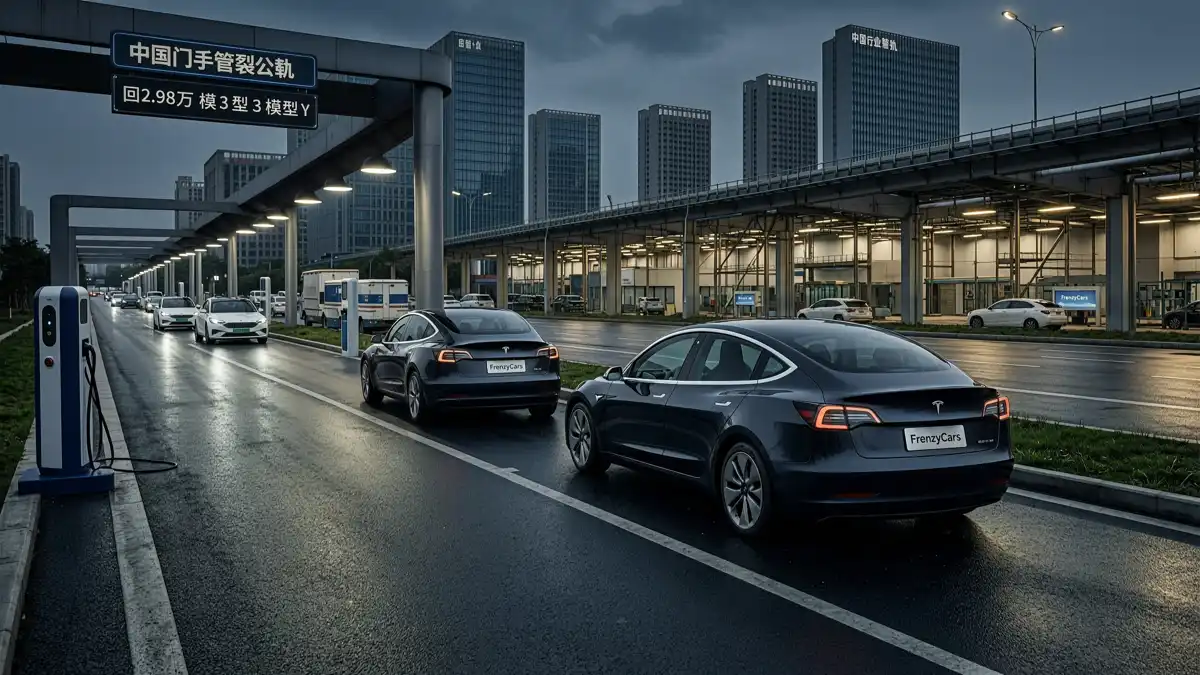
Chinese regulators have turned a design trend into a recall trigger. Tesla is recalling 2.98 million Model 3 and Model Y vehicles in China so the automaker can add warning labels that make it clear how to open the rear doors in an emergency, according to Chinese authorities. The action is part of China’s largest automotive recall campaign to date, covering about 4.3 million vehicles from Tesla and eight other automakers over concerns about emergency door-opening safety.
Critically, the fix is not a mechanical redesign. Tesla has to place warning labels on affected vehicles to make the emergency release procedure clearer, especially for rear-seat passengers. That suggests the handles don’t always fail — it’s that when they do, occupants may not know what to do. The recall includes both domestically produced and imported Model 3 and Model Y cars, so the requirement spans Tesla’s entire lineup in China. Ars Technica notes that Chinese regulators are taking a stricter approach to safety, and this labeling requirement is direct evidence of that shift.
The Problem With Power-Operated Door Handles
Flush, electronically deployed handles have become a signature of modern EVs. They improve aerodynamics and give a car a clean, futuristic look. Tesla helped mainstream that design, though it didn’t start the trend — hot rodders and custom builders were toying with motorized flush handles long before Tesla made them a production-car norm. What changed is scale: millions of cars now rely on electronic controls for something as fundamental as opening a door.
Chinese regulators stepped up scrutiny of hidden or flush handles after EV accidents in China and elsewhere where hidden electronic doors failed and trapped people inside, according to reports. With a conventional mechanical latch, a panicked rear-seat passenger can usually pull a handle and get out. With an electronic door release, the process may require a two-step procedure or a hidden manual release that a passenger doesn’t know exists. If a crash disrupts the car’s electrical architecture, that unknown becomes genuinely dangerous.
Door handles seem like a small component, but they are one of the last things between an occupant and the outside world. China has effectively decided that sleek styling cannot come at the expense of emergency egress. The campaign also highlights a growing regulatory focus on vehicle safety as automakers rely more on software and electronic controls for basic functions.
What the 4.3 Million-Vehicle Recall Tells Us
The scale of the campaign is the bigger story. Tesla and eight other automakers are preparing to recall about 4.3 million vehicles over concerns that passengers could struggle to open doors during emergencies, making it the country’s largest automotive recall campaign to date. The message to every automaker selling EVs in China is clear: safety rules won’t bend for design fashions.
Tesla’s 2.98 million-vehicle share makes it the biggest name attached, but the involvement of eight other automakers shows this is systemic, not a single-brand defect. It’s driven by the auto industry’s broad shift toward hidden handles, software-controlled locks and unconventional interior releases. Some coverage has framed the campaign as an “open and shut case” for the end of Tesla-style hidden handles in China. For now, Tesla’s official remedy is a labeling requirement — a low-tech answer to a high-tech problem.
For owners, the practical lesson is to learn the backup procedure before you need it. A warning label only helps if you know it’s there; in a real emergency, rear-seat passengers won’t have time to read it. Whether you drive a Tesla or another modern EV, it’s worth knowing how the doors open without power — and making sure everyone else in the car does too.
A Turning Point for Hidden Handles?
The China recall is a reminder that the EV transition is about more than range, charging speed and software updates. Regulators still care about basic mechanical survival functions, and they are increasingly willing to act when those functions are obscured by design choices. Tesla will now add the required labels to the affected Model 3 and Model Y vehicles in China, but the larger effect could be on how the next generation of EVs is designed. Hidden handles aren’t likely to disappear overnight, but the era of treating them as a pure styling flourish may be over — and future cars will be judged on whether anyone can get out, even in the worst moment.