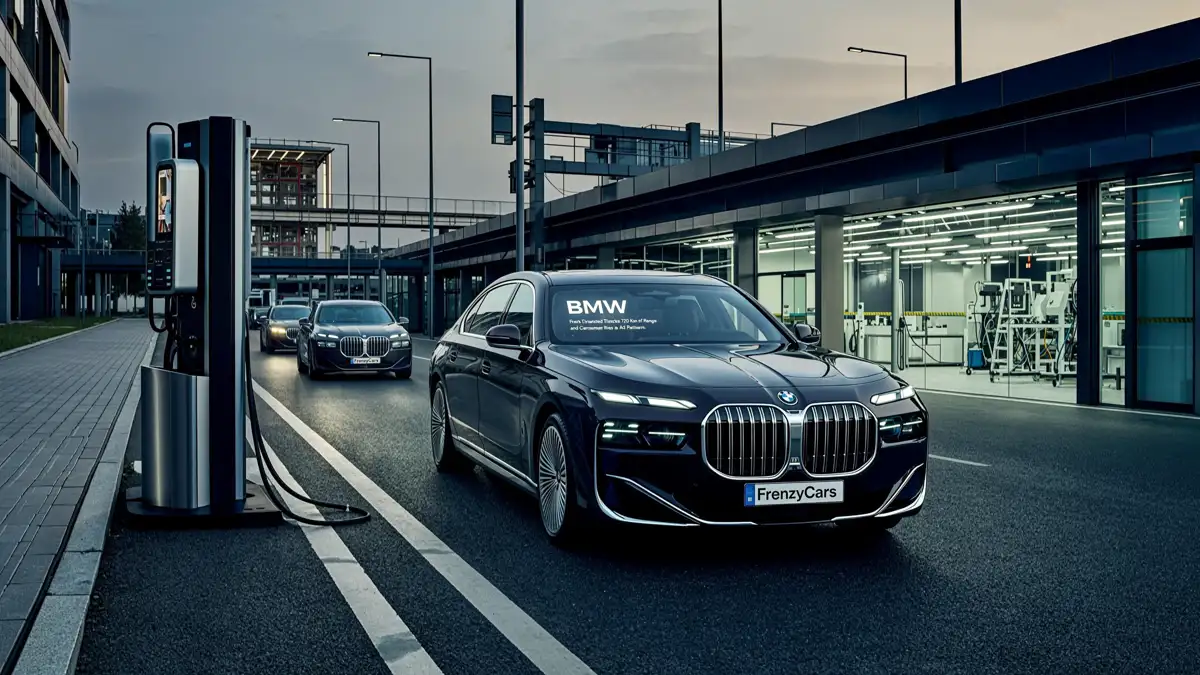
BMW’s flagship 7 Series is entering a new phase, and the first signal comes from India, where pre-bookings have opened for the facelifted limousine and the electric i7 ahead of a late-August 2026 launch. The headline number is an estimated 720 km of WLTP range for the i7, but the more provocative story is happening on the dashboard: BMW has been showing commercials on its cars’ dash screens, according to TechStory. Both developments speak to the same thing — BMW is treating the luxury cabin as a connected digital platform, not just a place to drive.
The Facelifted 7 Series and i7: A Flagship Built Around Software
BMW India has commenced pre-bookings for the facelifted 7 Series and the i7, the electric member of the flagship luxury saloon range. According to BMW India, the refresh brings exterior and interior design tweaks, a conventional mid-cycle update for a model that remains BMW’s technological showcase. The i7’s estimated 720 km WLTP range is the most concrete new weapon in that showcase. For buyers considering a luxury electric saloon, that kind of range changes the real-world calculus: it moves the i7 closer to long-distance touring, and it quietly answers the question of whether an electric flagship can be a primary car rather than a second vehicle. BMW also promises advanced AI integration in the facelift. That phrase is broad, but it points to the next battleground for luxury sedans. As cars collect more screens, voice assistants and connected services, the quality of the AI decides whether owners engage with the cabin or spend their drive wrestling with menus. The facelift’s interior tweaks will be judged on exactly that experience when the car reaches customers.
The early booking window is significant because it starts collecting orders months before launch. BMW India is accepting pre-launch bookings now, ahead of the late-August 2026 launch, which gives the facelifted 7 Series a running start in a key luxury market. At this stage, BMW has highlighted the range figure and the AI promise, and that alone sets expectations for the rest of the lineup.
Why Dashboard Commercials Are the Other Big Story
The range and AI details are the headline specifications, but the longer-term cultural shift at BMW may be the decision to treat the dash screen as a commercial surface. According to TechStory, BMW is showing commercials on its cars’ dash screens and wants drivers to think of it as a treat. The automotive industry has spent the past decade transforming vehicles into connected digital platforms, adding navigation updates, voice assistants, subscription-based services and over-the-air software upgrades. Advertising always looked like the logical next step because the carmaker owns the screen, the operating system and the data about how the driver uses it. For 7 Series and i7 buyers, this matters in a concrete way. The facelift’s interior changes are supposed to modernise a cabin that is already dominated by displays, and those displays are now monetizable. That changes the relationship between driver and dashboard: part instrument, part media channel. BMW will have to balance that against safety and against the expectations of buyers who have paid a premium for an uncompromised interior. The commercial question is no longer purely about marketing. It is about whether the cabin remains a sanctuary or becomes another place to advertise.
BMW’s Electric Target: From a Fifth to Half of Sales
BMW’s push behind the i7 is tied to a bigger corporate objective. BMW Group wants EVs to jump from 17.7% of sales to 50% by 2030. The progress so far shows how demanding that target is: EV share of BMW Group sales climbed from 4.1% in 2021 to 17.9% in 2025, yet in the first half of 2026 EVs accounted for 17.7% of total BMW Group deliveries. That flat line in the near term is exactly why cars like the i7 matter. The 720 km WLTP estimate is BMW’s attempt to remove the range objection at the top of the range, before the rest of the lineup goes electric. A flagship EV with genuinely long range validates the technology for buyers who will later migrate to smaller models. It also gives the brand a benchmark answer in a segment where range claims are climbing quickly. India’s early booking window fits that strategy: it puts the facelifted i7 into the market ahead of the launch and starts building order-bank momentum for what remains a niche but high-visibility part of BMW’s electrification plan.
Bookings are open now, with the official launch expected at the end of August 2026. Expect more details as that date nears — and expect the conversation about dashboard advertising to stay loud for as long as BMW keeps the commercials running.