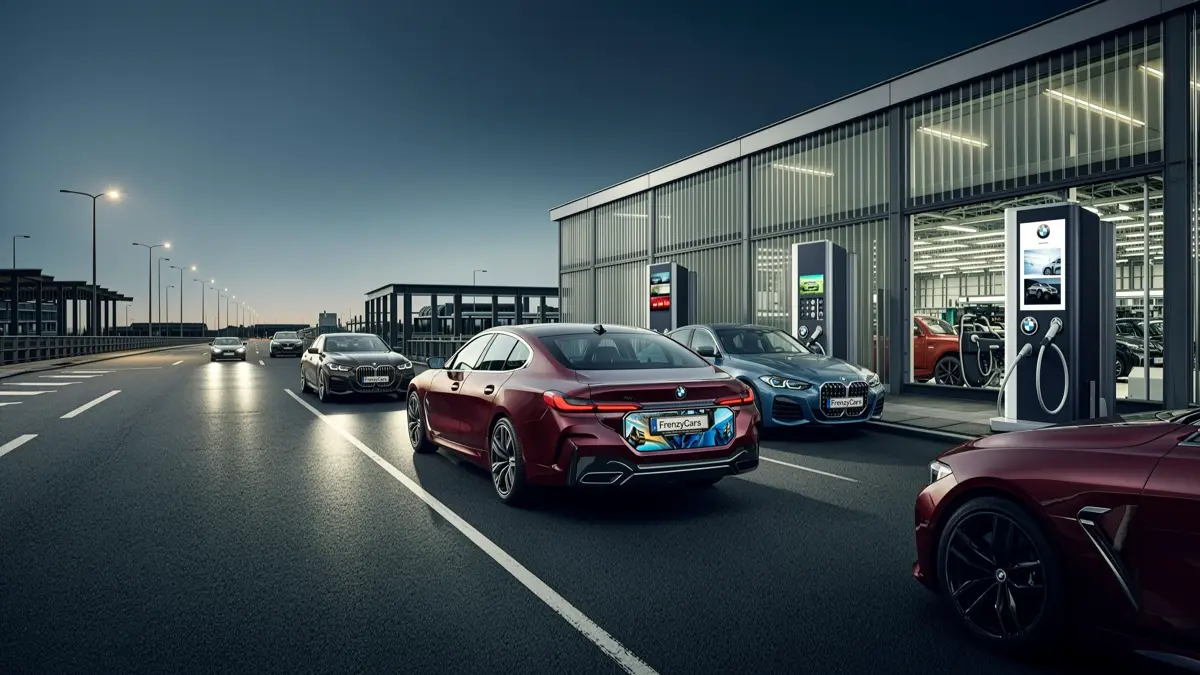
The automotive industry has spent a decade turning cars into connected digital platforms, with navigation updates, voice assistants, subscription services, and over-the-air upgrades. BMW is now taking that transformation in a surprising direction: according to a TechStory report, the German automaker is showing commercials on its cars’ dash screens — and wants drivers to think of it as a treat.
BMW’s Dash Screens Become Rolling Ad Billboards
The TechStory report doesn’t specify which models are affected or whether the commercials play while the car is parked or in motion. It does say BMW is showing commercials on dash screens and marketing the feature positively to drivers, placing it against the broader industry shift toward connected services.
For buyers, the implications are immediate. A commercial that interrupts a navigation prompt or appears during a lane change could be dangerous. If advertisers can place content on the primary display, the question of what driving or location data is shared becomes unavoidable. BMW’s “treat” language suggests the company sees this as a perk, but safety advocates and enthusiasts are likely to want the dash screen reserved for driving tasks.
The timing matters. BMW is preparing the facelifted 7 Series and the all-electric i7 for market, and those flagships carry some of the largest dash screens in the industry. The 7 Series has historically served as BMW’s technology flagship, debuting generations of iDrive and other cockpit innovations — a natural place to introduce or expand in-car advertising.
Flagship 7 Series and i7 Bring the Connected Cockpit to India
BMW India has commenced pre-bookings for the 7 Series facelift, including the electric i7, ahead of a late August 2026 launch. According to BMW India, the luxury sedan delivers an estimated 720 km of electric range on the WLTP cycle — a figure that puts the i7 among the longest-range luxury EVs available. That range alone positions it as a serious contender where range anxiety remains a deciding factor.
The announcement also highlights advanced AI integration, though BMW India hasn’t detailed the functions. An intelligent cockpit that learns a driver’s habits could also learn which ads are most engaging. That potential synergy between AI and advertising is likely to become a central topic of debate.
For Indian buyers, the booking opening means they can reserve a slice of BMW’s connected future ahead of the official debut. It also signals that BMW is rolling out its digital strategy on a global scale. A flagship sedan with a seven-hundred-kilometer range, AI features, and a large dash screen is a statement of intent — one that suggests the screen is destined for more than just maps and music.
EV Growth Pushes BMW Toward a Digital-First Future
BMW’s electrification momentum is well documented. The share of EVs in total BMW Group sales climbed from 4.1% in 2021 to 17.9% in 2025, and during the first half of 2026, EVs accounted for 17.7% of all deliveries across BMW, MINI, and Rolls-Royce, according to BMW Group figures. Now BMW wants that figure to jump to 50% of sales by 2030 — a target that will require compelling EVs and new revenue streams.
In-car advertising fits that strategy. As BMW scales its EV lineup, it needs ways to monetize vehicles over their lifetime, and dash-screen commercials are a direct route. The move is consistent with the industry’s shift toward connected services, but it marks a departure: previous connected features were sold as premium conveniences, whereas advertising is typically expected to be subtle or opt-in.
For buyers weighing the i7 and 7 Series, the practical takeaway is that the screens in BMW’s flagship sedans are becoming more than displays. They are potential channels for the same commercial content already common on smartphones and smart TVs. The TechStory report suggests BMW wants drivers to embrace the change as a treat, but the company’s own EV sales target shows why it needs the revenue that advertising can provide.
With bookings open in India and deliveries expected around late August 2026, the first owners will face a dual introduction: one to a luxury electric flagship with impressive range and AI smarts, and another to a dash screen that may soon carry more than just maps and music. How drivers respond will determine whether BMW treats in-car advertising as a standard feature or a footnote.